 Andrew Thompson
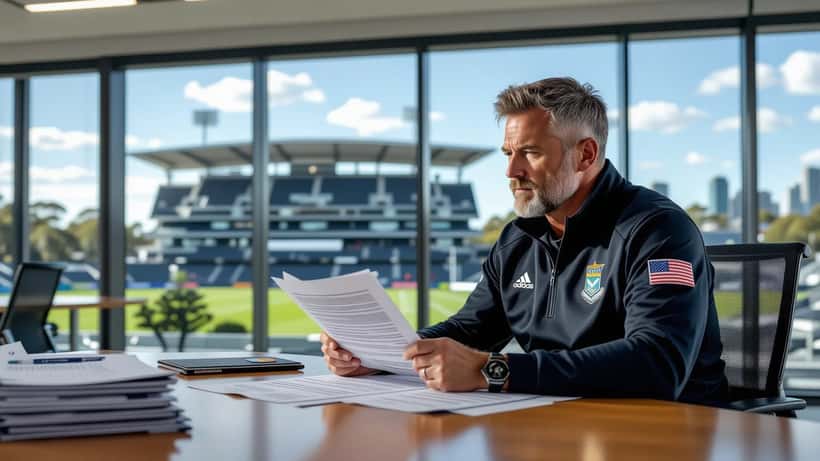
Trent Robinson is entering his 14th season as head coach of the Sydney Roosters in 2026 — a tenure so rare in professional sport that it raises a question most Australian workers have never thought to ask: what does exceptional job security actually look like, and what legal frameworks underpin it?
The NRL's Most Durable Coaching Arrangement
Robinson was appointed Roosters head coach in 2013, inheriting a club that would go on to win NRL premierships in 2018 and 2019 under his guidance. In 2026, he is preparing his squad for another title tilt, with star fullback James Tedesco — now in his 15th season — benefiting from what Robinson calls "the best environment to grow and be challenged."
That kind of sustained relationship between employer and senior employee is increasingly unusual in Australian workplaces, not just in sport. According to the Australian Bureau of Statistics, median job tenure for employees across all industries sat at 3.3 years as of their most recent workforce survey. Head coaches in the NRL, who operate under fixed-term contracts negotiated with club boards, typically last far less than Robinson's remarkable run.
So how does a coach protect that position — and what can Australian professionals learn about their own employment arrangements?
Fixed-Term Contracts: Protection and Pitfalls
NRL coaching contracts are fixed-term agreements, meaning they have a defined end date and specific performance-linked provisions. Under the Fair Work Act 2009, employees on fixed-term contracts in Australia are entitled to the National Employment Standards (NES), which cover entitlements including notice periods, redundancy pay thresholds, and unfair dismissal protections.
Importantly, recent changes to the Fair Work Act — introduced through the Secure Jobs, Better Pay amendments — placed new limits on how many consecutive fixed-term contracts an employer can offer. From November 2023, most fixed-term contracts cannot extend beyond two years in total (including renewals), unless specific exemptions apply. Specialised roles — including senior coaches and executives — may qualify for those exemptions, which is likely how Robinson and others in elite sport continue to operate under rolling arrangements.
For everyday Australian workers, understanding whether your role is permanent, casual, or fixed-term is critical. Each classification carries different legal protections.
What Happens When the Contract Ends — Or Is Terminated Early?
When a coaching tenure ends, it rarely happens quietly. Mid-contract terminations — sometimes called "being sacked" — can expose clubs to significant legal liability if the correct processes aren't followed.
An employment lawyer can help assess whether a termination was lawful, particularly around:
- Notice periods: Was proper notice given as per the contract and the Fair Work Act?
- Redundancy vs. performance: Was the role made redundant, or was the employee dismissed for performance reasons? The distinction matters for entitlements.
- Constructive dismissal: Did conditions become so unreasonable that the employee effectively had no choice but to leave?
- Post-employment restraints: Many senior contracts include restraint-of-trade clauses that restrict where a coach or executive can work after departure.
Robinson's longevity at the Roosters suggests his contract renewals have been handled smoothly — a model of what positive, well-structured employment relationships can look like. But not every Australian worker is so fortunate.
Long-Service Leave: Australia's Unique Entitlement
One area where Robinson's tenure is particularly relevant is long-service leave — an entitlement unique to Australia. Most states and territories require employers to grant long-service leave after a period of continuous service, typically seven to ten years depending on the jurisdiction.
In New South Wales, where the Roosters are based, employees become entitled to long-service leave after ten years of continuous service with the same employer, at the rate of one month of leave per five years of service. This means an employee in Robinson's position — 14 years with the same organisation — would have accrued significant leave entitlements.
For many Australians, long-service leave is an entitlement they forget to claim, or one their employer fails to properly record. An employment lawyer can assist in calculating owed entitlements and pursuing them if an employer disputes the calculation.
Performance Reviews and the Law
One of Robinson's strengths, according to media reports, is his ability to create high-performance environments where players like Tedesco can sustain elite output across a decade. But performance management in workplaces has a legal dimension that many employers and employees misunderstand.
Under Australian law, employers cannot dismiss employees for poor performance without following a fair process. That process typically includes:
- Communicating specific performance concerns clearly
- Giving the employee an opportunity to respond and improve
- Providing a reasonable timeframe and support for improvement
- Documenting all steps
An employment lawyer can review whether your employer's performance management process is procedurally fair — or whether a dismissal has been used to mask other motivations, such as cost-cutting or personal conflicts.
The Restraint of Trade Issue
For senior professionals — coaches, executives, and specialists — contracts often include post-employment restraint clauses. These clauses attempt to stop departing employees from joining competitors or taking clients with them.
Australian courts apply a reasonableness test to restraint clauses. A clause that is too broad in scope, too long in duration, or too geographically wide may be unenforceable. But challenging a restraint clause in court is costly and time-consuming without professional legal advice.
If you're leaving a senior role and your contract contains a restraint clause, consulting an employment lawyer before you sign anything with a new employer is essential.
NRL Player Contracts: A Related Legal Landscape
The same employment law principles that apply to coaches also govern NRL player contracts, which are governed partly by the NRL's Collective Bargaining Agreement and partly by general Australian employment law. As explored in NRL player contract and transfer rights, the intersection of sport-specific regulations and Fair Work entitlements can be complex, particularly around transfer negotiations and mid-contract buy-outs.
When to Consult an Employment Lawyer
Whether you're a head coach in your 14th season or an employee unsure of your rights after a workplace dispute, legal advice can make a significant difference. An employment lawyer can help with:
- Reviewing fixed-term and ongoing employment contracts before you sign
- Calculating long-service leave entitlements
- Responding to performance management processes
- Assessing whether a termination was lawful
- Navigating restraint-of-trade clauses
Australia's employment laws are among the most protective in the world — but only if workers know how to use them. Trent Robinson's 14-year tenure at the Sydney Roosters is an exceptional case. For the rest of us, understanding our rights under the Fair Work Act is the first step toward a more secure working life.
This article is for informational purposes only and does not constitute legal advice. For advice specific to your situation, consult a qualified employment lawyer.
