 Fred Rivers
On 15 May 2026, Russian President Vladimir Putin signed a decree simplifying the process for residents of Transnistria to obtain Russian citizenship. The decree removes requirements for years of Russian residency, language exams, and historical knowledge tests, effectively fast-tracking citizenship for approximately 350,000 people in the breakaway region — a strip of land wedged between Moldova and Ukraine that declared independence in 1990 but is recognised by no United Nations member state.
Within days of the decree, Russia's Foreign Ministry threatened a "prompt and adequate response" to any actions against Russian citizens in Transnistria. The language closely mirrors statements Moscow made before its military intervention in Georgia in 2008 and its recognition of Donetsk and Luhansk in 2019. Moldova, which maintains that Transnistria is its sovereign territory, has now cut Russian involvement from its reintegration negotiations and is accelerating its path toward European Union membership.
For most Australians, Transnistria may seem like a footnote in Eastern European geopolitics. But as a new passport escalation unfolds along yet another contested border, it is worth understanding what protections Australian law provides — and where those protections run out.
What Is Transnistria, and Why Is It Trending Now?
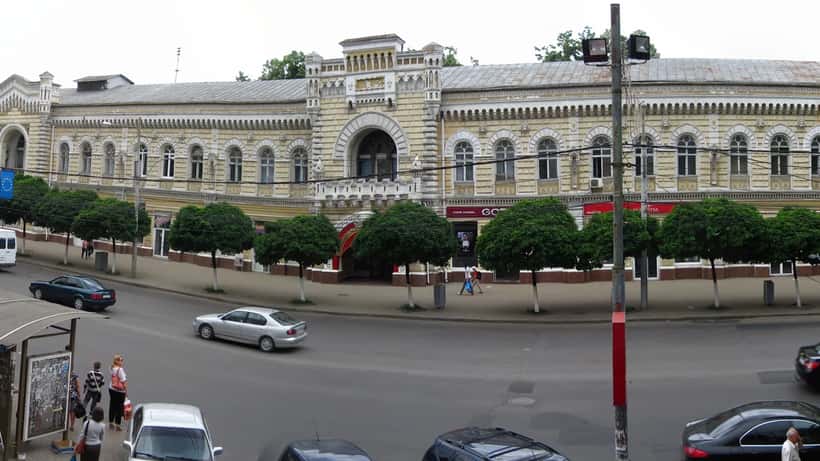
Transnistria is a narrow, densely populated territory on Moldova's eastern border, along the Dniester River. Despite being unrecognised internationally, it functions as a de facto state with its own currency, military, and government backed by Moscow. Approximately 1,500 Russian troops are permanently stationed there under the guise of a peacekeeping mission dating to 1992.
The significance of the May 2026 passport decree is structural: Russia is replicating a strategy it has used in South Ossetia, Abkhazia, and parts of Donbas — distributing passports, then citing the protection of Russian citizens as legal justification for intervention. A Spectator Australia correspondent who visited the region in May 2026 described Transnistria as "a country that's not a country," noting the surreal normalcy of daily life alongside the unmistakable presence of Russian military infrastructure.
For Australians with Moldovan, Romanian, or Ukrainian heritage — or those considering travel through Eastern Europe — the situation is directly relevant.
The Australian Government's Current Position
Australia's official travel advice for Moldova, published by Smartraveller (the Department of Foreign Affairs and Trade travel advisory service), currently rates the country "exercise a high degree of caution," citing ongoing political instability linked to the war in neighbouring Ukraine. Smartraveller specifically advises against travel to the Transnistrian region, noting that consular assistance there is severely limited.
For Russia, the advisory is the strongest possible: "Do not travel."
Australia also maintains an extensive sanctions regime against Russia — one of the broadest Australia has ever imposed — covering financial transactions, travel bans, and trade restrictions. The Australia-Russia sanctions framework has been progressively tightened since 2022 and remains in active force.
According to the Australian Government's Smartraveller advice for Moldova, Australians in the region should register with the consular notification system and ensure their travel insurance explicitly covers political instability and civil unrest.
3 Legal Protections Australians Abroad Should Understand
1. Your right to consular assistance — and its hard limits
Australian citizens abroad are entitled to consular assistance from Australian diplomatic missions under the Vienna Convention on Consular Relations. In practice, this means the nearest Australian embassy — in Bucharest, Warsaw, or Kyiv — can help with passport replacement, emergency contact with family, and assistance if you are detained.
However, in unrecognised territories like Transnistria, these rights hit a structural wall. De facto authorities are not obliged to grant consular access, and Australian officials cannot freely operate in territory that is not internationally recognised. If detained by Transnistrian or Russian forces in the region, access to consular assistance is not guaranteed and may be significantly delayed.
2. Dual nationality and the passport trap
Australian-Moldovan dual nationals — and those with Romanian, Ukrainian, or Russian heritage who have connections to the region — face particular complexity. Under Russia's new decree, certain individuals with Transnistrian residency history may be considered Russian citizens by Moscow, regardless of their Australian nationality. Russia does not recognise dual nationality, meaning Russian authorities may treat a dual national as solely Russian when it is legally convenient to do so.
This creates a practical risk: if you travel to the region or a nearby territory and are assessed by Russian or Transnistrian authorities as a Russian citizen, your Australian passport provides limited protection. Legal advice before travel is essential for anyone with multiple citizenships and connections to the region.
3. Business compliance under Australia's Russia sanctions
If your business has commercial relationships with Moldovan entities, particularly those with links to Transnistria's state-owned enterprises or Russian-aligned institutions, Australia's sanctions framework may impose restrictions you are not yet aware of. Inadvertently dealing with newly designated Russian citizens or sanctioned entities — even through indirect transactions — creates legal exposure under Australian law.
An international law specialist can audit your commercial exposure and help ensure your business remains compliant as the situation in Transnistria continues to evolve.
Travel Insurance and the Fine Print
For Australians considering travel to Moldova or surrounding regions, the Transnistria escalation is a timely reminder that most travel insurance policies contain exclusions for travel to destinations under active government advisories. Travelling to Moldova under the current "exercise a high degree of caution" rating may reduce or void your coverage in the event of a medical emergency, evacuation, or political incident.
Travelling into the Transnistrian region itself — against explicit Smartraveller advice — would almost certainly place you outside the scope of standard travel insurance coverage entirely. Before booking, consult your insurer and read the policy documents carefully.
Getting Expert Guidance Before Your Situation Becomes Complicated
The Transnistria situation is a reminder that international law, travel rights, and sanctions compliance are never fully separate concerns — and that they can change quickly. Whether you are an Australian with family in Moldova, a business with Eastern European supply chains, or a traveller planning time in Kyiv or Bucharest, understanding your legal position in advance is the most effective form of protection.
ExpertZoom's legal consultants include specialists in international law, consular matters, and cross-border commercial disputes. A consultation today can clarify your rights and obligations before events on the ground change your situation.
Disclaimer: This article provides general information only and does not constitute legal advice. Travel advisories and sanctions regimes are subject to change. Consult a qualified legal professional and check the current Smartraveller advice before travel.
