 Andrew Thompson
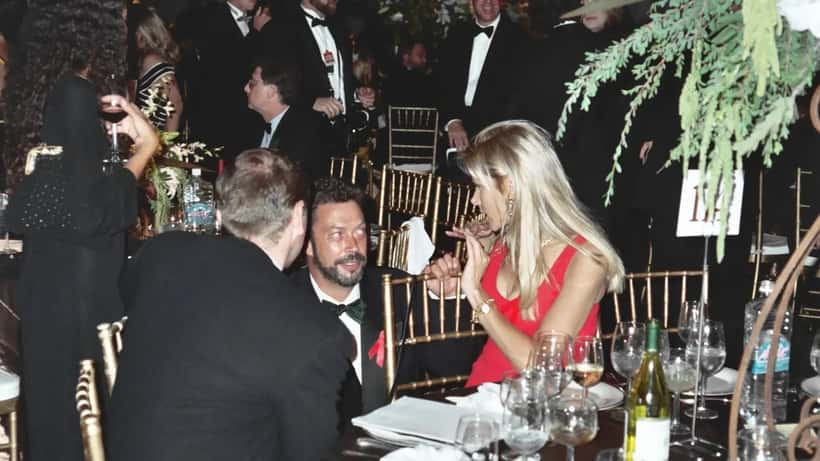
British actor Tim Curry, beloved worldwide for his iconic roles in The Rocky Horror Picture Show, IT, and Clue, died on Tuesday 26 August 2026 at his Los Angeles home at age 80. He had been largely out of the public eye since a severe stroke in 2012 left him permanently wheelchair-bound; at a 50th anniversary event for Rocky Horror in September 2025, he told fans, "I still can't walk, which is why I'm in this silly chair." He never married and had no children. His passing immediately raises a question that applies to an estimated 1.3 million Australians over 65 in exactly the same situation: what happens to your estate when you die single, childless, and — as is the case for roughly 45 per cent of Australian adults — without a valid will?
Tim Curry's Final Years and the Circumstances of His Death
Curry built one of the most distinctive careers in English-language entertainment across five decades: from Hair on the London stage in the 1970s through to Pennywise the Dancing Clown in the 1990 television adaptation of Stephen King's IT and dozens of beloved animated roles. His 2012 stroke was a turning point; it impaired his mobility severely, though his cognitive sharpness and characteristic wit remained fully intact. He made his last significant public appearance at a Hollywood screening in September 2025.
According to reports from Variety and TMZ, Curry died on the evening of 25 August 2026. Los Angeles police confirmed no foul play was suspected. At 80, he leaves behind a body of work stretching over 50 years — and, legally speaking, a situation that mirrors that of millions of people: a substantial personal estate, no immediate family in the conventional sense, and questions about who has the authority to manage what comes next.
Australian Intestacy Law: Who Inherits When There's No Will?
In Australia, dying without a valid will means dying intestate. Each state and territory has its own intestacy legislation, but the underlying priority ladder is broadly consistent across the country.
Under the Succession Act 2006 (NSW), if a person dies with no spouse, no de facto partner of at least two years, and no children, the estate passes first to any surviving parents. If both parents are deceased, it passes to siblings — and if there are no siblings, to more distant relatives such as grandparents, uncles, aunts, and cousins. In the extreme case where no relatives can be located, the estate escheats to the Crown — that is, it goes to the state government.
This matters enormously for single, childless Australians. The intestacy formula was never designed to reflect the actual relationships and priorities of a person who has lived a full life without forming a traditional family unit. A close friend of 30 years, a long-term carer, a favourite niece, or a charity that meant the world to the deceased person: under intestacy rules, none of them receive anything if a relative — however distant or estranged — is still alive. According to the Australian Institute of Health and Welfare, 45 per cent of Australian adults still lack a current, valid will — a figure that has changed little in a decade despite repeated awareness campaigns.
The Stroke Factor: Why Capacity Documents Matter as Much as a Will
Tim Curry's situation highlights a second layer of legal exposure that receives far less attention than wills: the documents that govern decision-making when someone loses mental capacity before they die.
A major stroke, like the one Curry suffered in 2012, can impair both physical mobility and cognitive function. In Australia, if a person loses decision-making capacity without having appointed an enduring attorney, a family member — or, if no family is willing or available, a government body such as the NSW Trustee and Guardian or Queensland's Public Trustee — must apply to the relevant state tribunal (NCAT in NSW, QCAT in Queensland) to be appointed as financial manager and guardian. This process is slow, expensive, and produces an outcome that may not reflect what the affected person would have chosen.
An enduring power of attorney (EPOA) allows you to nominate, in advance, a specific person you trust to manage your finances and property if you lose capacity. A separate enduring guardianship (or medical decision-maker) appointment handles health and lifestyle decisions. These instruments only activate on incapacity — they lapse at death, at which point the will takes over. Used together, they form a complete legal safety net for the final decades of life.
For Australians who are single, childless, or estranged from family — a demographic that now represents roughly 15 per cent of adults over 60 — these documents are not optional. They are the only mechanism by which a person retains meaningful control over who looks after them when they can no longer do so themselves.
A Concrete Case: Margaret, 74, Unmarried and Without a Will in Victoria
Consider the following scenario, drawn from the type of estates Victorian solicitors routinely administer.
Margaret is 74, retired, and has never married. She has no children. She owns a unit in Melbourne's inner east worth approximately $720,000, has $95,000 in an industry superannuation fund, and $28,000 in a savings account. Her mother died three years ago; her father predeceased her mother. She has one brother, Raymond, with whom she has had no contact for 17 years following a family dispute. Her closest companion is a long-term friend, Diane, who has driven her to medical appointments, helped with shopping, and been her primary support since Margaret's hip replacement in 2023.
If Margaret dies intestate in Victoria, under the Administration and Probate Act 1958 (Vic), her entire estate — the unit, the bank account, and whatever part of her superannuation is paid to her estate — goes to Raymond. Diane receives nothing, no matter how central she was to Margaret's daily life.
The superannuation is a separate problem. Margaret's $95,000 in super does not automatically form part of her estate; it is distributed according to her fund's own death benefit rules. If Margaret never lodged a binding death benefit nomination — and most Australians have not, or have allowed their nomination to lapse — the fund trustee exercises discretion. Without a clear financial dependant, the trustee will often pay the benefit to the estate, which means Raymond again.
If Margaret had instead taken three targeted steps, the outcome would look completely different: she could have left the unit to Diane through a will, appointed Diane as her enduring attorney and guardian so that Diane could manage her affairs during a future health crisis, and lodged a current binding death benefit nomination with her super fund directing those funds to Diane as a financial dependant or to a nominated organisation. The total legal cost to prepare these three documents typically ranges from $400 to $900 through a Victorian solicitor — a fraction of the estate's value, and a fraction of the cost of a contested intestacy administration.
What Estate Lawyers Recommend You Do This Week
Estate planning specialists across Australia flag three steps that single, childless people of any age should take — ideally before a health event forces the issue.
1. Write a valid will. A properly witnessed, signed will is the only document that overrides intestacy rules. Name your beneficiaries, your executor, and any specific bequests. Review it every three to five years or after any major life change.
2. Execute an enduring power of attorney and enduring guardianship appointment. These documents can only be signed while you have full mental capacity. Do not wait until a diagnosis or a fall — by then it may be legally too late to execute them, and a tribunal appointment process may be your family's only option.
3. Update your superannuation death benefit nomination. Log in to your fund's member portal today. Check whether you have a binding nomination, whether it has lapsed (most lapse every three years), and whether your nominated beneficiaries are current. A lapsed nomination is as dangerous as no nomination.
Tim Curry's death is a reminder that end-of-life planning is not a morbid exercise reserved for the very elderly or the very wealthy. It is the most practical form of care you can extend to the people you love and to your own future self. A single appointment with an Australian estate planning solicitor can produce all three of these documents — and the peace of mind that accompanies knowing your wishes are legally binding.
Disclaimer: This article is for general information purposes only and does not constitute legal advice. Succession and intestacy laws vary by state and territory. Consult a qualified Australian solicitor for advice specific to your circumstances.
