 Liam Wilson
Royal Birkdale roared into life on Thursday as the 154th Open Championship began on 16 July 2026, with Alex Smalley setting the early pace at five under par and defending champion Scottie Scheffler carding a two-under 68, according to Sky Sports. While the world's best chase the Claret Jug on the Southport links, a quieter contest is playing out in golf shops and pro shops across Australia: amateur players hunting for the technology that might shave a few strokes off their own weekend rounds.
The Open always sparks a spike in club and gadget sales, and 2026 is no exception. But between laser rangefinders, GPS watches, launch monitors and AI swing sensors, it is easy to spend a fortune on devices that never touch your handicap. Here is what a consumer electronics specialist would tell you before you tap your card.
The devices amateurs actually buy after The Open
Watching Scheffler and Bryson DeChambeau attack Birkdale's par-fours on television makes precise yardages look essential. For club golfers, the entry point is usually one of two tools.
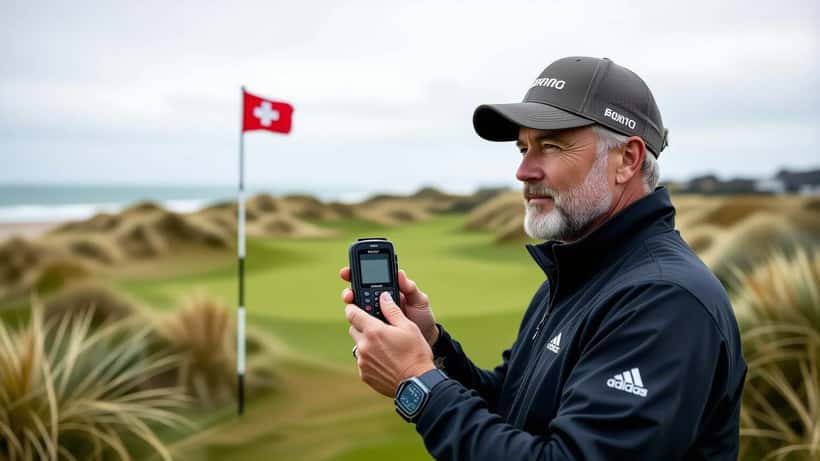
A laser rangefinder measures the exact distance to the flag by bouncing an invisible beam off the target. Most consumer models are accurate to within a metre and now include slope adjustment and a stabilising feature to hold steady on the pin. A GPS watch or handset takes a different approach, pulling pre-mapped course data to show distances to the front, middle and back of the green without you aiming at anything.
Higher up the spending ladder sit portable launch monitors, which use radar or camera systems to measure club-head speed, ball speed, spin and carry distance. Once a fitting-studio luxury, compact units now sell to keen amateurs who want to practise with real numbers at the range or in a garage net.
What the pros are allowed to use — and what you are
There is a common myth that distance-measuring devices are banned in serious golf. In fact, the Rules of Golf were changed in 2019 so that rangefinders are permitted by default, and many amateur competitions in Australia now allow them. The catch is the slope function: any device that measures elevation change must have that feature switched off during a round played under the rules, or you risk disqualification.
The touring professionals at The Open sit under stricter tournament conditions and rely on caddies with detailed yardage books rather than lasers during play. That distinction matters for buyers. You do not need a professional-grade device to play within the rules at your local club — you need one whose slope feature can be disabled, and you need to know your club's competition policy before you use it.
Matching the gadget to your actual game
The honest answer from a consumer electronics adviser is that the right device depends on how you play, not on what the leaderboard is using.
If you already know your carry distances and simply want a precise number to the flag, a rangefinder rewards you. If you struggle to judge hazards, doglegs and green depth on unfamiliar courses, a GPS watch that maps the whole hole is often more useful and far quicker to read while walking. A launch monitor only pays off if you are willing to practise deliberately with the data; bought on Open-week enthusiasm and left in a cupboard, it is an expensive paperweight.
Battery life, screen readability in bright sunlight and how the device pairs with a phone app all separate a good buy from a frustrating one. Water resistance matters more than most buyers expect, given how often an Australian round meets an afternoon shower or a dew-soaked early start.
Protect the purchase, not just the swing
A rangefinder or launch monitor is a significant outlay, and the consumer protections around it are stronger than many golfers realise. Under Australian Consumer Law, electronics sold here come with automatic consumer guarantees: the product must be of acceptable quality, fit for its stated purpose and match its description, regardless of any separate manufacturer warranty. The Australian Competition and Consumer Commission explains these rights in detail on its consumer guarantees page.
In practice, that means a rangefinder that will not hold a reading, or a GPS watch whose display fails within months, can entitle you to a repair, replacement or refund even after a short manufacturer warranty has lapsed. Keep your receipt, note the fault clearly, and raise it with the retailer rather than the overseas maker. Buying from a grey-market overseas seller to save money often forfeits this protection, because the guarantees attach to goods supplied in Australia.
When to ask an expert before you buy
Golf technology has become a genuine category of consumer electronics, with the same trade-offs around compatibility, firmware updates, app subscriptions and repairability as any smartwatch or camera. That complexity is exactly where independent advice earns its keep.
Before committing several hundred — or several thousand — dollars in the Open-week rush, it is worth a short conversation with a consumer electronics specialist who can match a device to your budget, your course conditions and your appetite for data. An expert can flag which features you will genuinely use, which subscriptions add ongoing cost, and which models have a track record for reliability rather than marketing gloss.
The professionals at Royal Birkdale spent years earning their place on the leaderboard. For the rest of us, the smarter play this Open week is not to buy the flashiest gadget on the shelf, but to buy the one that fits how we actually play — and to know our rights when it arrives.
