 Liam Ryan
Switzerland's Breel Embolo opened the scoring inside 11 minutes on July 3, 2026, as the Swiss dismantled Algeria 2-0 in a commanding Round of 32 performance at BC Place, Vancouver. Johan Manzambi added a second to seal the result, sending the Swiss into the quarter-finals — and delivering one of the most-streamed sporting moments of the year for Australian fans watching via SBS On Demand.
For many households across Australia, the match also doubled as a live stress test for their home streaming setups. With Optus Sport no longer holding FIFA rights and every one of the 104 World Cup 2026 matches now streaming free on SBS On Demand, the question has shifted: is your living room actually equipped to keep up?
SBS On Demand and the WC2026 Shift Every Australian Fan Needs to Know
The biggest change heading into this World Cup was that SBS, not Optus Sport, holds exclusive broadcast rights to FIFA World Cup 2026 in Australia. That means all 104 matches are completely free — on Channel 3 (SBS) and Channel 31 (SBS VICELAND) via free-to-air TV, or through the SBS On Demand app on smart TVs, phones, tablets and browsers.
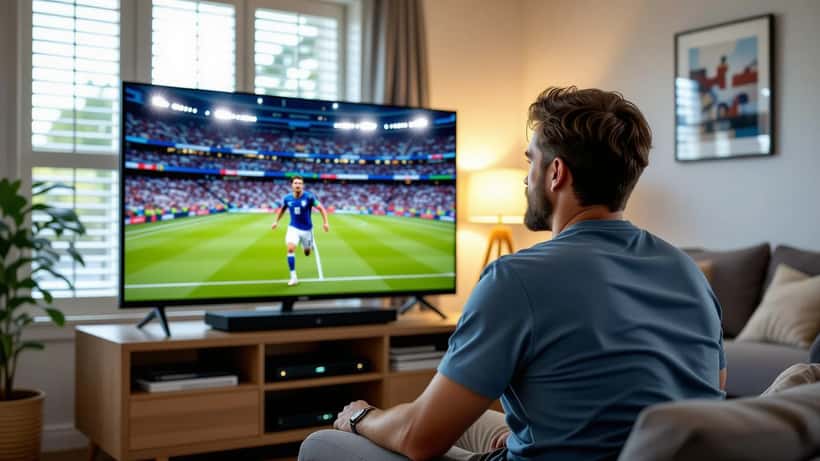
The catch? Streaming a live sporting event in HD or 4K places far greater demand on your home network and devices than watching a pre-recorded show. When Embolo's shot hit the back of the net, millions of Australians were hitting refresh at exactly the same moment. If your stream froze, buffered, or dropped to a blurry low-resolution image during that 11th minute, your setup likely has a bottleneck worth fixing before the next round.
What Internet Speed Do You Actually Need for WC2026 Streaming?
SBS On Demand recommends a minimum of 3 Mbps for standard definition, 5 Mbps for HD streaming, and 25 Mbps for a stable 4K stream — though in practice, with multiple devices active in the household, you want headroom above that.
According to NBN Co's speed tier guidance at nbnco.com.au, an NBN 25 plan (25 Mbps download) is the minimum recommended for HD video on a single device, while NBN 50 or NBN 100 plans provide a noticeably better buffer-free experience for simultaneous streaming across multiple screens.
Key culprits behind streaming dropouts during live sport:
- Wi-Fi congestion: A 2.4 GHz signal shared with neighbours during a World Cup peak period can throttle your speed significantly. Switching your smart TV or streaming stick to the 5 GHz band — or better yet, a wired ethernet connection — can eliminate buffering entirely.
- Router placement: A router tucked behind a TV cabinet or in a cupboard can lose 30–50% of its effective signal before it reaches the device.
- Peak-time throttling: Some ISPs reduce speeds during high-traffic hours (7pm–11pm). If you noticed your Switzerland vs Algeria stream degrading in the second half, this is a likely cause worth raising with your provider.
Smart TV vs Streaming Stick vs Phone: Which Wins for WC2026?
Not all streaming devices handle live sport equally. Here is how the main options compare for watching World Cup matches on SBS On Demand:
Smart TV (built-in apps): Most modern smart TVs running Tizen (Samsung), WebOS (LG) or Android TV support the SBS On Demand app. Older models — particularly those from 2019 or earlier — may run an outdated version of the app that lacks support for the latest adaptive bitrate streaming protocols, leading to quality issues the hardware itself can't fix.
Streaming sticks (Google Chromecast, Apple TV, Amazon Fire Stick): A 4th-generation Apple TV or Google TV Chromecast with 4K output will typically outperform a mid-range smart TV's built-in processor when it comes to buffer management during live events. These are relatively inexpensive upgrades that can transform a laggy viewing experience on a 2018 smart TV.
Phones and tablets: Fine for highlights, but for live sport lasting 90-plus minutes, sustained brightness, small screen sizes and the risk of a call interrupting the stream make mobile viewing a second-tier option for dedicated fans.
Gaming consoles (PlayStation 5, Xbox Series X): Both support the SBS app and deliver fast load times with strong adaptive streaming. If you already own one, this is often the best streaming client in the household.
Sound Matters: Why Your Audio Setup Changes the Match Experience
Stadium atmosphere is half of what makes watching a World Cup match compelling. The roar when Embolo scored, the crowd noise building through the second half — these are largely lost if you're relying on the built-in speakers of a thin OLED or QLED panel.
A soundbar with a dedicated subwoofer (available at most price points from $300 to $2,000+) delivers a meaningfully different experience for live sport compared to TV speakers, which are typically rated at 10–20 watts and lack low-frequency response. For most Australian living rooms, a mid-range soundbar connected via HDMI ARC is the single highest-impact audio upgrade available.
If you're in a shared apartment or have neighbours in close proximity, headphones connected via Bluetooth or a 3.5mm adapter on your streaming device can preserve the sound quality without the volume complaints.
Upgrading Before the Next Round: When to Call a Consumer Electronics Expert
Many Australian fans find themselves attempting DIY fixes — factory resets, app reinstalls, router reboots — without addressing the underlying issue. A consumer electronics technician can diagnose whether a buffering problem stems from the device, the home network, the ISP plan, or the cabling inside your home.
Switzerland's run at WC2026 is not over. The same is true for Spain, Portugal, Germany and the other contenders still in the draw. With knockout football producing some of the most tense and unpredictable moments in sport, a frozen screen at the wrong second is more than a minor inconvenience — it's a missed experience you cannot rewatch with the same feeling.
As further coverage of the WC2026 from an Australian data and technology angle at Expert Zoom, the analytics revolution is transforming how matches like Switzerland vs Algeria are won. A reliable stream means you can watch that revolution unfold in real time.
If your home viewing setup is due for an assessment — whether it's choosing the right streaming device, diagnosing slow NBN speeds, or selecting a soundbar that works with your current TV — a consumer electronics specialist can give you tailored advice matched to your household's specific configuration and budget.
World Cup 2026 has 104 matches. Switzerland vs Algeria was one of the better ones. Make sure the next great match arrives in your living room the way it deserves to.
