 Sarah Thompson
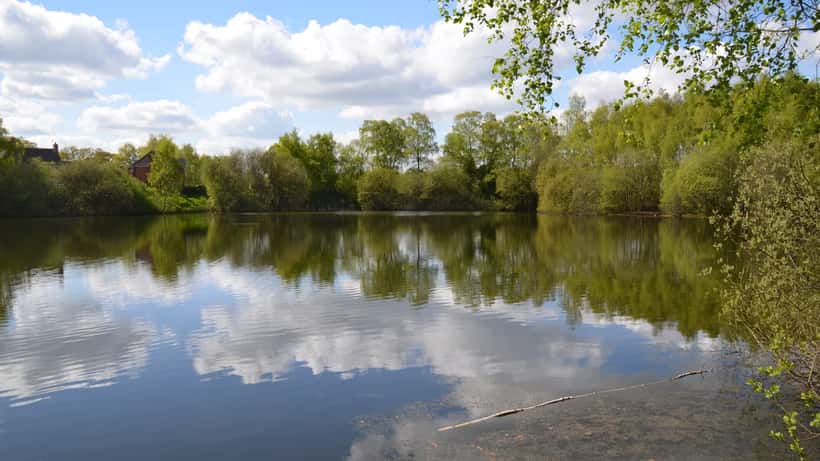
On 24 May 2026, Declan Sawyer — a 15-year-old boy — entered the water at Swanholme Lakes, a nature reserve in Lincoln, England. He did not come out. Emergency services, including specialist underwater search teams, responded to the scene. The following day, his body was recovered from the lake. Lincolnshire Police extended their condolences to Declan's family and friends.
The news travelled quickly across the internet. In Australia, where open water tragedies are an annual reality — 357 Australians drowned in 2024–25 alone, a 27% rise on the ten-year average — families are once again asking questions that rarely get answered until it is too late: who is responsible for safety at public waterways, what legal obligations do councils carry, and what rights does a family have when something goes wrong?
The Scale of Open Water Drowning in Australia
Australia's drowning toll does not come from the ocean alone. Rivers, lakes, dams, and reservoirs account for a significant share of annual fatalities. Young males aged 15 to 29 are consistently over-represented in drowning statistics — a pattern that mirrors the Swanholme Lakes tragedy almost exactly.
The Australian Water Safety Council's Strategy 2030 sets a target of reducing drowning deaths by 50% by the end of this decade. It identifies three national priorities: improving swimming and water safety skills, localising safety efforts for high-risk communities, and strengthening coordination between councils, land managers, and emergency services.
Progress is real but uneven. While some local governments have invested in signage, fencing, safety equipment, and education programs at public waterways, others have not. And for families who live near rivers, lakes, or reservoirs frequented by young people, the question of what their council is actually required to do — under law, not just policy — is often unclear.
What Australian Law Requires at Public Waterways
Under Australian negligence law, the duty of care owed by a land manager — including a local council — to a person using public land is governed by general principles drawn from tort law and, in some states, specific civil liability legislation such as the Civil Liability Act 2002 (NSW) and equivalent statutes.
The standard is not a guarantee of safety. Councils are not automatically liable every time someone drowns at a public lake. What the law requires is that the land manager take reasonable steps to prevent a foreseeable harm. The question of what is "reasonable" depends on a range of factors, including:
- Whether the waterway is known to be dangerous (depth, currents, underwater hazards)
- Whether previous incidents have occurred at the site
- Whether adequate warning signs are in place
- Whether the site is fenced or access is restricted where appropriate
- Whether the site attracts unsupervised young people
Where a council knows — or should know — that a waterway poses a serious risk, and fails to take reasonable action, liability can follow. Several Australian cases have established this principle, particularly where local councils have been on notice about hazardous conditions and failed to respond.
Signs, Barriers, and Supervision: The Practical Obligations
In practice, the minimum expected safety measures at a public waterway typically include clearly visible "no swimming" or hazard warning signs where swimming is dangerous, physical barriers where feasible, and regular inspection of the site.
Where a council actively promotes a waterway as a recreation site — installing picnic facilities, walking paths, or other amenities that attract visitors — the duty of care may be higher, because the council is effectively inviting the public onto the land and implicitly representing that it is reasonably safe for recreational use.
This distinction matters enormously in personal injury claims. A lake with no amenities and a clear "dangerous water" sign sits in a very different legal position to a popular recreation area where families regularly gather and children routinely swim without signage discouraging them.
If a Loved One Is Harmed at a Public Waterway: Your Options
For families whose loved ones are seriously injured or killed at a public waterway in Australia, several legal pathways are potentially available:
Negligence claims against the land manager: If the council or land manager failed in their duty of care, a claim in negligence may be available. These cases are fact-specific and require expert assessment of what the land manager knew, what they did, and whether a reasonable authority would have acted differently.
Coronial investigations: In cases of drowning death, a coroner's investigation is typically mandatory. Coronial findings can make recommendations about site safety, and in some cases attribute systemic failures to land managers. While not legally binding, these findings carry significant weight.
Statutory compensation: Depending on the state, workers' compensation or other statutory schemes may not apply to recreational drowning victims. Personal injury claims through the civil courts remain the primary avenue.
A lawyer specialising in personal injury or public liability can assess the specific facts of an incident and advise on whether a viable claim exists, what evidence would be needed, and what the realistic timeline and outcomes look like.
What Families Can Do Before Something Goes Wrong
The tragedy at Swanholme Lakes is a stark reminder that open water carries serious risks, particularly for teenagers whose confidence in the water may outpace their actual capability. The Royal Life Saving Society of Australia recommends that all young Australians learn basic water safety: never swim alone, never enter unfamiliar water without checking depth and hazards, and always tell someone where you are going.
At a community level, families can report unsafe conditions at local waterways to their council. If a site lacks adequate signage, has known underwater hazards, or regularly attracts unsupervised swimmers in dangerous conditions, a formal written report to the council can create a record that is legally significant if an incident later occurs.
For questions about a specific waterway's legal status, the conditions of access, or whether a council has met its obligations, a qualified lawyer can provide a rapid assessment — often in a single consultation.
According to the Australian Water Safety Strategy 2030, water safety is a shared responsibility. But when shared responsibility breaks down, the law provides remedies — and knowing those remedies before tragedy strikes is far better than discovering them after.
