 Andrew Thompson
When Nine Entertainment terminated Karl Stefanovic's contract immediately after he conducted a podcast interview with British far-right activist Tommy Robinson, it sent shockwaves through Australia's media industry — and raised a question every Australian worker should be asking: can your employer legally fire you for what you do outside of work?
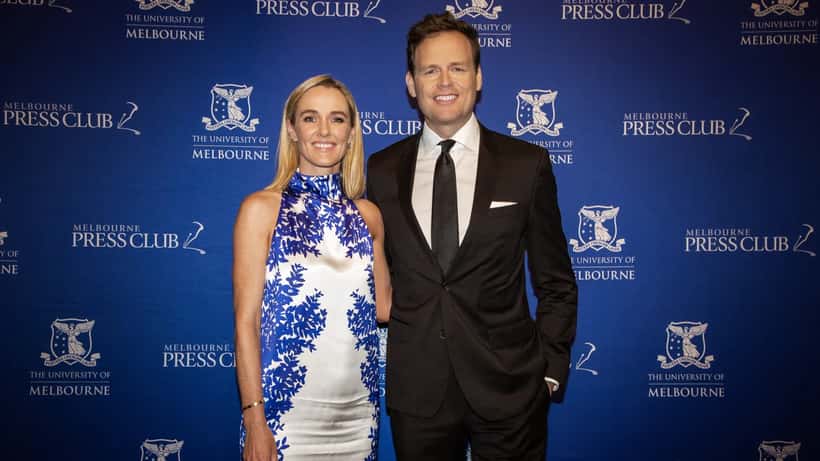
The answer arrived on the morning of September 17, 2026, when Sylvia Jeffreys and Tom Steinfort were confirmed live on air as Today's new permanent co-hosts — just 24 hours after Sarah Abo announced her departure from Nine. The reshuffle marks one of the most significant resets in Australian breakfast television history, and the circumstances surrounding Stefanovic's exit make it one of the most instructive employment cases of the year.
What Happened at Today — and Why It Matters Beyond TV
Karl Stefanovic, who had co-hosted Today for years, was ejected from Nine in September 2026 following an episode of his independent podcast, The Karl Stefanovic Show, in which he interviewed Tommy Robinson. Nine Entertainment concluded that Stefanovic could no longer continue hosting Today while simultaneously operating his independent podcast, accelerating an already-planned exit into an immediate termination. He was subsequently dismissed from his Australian Radio Network contract as well — two dismissals within a single week.
Stefanovic responded publicly, framing the split as a stand for editorial independence. Meanwhile, Sylvia Jeffreys — who spent nearly 15 years in various capacities with Today — described her return to the anchor chair as "a natural progression," while an enthusiastic Tom Steinfort admitted: "I never thought I'd be this pumped to be getting up at 3am every day." Belinda Russell moves to Today Extra alongside David Campbell as part of the wider reshuffle.
For the estimated 13.4 million Australians in employment as of mid-2026, according to the Australian Bureau of Statistics, Stefanovic's case raises urgent and practical questions about the line between professional life and personal expression.
Can Your Employer Fire You for What You Do Outside Work?
In Australia, the question of whether an employer can lawfully terminate you for outside-work conduct is not straightforward — which is precisely why it matters so much.
Under the Fair Work Act 2009, a dismissal is considered unfair if it is "harsh, unjust or unreasonable." However, the Fair Work Commission has consistently upheld terminations where an employee's conduct outside working hours:
- Causes a demonstrated reputational risk to the employer or its brand
- Creates an actual or potential conflict of interest with the employment relationship
- Breaches an explicit contractual clause — such as an exclusivity agreement, a media personality clause, or an independent commercial activities policy
- Undermines trust and confidence in the employment relationship in a measurable way
In Stefanovic's case, Nine reportedly cited the conflict between his independent podcast and his obligations to the Network. High-profile media employees almost universally operate under exclusivity or conflict-of-interest provisions that govern what they can do commercially outside their primary employer. But these protections — and pitfalls — are by no means limited to television presenters. They appear in employment contracts at every seniority level, including roles well outside the public eye.
According to the Fair Work Ombudsman, Australian employees have a general right to engage in lawful activities outside of work. But that right is not absolute. Employment contracts frequently include restraint-of-trade clauses, exclusivity provisions, social media conduct standards, and reputational obligations that can legally override an employee's general freedom to pursue outside activities.
The Side-Hustle Risk: What a Real Scenario Looks Like
Consider the situation of a 42-year-old operations manager at a national logistics company in Sydney — let's call her Anya — who launches a public YouTube channel in mid-2026. The channel offers commentary on supply chain practices and, over six months, builds an audience of around 30,000 subscribers. Anya's contract contains a standard "no-compete" clause and a provision requiring her not to engage in activities that "could reasonably be perceived as damaging to the company's reputation or commercial interests."
In September 2026, a video in which she critiques industry pricing practices attracts 45,000 views in 72 hours and is shared by a direct competitor. Her employer calls her in.
If her contract explicitly prohibits competing commercial activities — and the YouTube channel generates revenue or positions her as a public expert in the same industry — her employer potentially has grounds to issue a formal warning and demand she cease the activity immediately, terminate her employment for breach of contract without redundancy pay (since this is conduct-based, not a structural role elimination), or pursue civil action for breach of the restraint clause if she ignores the cease-and-desist.
If her contract contains no such clause, the employer's legal position is far weaker. They would need to demonstrate that the channel's content demonstrably damaged the business — a significantly higher evidentiary bar. In that scenario, Anya would likely be entitled to the full unfair dismissal process, including the 21-day window to lodge a claim with the Fair Work Commission if terminated.
The difference between those two scenarios — the presence or absence of a single contractual clause — can mean the difference between lawful termination and a potential compensation payment of up to 26 weeks' salary. That figure is the maximum compensatory amount the Fair Work Commission can award in an unfair dismissal claim as of 2026.
What Every Australian Worker Should Know Before They Post, Podcast, or Start a Side Business
The Stefanovic case reveals how quickly an employment situation can escalate when an employee's public activities outside work draw their employer's attention. Whether you run a podcast, a social media profile, a consulting practice, or a side business selling products in a competitive market, Australian workers in 2026 are navigating a landscape where the personal and professional are increasingly difficult to separate.
Your employment contract governs more than your job description. Most workers sign contracts without closely reading restraint-of-trade, exclusivity, or social media conduct clauses. These provisions are legally enforceable in Australian courts and can significantly curtail your outside-work freedoms — even after you leave the employer, for a defined restraint period.
"Reputational damage" is a subjective standard with objective consequences. Courts and the Fair Work Commission assess whether reputational damage was actual or reasonably foreseeable — not merely alleged by an employer. Employees have successfully defended terminations by demonstrating no concrete harm occurred. Expert legal advice early in a dispute can define which side of that line you're on.
Summary dismissal requires serious misconduct. An employee terminated immediately — as Stefanovic was — rather than with notice may have grounds to claim payment in lieu of notice under their contract. In Australia, summary dismissal without notice requires a finding of serious misconduct: conduct that causes imminent risk to health, safety, or the business's reputation. Courts apply this standard rigorously.
The 21-day clock starts the moment you're dismissed. If you believe your dismissal was unfair or unlawful, you must lodge an application with the Fair Work Commission within 21 days of the dismissal taking effect. Missing that window almost invariably extinguishes your right to claim.
Casual and part-time workers are not exempt. Enforceable conduct and exclusivity clauses appear in employment agreements at every seniority level. The assumption that outside-work conduct policies only apply to executives or public-facing roles is a common and costly misconception.
When to Seek Professional Legal Advice
The smooth handover at Today — with Jeffreys and Steinfort stepping confidently into their new roles — belies the legal and contractual complexity that preceded it. For the employees involved, those behind-the-scenes negotiations involved precisely the kind of employment law expertise that a specialist lawyer provides.
For Australian workers facing dismissal, concerned about outside-work activities, or weighing whether to launch an independent side business, the most important step is seeking early legal advice — before receiving a termination notice, not after. A specialist employment lawyer can review your contract to identify exposure, assess whether your employer's actions are lawful, advise on your entitlements, and represent you in Fair Work proceedings if required.
The Fair Work Ombudsman's website at fairwork.gov.au provides free, accessible guidance on termination entitlements, unfair dismissal thresholds, and the claims process — a valuable first step for any Australian worker seeking to understand their baseline rights.
For advice specific to your contract, industry, and circumstances, a consultation with an experienced employment lawyer can make the difference between an outcome you accept and one you actually deserve.
Legal disclaimer: This article provides general information only and does not constitute legal advice. Employment law outcomes depend on individual facts and contractual arrangements. Consult a qualified Australian legal professional for advice specific to your situation.
