 Isla Henderson
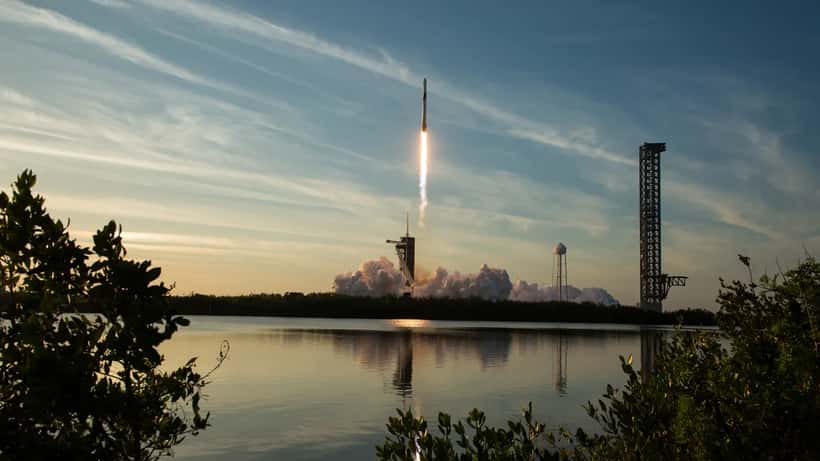
SpaceX began trading today on the Nasdaq under the ticker SPCX, completing the largest initial public offering in stock market history — and for tens of thousands of Australian retail investors who applied for shares, today marks either an exciting entry point or the beginning of a costly lesson in IPO hype.
The company priced its shares at US$135, raised US$75 billion selling 555.6 million shares, and opened at a valuation of US$1.77 trillion — instantly making it one of the ten largest listed companies on Earth. Elon Musk and CEO Gwynne Shotwell rang the opening bell in both New York and Texas to mark the occasion.
For Australian investors, trading commences on 13 June 2026 (AEST) through approved retail brokers including Sharesies. The IPO was almost four times oversubscribed, drawing more than US$250 billion in investor demand.
But before you place your order, four significant risks demand a wealth adviser's attention.
The Biggest IPO in History — With the Biggest Valuation Premium
At US$135 per share, SpaceX is valued at US$1.77 trillion, making it worth more than Tesla, JPMorgan and Berkshire Hathaway. For that price, you are paying approximately 94 times trailing revenue.
Morningstar's equity research team put a fair value of roughly US$65 per share on SpaceX — less than half the IPO price. According to CNBC, Morningstar's lead analyst argued that "the smart investors will wait out the hype and buy later" and described the current valuation as embedding assumptions about future revenue growth that have never been commercially proven at scale.
Investment analysis firm GuruFocus described the IPO as containing "stratospheric risk" given the combination of high valuation, heavy capital requirements, and an unprofitable financial profile.
SpaceX Is Not Profitable
Despite its profile and the excitement around Starlink, SpaceX reported a net loss of US$4.95 billion in 2025. In the first quarter of 2026 alone, the company recorded a net loss of US$4.3 billion, partly driven by heavy AI and orbital infrastructure spending.
Starlink satellite internet revenue did grow approximately 50 per cent year-on-year, and the company's launch business is operationally impressive. But for a company valued at US$1.77 trillion, profitability is not a near-term story — it is a long-term bet.
For Australian retail investors used to evaluating companies on price-to-earnings multiples, SpaceX requires a different framework entirely. This is where a licensed financial adviser can add genuine value: helping you understand what growth rate, at what margin, over what timeline, is required to justify buying in at today's price.
Governance: Musk Controls 85% of Votes
SpaceX's prospectus discloses that Elon Musk will retain approximately 85 per cent of the voting rights in the company through its dual-class share structure. Public shareholders — including Australians buying at the retail offer price — receive economic exposure to SpaceX's performance but essentially no ability to influence the company's direction.
In practical terms: if Musk decides to redirect SpaceX resources toward Mars colonisation at the expense of Starlink profitability, or if a governance crisis emerges involving his personal conduct or competing business interests, minority shareholders have no meaningful mechanism to resist.
Al Jazeera's analysis noted that Musk's concentration of voting power could be "highly undesirable" for institutional investors who require board accountability. For retail investors in Australia, this governance structure means you are not really a co-owner in any meaningful sense — you are a spectator with financial exposure.
Execution Risks Are Real and Multi-Front
SpaceX is simultaneously trying to scale three distinct businesses: Starlink satellite internet, commercial and government rocket launches, and Starship, its next-generation deep-space vehicle. Each carries significant execution risk.
According to ASIC's MoneySmart investor guidance, investing in an IPO is considered higher risk than investing in established companies because the company has no track record as a listed entity. Price volatility in the days and weeks after listing is common, and first-day buyers often pay a significant premium over where the stock settles once institutional and retail sentiment normalises.
SpaceX perpetual contracts were trading at approximately US$176 on derivative exchanges on Friday — about 30 per cent above the IPO price — reflecting speculative demand ahead of the listing. Whether that premium holds, narrows, or reverses on the first week of trading is genuinely unknowable.
What a Wealth Adviser Can Help You Decide
None of this means SpaceX is a bad investment. It means it is a complex one, with a risk profile that differs materially from buying an ASX index fund, a blue-chip dividend stock, or even a high-growth tech ETF.
A licensed financial adviser can help you answer the questions that matter:
What percentage of your total portfolio should be allocated to a single, unprofitable, governance-challenged high-growth stock? How does buying SpaceX at US$135 compare to the Betashares Global Space ETF or a US tech broad market fund for similar exposure with less concentration risk? At what price point — if any — does SpaceX represent reasonable value against your personal financial goals?
Tens of thousands of Australians applied for SPCX shares in the retail tranche. Some will have received scaled-back allocations due to the oversubscription. For those who did receive shares, today's trading data will show how the market is pricing in those four risks in real time.
For those still deciding whether to buy on the open market from 13 June — this is precisely the kind of decision a wealth management expert exists to help you make with clear eyes.
See also: Nasdaq's 4% Slide: What Australian Super Investors Can Learn
