 Andrew Thompson
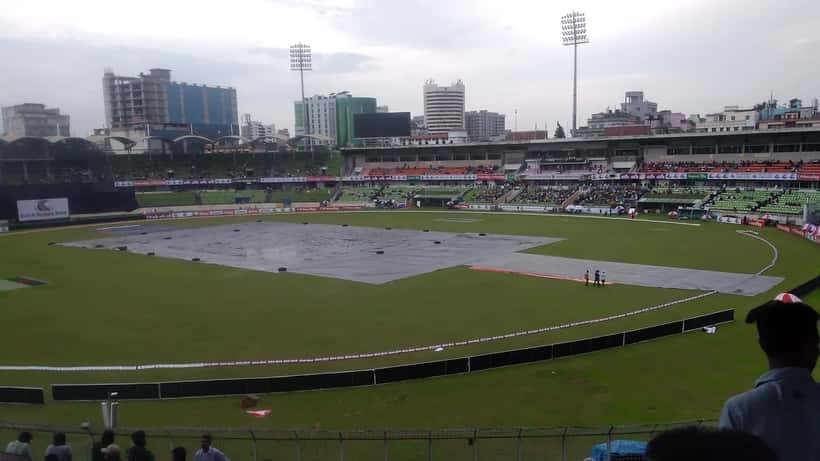
The quarterfinal between Sri Lanka and Nepal at the Asian Games 2026 never produced a single ball on 29 September 2026. Heavy rain at Korogi Sports Park in Nisshin, Japan, saw the match abandoned without a toss, with Sri Lanka advancing to the semifinals solely on the strength of their ICC T20I rankings. They will face India on 1 October. For the thousands of Australians who had wagers riding on this match, the question is no longer who won — it is whether they get their money back, and what the law actually says about it.
What Happened at the Nisshin Cricket Ground
The Asian Games 2026 cricket competition has been battered by wet weather across Aichi Prefecture, Japan. Sri Lanka and Nepal were scheduled to contest their T20I quarterfinal on Tuesday 29 September, but persistent rain through the morning and afternoon made play impossible at Korogi Sports Park. Not a single delivery was bowled, and no toss was conducted.
Under ICC tournament rules, no toss means no official on-field result. Nepal's elimination was therefore determined by the teams' respective ICC T20I rankings, not by anything that occurred in the middle. Sri Lanka, ranked significantly higher than Nepal in the T20I standings, advanced automatically to face India in the second semifinal on 1 October 2026.
This is the second time these two sides have failed to complete a scheduled fixture. Their 2024 T20 World Cup encounter was also abandoned without play, according to ESPN Cricinfo. For Nepal — sitting at number 17 in the ICC T20I rankings as of September 2026 — this exit carries particular weight: a legitimate contest against a higher-ranked nation that never materialised, twice.
For cricket fans in Australia, where the game enjoys deep cultural roots and enormous betting interest, the abandonment raises immediate practical questions about wagering rights.
Why Australian Bettors Are Watching This Closely
Australia is one of the world's most active sports wagering markets. According to the Australian Communications and Media Authority (ACMA), Australians collectively wagered in excess of $8 billion on sports during the 2025–26 financial year, with T20 cricket accounting for a growing share of that total. ICC-sanctioned events — including the Asian Games cricket competition — attract significant pre-match and in-play betting, particularly through multi-leg accumulator bets that amplify potential returns.
The SL vs NEP quarterfinal was widely included as a "leg" in multi-bet combinations precisely because it looked like a one-sided result on paper: Sri Lanka were strong favourites. A single abandoned match does not just void one bet. It cascades across thousands of accumulators, raising genuine questions about how Australian bookmakers are legally obliged to treat their customers when cricket is washed out.
That is where a sports and gaming lawyer becomes more than just useful — they become essential.
What Australian Law Actually Requires of Bookmakers
Under the Interactive Gambling Act 2001 (Cth), licensed Australian wagering providers — Sportsbet, TAB, Ladbrokes, Bet365, and others — must operate in compliance with their own published terms and conditions, which are in turn subject to the Australian Consumer Law (ACL). Unconscionable or misleading conduct in the application of those terms can expose a bookmaker to regulatory action and customer compensation claims.
The industry standard for abandoned matches is that stakes are voided and returned. However, the way bookmakers apply this principle is far from uniform, and the language in product disclosure statements (PDS) often gives operators significant discretion. Key distinctions that a lawyer will immediately identify:
- Pre-match head-to-head bets: If you wagered on Sri Lanka or Nepal to win and no official on-field result was declared, your stake must be refunded in full. Most Australian bookmakers will process this automatically.
- Tournament outright bets: If you backed Sri Lanka to win the Asian Games tournament — not just this match — your bet remains active. Sri Lanka is still in the competition.
- Multi-bet legs: If the SL vs NEP match was one leg in a multi-bet, most bookmakers void that leg and recalculate the multi using the remaining legs. Your potential payout decreases, but your stake is preserved.
- Same-game multi (SGM): If your entire bet was within the SL vs NEP fixture — top scorer, total runs, match winner — the whole SGM is typically voided and your stake returned.
The complication arises when bookmakers either delay refunds, apply "weather-affected event" clauses inconsistently, or — in a scenario specific to this match — interpret Sri Lanka's ranking-based "advancement" as a declared result rather than a void. If a bookmaker declares a result in the absence of any play, that interpretation requires clear, prior disclosure in their PDS to be enforceable.
Case Study: The $250 Multi-Bet — What Actually Happens to Your Payout
Consider this scenario, which reflects a common structure among Australian cricket bettors during Asian Games week:
On 28 September 2026, you placed a four-leg multi-bet:
- Leg 1: Sri Lanka to beat Nepal — odds $1.40
- Leg 2: India to beat Pakistan in a separate group fixture — odds $1.60
- Leg 3: Japan to beat Bangladesh — odds $2.20
- Leg 4: South Korea to beat Afghanistan — odds $2.80
Total multi-bet odds: $1.40 × $1.60 × $2.20 × $2.80 = approximately $13.80. On a $250 stake, your potential payout was $3,450.
Because Leg 1 (SL vs NEP) was abandoned and declared void, the remaining three legs are recalculated. Your revised multi-bet odds become $1.60 × $2.20 × $2.80 = approximately $9.86. Your potential payout drops to around $2,464 — a reduction of $986 — but your $250 stake continues in the live multi.
The critical if/then: If Legs 2, 3, and 4 all win, you receive $2,464. However, if your bookmaker instead voids your entire multi on the basis that the SL vs NEP abandonment somehow triggers a broader "tournament result" clause, you receive only your $250 stake back — and you have a legitimate consumer law complaint. Under the ACL, terms applied inconsistently or without clear prior disclosure may constitute an unfair contract term, particularly where the customer had no reasonable means of anticipating that interpretation when they placed their bet.
A 30-minute consultation with a sports and gaming lawyer — available through ExpertZoom — is often enough to determine whether a bookmaker's position holds up legally, and to draft a dispute letter that bookmakers take seriously before matters escalate.
What to Do Right Now If You Had a Bet on This Match
Screenshot everything immediately. Capture your bet slip, the bookmaker's confirmation email, and their current terms and conditions page. These documents can be updated by operators, and timestamped evidence is critical if you later need to dispute a decision with the bookmaker or with the Australian Financial Complaints Authority (AFCA).
Check for a refund within 24 hours. Most Australian bookmakers process abandoned-match voids within a few hours. If your account balance has not been updated by end of business on 30 September 2026, contact customer service and request a formal written explanation citing the specific PDS clause they are relying on.
Understand the "ICC result" distinction. Sri Lanka technically "advanced" in the tournament, which some operators may interpret as a match outcome. Ask your bookmaker to identify the precise clause in their PDS that permits this. A declared result where no ball was bowled is legally tenuous and has been successfully challenged in Australian consumer tribunals in analogous scenarios.
Escalate if needed. If your bookmaker refuses to refund or applies their terms unreasonably, you can lodge a complaint with AFCA, which handles sports wagering disputes under its expanded mandate from 2025 onwards. No ball bowled, no legitimate result — this is a principle most regulators will uphold.
Consult a specialist if the sum is significant. For disputed amounts above $300–$500, a consultation with a gaming and consumer law specialist can clarify your rights, identify any applicable ACL protections, and draft a dispute notice that often resolves matters before they reach AFCA. ExpertZoom connects you with verified legal experts who specialise in consumer rights and sports wagering disputes across Australia.
The rain in Nisshin has already cost Nepal a legitimate shot at an Asian Games cricket semifinal. It should not also cost Australian bettors money that consumer law entitles them to recover.
Disclaimer: This article is for general informational purposes only and does not constitute legal advice. For advice specific to your individual circumstances, consult a qualified legal professional.
