 Chloe Wilson
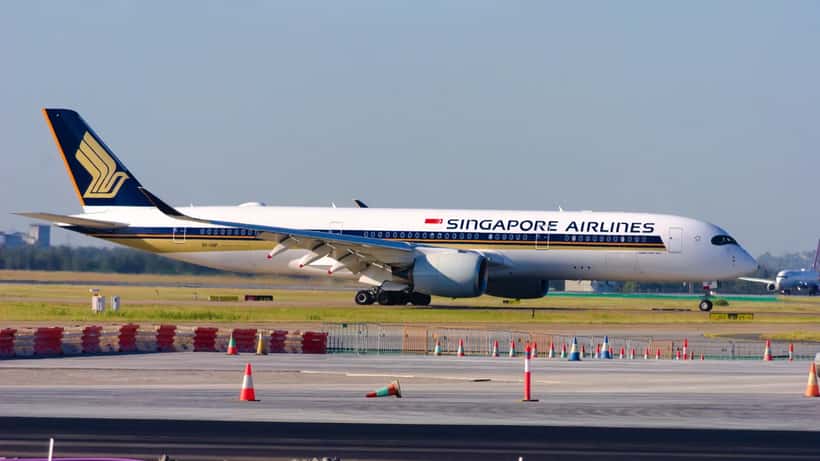
Singapore's aviation authority classified turbulence as a top national safety risk in its 2026 annual report — a move triggered in part by the ongoing scrutiny of Singapore Airlines following its deadly SQ321 incident and a string of crew injuries in 2025. But while turbulence commands the headlines, Australian travel medicine specialists point to a quieter health risk that kills far more passengers every year: the blood clot that forms silently in economy class and strikes hours after landing.
What the 2026 Safety Reports Actually Found
Singapore Airlines has faced sustained regulatory scrutiny since May 2024, when Flight SQ321 from London to Singapore struck severe turbulence over Myanmar, killing one passenger and injuring 79 others. Singapore's Transport Safety Investigation Bureau (TSIB) released its final report in May 2026, concluding that the Boeing 777-300ER's weather radar "probably wasn't working" at the time of the encounter — a finding that prompted industry-wide reviews of weather avoidance protocols.
In July 2026, TSIB published findings on two further incidents from June 2025, involving Singapore Airlines and its subsidiary Scoot. A Scoot Boeing 787-8 encountered severe turbulence over the South China Sea; separately, an SIA Airbus A350-900 hit turbulence while descending into Shanghai. Combined, the two incidents injured eight cabin crew members, including one crew member who suffered a fractured ankle. Singapore's Civil Aviation Authority has since formally listed turbulence as a key aviation safety priority in its national risk framework.
For Australians — who collectively take hundreds of thousands of Singapore Airlines flights each year, primarily via Changi on routes to Europe and Asia — the reports are a prompt to think more carefully about flight health. Singapore is Australia's fourth-largest inbound aviation market. The Sydney–Singapore leg alone runs to 8 hours 20 minutes.
The Health Risk That Doesn't Make the News
Turbulence injuries are dramatic. Deep vein thrombosis (DVT) is not — but it is statistically far more likely to harm an Australian long-haul passenger.
DVT occurs when blood clots form in the deep veins of the legs during extended immobility. On flights exceeding four hours, a combination of reduced cabin pressure, low humidity, restricted legroom, and sustained sitting slows venous blood return from the lower limbs. A clot that travels from the leg to the lungs becomes a pulmonary embolism (PE) — a life-threatening emergency that can develop mid-flight or in the days after landing.
According to Australian Prescriber, the peer-reviewed publication of Australia's National Prescribing Service, the absolute risk of a clinically significant DVT on a single long-haul flight is approximately 1 in 4,500 to 1 in 6,000 flights. That figure climbs sharply for passengers with pre-existing risk factors. Approximately 30,000 Australians develop DVT each year, and blood clots account for an estimated 10% of all Australian deaths — with up to 70% of those deaths considered preventable with appropriate early intervention.
The Singapore Airlines routes popular with Australians are among the longest operated by any commercial airline. The Melbourne–Singapore–London itinerary, for example, involves more than 21 hours of airborne time across two segments — both well above the four-hour clinical threshold.
Who Carries the Highest Risk at Altitude
Not every passenger faces the same level of DVT exposure. Medical literature identifies several factors that substantially elevate risk on long-haul flights:
Recent surgery or hospitalisation. Any major procedure — particularly hip or knee replacement surgery — activates the body's clotting cascade as part of the healing response. This elevated clotting tendency persists for up to three months post-operatively, overlapping with the period when many patients feel recovered enough to travel.
Age above 40. Venous elasticity declines gradually with age, reducing the efficiency of the lower-limb muscle pump that drives blood back to the heart during immobility.
Obesity. A body mass index above 30 is independently associated with increased venous stasis and elevated baseline clotting factor activity.
Hormonal medications. Oestrogen-containing contraceptives and some forms of hormone replacement therapy raise circulating clotting factors. Combined with long-haul immobility, this risk is compounded rather than simply added.
Pregnancy and the post-partum period. Hormonal and mechanical changes during pregnancy increase DVT risk significantly; the elevated risk persists for approximately six weeks after delivery.
Prior DVT or pulmonary embolism. A previous clotting event is the strongest single predictor of a future one and warrants specific pre-travel medical assessment.
Active cancer or chemotherapy. Certain malignancies and their treatments alter coagulation substantially, and oncology patients are routinely advised to seek travel clearance before boarding long-haul flights.
A Concrete Scenario: The Journey Australians Take Every Week
Consider Sandra, a 55-year-old from Melbourne who underwent a hip replacement in mid-June 2026. By late July she feels well enough to proceed with a long-planned trip to visit family in the UK, and books SQ211 Melbourne–Singapore (7 hours 55 minutes) connecting to SQ303 Singapore–London (13 hours 10 minutes).
Sandra's operation is eight weeks in the past. At this stage, her DVT risk on a long-haul flight is approximately three times higher than that of a healthy passenger her age. On the 13-hour Singapore–London segment alone, her estimated individual risk shifts from roughly 1 in 4,500 to approximately 1 in 1,500.
If Sandra develops a DVT mid-flight that progresses to a pulmonary embolism, the in-flight crew will request an emergency medical diversion — potentially to Bahrain or Abu Dhabi, depending on the flight's position. The subsequent chain of costs is substantial: ambulance transfer from the aircraft, emergency department assessment, CT pulmonary angiography, anticoagulant treatment, potential intensive care admission, and several days of hospitalisation before medical clearance to continue travelling. For an Australian traveller without adequate travel insurance covering pre-existing conditions, out-of-pocket medical costs in this scenario range from $80,000 to $150,000 AUD, excluding the cost of rebooking flights once cleared to fly.
Had Sandra seen her GP or a travel medicine specialist four to six weeks before departure, the outcome could have been different. A standard pre-travel risk assessment for post-operative patients typically recommends: fitted below-knee graduated compression stockings (Class II, 15–30 mmHg), a short course of prophylactic low-molecular-weight heparin injections on travel days, rigorous hourly lower-limb exercises during flight, and full hydration. Research cited in Australian clinical guidelines suggests these combined measures can reduce DVT risk in high-risk travellers by 60–70%.
The pre-travel GP consultation — 30 minutes, partially Medicare-rebatable — typically costs Sandra $80–$120 out of pocket at most practices. The risk-adjusted cost difference between consulting and not consulting is significant.
Turbulence and Cardiac Risk: A Secondary Consideration
While DVT is the more prevalent long-haul health threat, the Singapore Airlines turbulence series adds a secondary health consideration worth noting.
In the SQ321 incident, the passenger who died was a 73-year-old retired insurance worker who suffered a suspected cardiac event triggered by the sudden physical impact of the turbulence. Cardiovascular medicine literature notes that pre-existing heart conditions — including arrhythmia, uncontrolled hypertension, and heart failure — elevate the probability of a serious cardiac event during severe turbulence, partly because the physical jolt and the resultant fear response both spike adrenaline and cardiac demand simultaneously.
Passengers with known cardiovascular conditions are advised to inform their treating cardiologist or GP before any long-haul travel — not merely to assess DVT risk, but to obtain a general fitness-to-fly assessment that considers the full cardiac picture.
What to Do Before Your Next Singapore Airlines Flight
The pre-travel consultation is the most effective intervention available, and it is consistently underused. Australian travel medicine specialists recommend the following for any passenger planning a flight of four hours or more:
Consult a GP or travel medicine specialist at least four to six weeks before departure if you have any of the risk factors listed above. Earlier is better — some preventive medications require time to initiate safely.
Disclose your complete medical history and current medications. Conditions that seem unrelated — varicose veins, inflammatory bowel disease, recent illness requiring bed rest — can be relevant to DVT risk calculation.
Ask specifically about compression stockings and anticoagulant medication. Not all compression garments are equivalent; a clinician can specify the correct pressure class for your risk level. Anticoagulant injections are prescription-only and should not be self-administered without guidance.
Follow in-flight movement protocols. Walk the aisle every hour when safe to do so. Perform calf raises and ankle circles in your seat. Avoid alcohol and sedating medications, which promote the immobility that drives clot formation.
Know the post-flight warning signs. Unilateral calf swelling, redness, warmth, or pain in one leg within a week of a long-haul flight should prompt same-day medical assessment. Shortness of breath, chest pain, or rapid heartbeat in the same period requires emergency presentation.
Singapore Airlines' 2026 safety reports are a legitimate reminder that flying, for all its routine familiarity, carries real health consequences — most of which can be substantially mitigated with the right medical guidance before departure. A conversation with a doctor is the most important pre-flight checklist item most Australian travellers skip.
This article contains general health information only and does not constitute medical advice. DVT risk varies significantly between individuals. Consult a qualified GP or travel medicine specialist before making any decisions about medications, preventive treatments, or fitness to fly.
