 Olivia Thompson
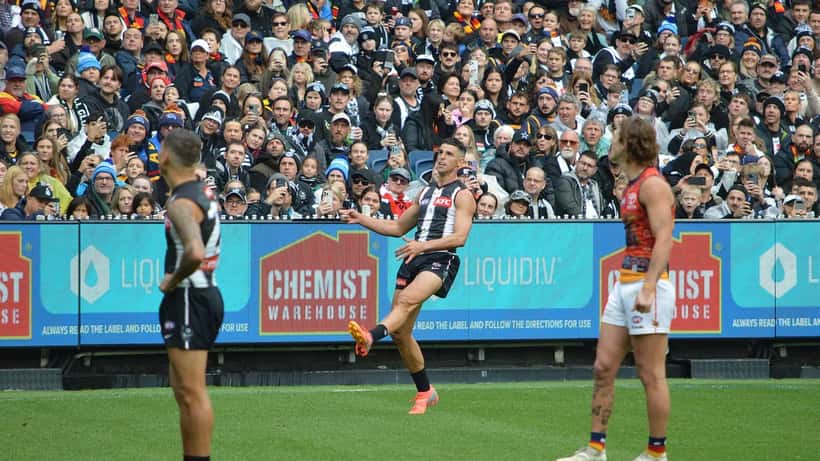
A multimillion-dollar investment fund that counted some of Australia's most recognisable AFL players among its investors has been placed into liquidation, triggering legal action and raising serious questions about how elite athletes manage their wealth. The Sayers Road Investment Trust — a fund reportedly holding around A$75 million in assets — collapsed after the company overseeing it, Sayers Road Investment Co, went into administration. Among those affected: Scott Pendlebury, Adam Goodes, Dyson Heppell, Jy Simpkin, Josh Battle, and Mason Wood. Pendlebury has since launched a separate legal action against his former financial manager, alleging A$2.6 million in mismanagement and theft.
What Happened to the Sayers Road Trust?
The Sayers Road Investment Trust was a private trust vehicle used by a number of current and former AFL players to hold and grow their wealth. When the fund entered liquidation in 2026, creditors discovered that the trust's claimed assets of approximately A$120 million were largely made up of loans extended to Western United FC — and that most of those loans were unrecoverable.
Liquidators have indicated that only the Australian Taxation Office and a secured creditor, Theodore Andriopoulos, are likely to recover meaningful funds from the trust's estate. For the AFL players who trusted their career earnings to this vehicle, the prospect of recovering their principal investments is bleak.
The collapse illustrates a pattern that Australian financial regulators have warned about repeatedly: private investment trusts that promise above-market returns, rely on concentrated lending to connected entities, and lack transparent oversight structures carry significant risks for investors — even sophisticated ones.
Pendlebury's Legal Action Against His Former Manager
Separately from the trust's liquidation, Scott Pendlebury has initiated a A$3 million civil court action against Jason Sourasis, his former financial manager, over alleged mismanagement and theft totalling A$2.6 million. According to reporting by The Nightly, the claim includes allegations that funds entrusted to Sourasis were not applied as directed and that Pendlebury was misled about the status of his investments.
This case highlights a legal reality that many investors do not consider until it is too late: when a financial manager misappropriates or mismanages client funds, the path to recovery runs through the courts — and that process is expensive, slow, and uncertain. Even with a strong case on the facts, recovering misappropriated funds from an individual defendant who may have dissipated the assets is far from guaranteed.
Why Elite Athletes Are Particularly Vulnerable
The Sayers Road collapse is not an isolated incident. Elite athletes are disproportionately vulnerable to financial mismanagement for several structural reasons.
Sudden, compressed income: AFL players typically earn the bulk of their career income over a window of 10 to 15 years, creating pressure to invest aggressively during that period. This urgency can lead to concentration of assets in a small number of vehicles — exactly what the Sayers Road trust represented.
Heavy reliance on a single manager: Many athletes delegate their entire financial affairs to one agent or manager — the same person handling contracts, endorsements, and investments. This concentration of trust creates a single point of failure and removes the checks and balances that institutional investors take for granted.
Limited financial education: Professional sport does not prepare athletes for the complexities of trusts, corporate lending, tax structuring, or investment risk management. This knowledge gap is often exploited, whether intentionally or through sheer incompetence.
Social trust networks: Players often invest together on the recommendation of teammates or trusted figures within their club. The Sayers Road trust apparently drew multiple Collingwood and other AFL players through exactly this dynamic — a recommendation chain rather than independent due diligence.
Warning Signs of a Poorly Managed Investment Trust
Whether you are an elite athlete or a small business owner, certain warning signs indicate that an investment structure may be putting your capital at serious risk:
- Opaque lending practices: If a trust is advancing loans to related or connected entities — particularly property or sports entities with illiquid assets — the risk of those loans becoming unrecoverable is significantly elevated.
- Lack of independent auditing: Legitimate investment trusts are independently audited annually. If you cannot access recent audited financial statements, that is a red flag.
- Concentration in a single asset or counterparty: Diversification is the most basic protection against catastrophic loss. A fund that lends the majority of its capital to one entity violates this principle entirely.
- Promises of consistent above-market returns: No investment consistently outperforms the market over long periods without taking significant risks that must be disclosed to investors.
- Difficulty accessing or withdrawing funds: If redemptions are restricted, delayed, or met with excuses, a liquidity problem may already be developing.
The Australian Financial Complaints Authority (AFCA) provides a free dispute resolution service for consumers and small businesses with complaints about financial products and services. If your financial adviser recommended an investment that turned out to be unsuitable or was misrepresented to you, AFCA is the appropriate starting point for a complaint.
What to Do When an Investment Goes Wrong
If you believe you have been the victim of financial mismanagement, acting quickly matters. Australian law imposes limitation periods on civil claims — in most states, you have six years from when you became aware (or should have become aware) of the loss to commence legal action.
Steps to take if you find yourself in a situation like Pendlebury's:
- Gather documentation: Collect all investment agreements, communications, statements, and receipts of funds transferred.
- Obtain an independent financial review: Before committing to legal action, have an independent financial adviser assess what happened and quantify your loss.
- File an AFCA complaint if applicable: If the manager was an ASIC-licensed financial adviser, an AFCA complaint may resolve the matter without litigation, and AFCA can order compensation of up to A$1 million for individuals.
- Consult a litigation lawyer: For losses exceeding AFCA's limits, or involving potential criminal conduct such as theft or fraud, civil litigation is the pathway. A lawyer specialising in financial disputes can assess whether recovery is realistic given the defendant's assets.
For context on how elite athletes structure their financial lives — and the wealth planning strategies that reduce these risks — see our earlier analysis of Messi's elite athlete financial planning and superannuation lessons for Australians.
Protecting Yourself: Practical Principles
The Sayers Road Trust collapse is a lesson that applies far beyond AFL circles. Any investor using a private trust, managed investment scheme, or discretionary financial manager should take the following steps:
- Insist on independent oversight: Use a financial adviser who is separated from the entity managing your investments.
- Demand annual audited accounts: If your investment manager cannot produce them, withdraw your funds.
- Diversify across vehicles and managers: No single person or entity should control more than 30-40 per cent of your investable assets.
- Understand the structure before investing: Before committing capital to a trust or fund, have a lawyer explain the structure, the risk profile, and your rights as a beneficiary.
For Australians who have experienced financial losses through mismanagement, a wealth adviser and financial disputes lawyer can help you assess your options and chart a path to recovery.
