 Mia Jones
When Olympic gold medallist Emily Seebohm was knocked to the floor by British social media star Jack Joseph in the opening episode of SAS Australia v England on April 29, 2026, the country watched in shock. The two were paired for a "milling" drill — a 60-second head-punching exercise — despite the obvious weight and gender mismatch. Jack Joseph later told media he felt "betrayed" by producers who "forced" him to punch her. But beyond the immediate viewer backlash, the incident raises a question that applies to every Australian who signs up for a reality TV show: what legal rights do contestants actually have?
What happened in the SAS Australia 2026 premiere
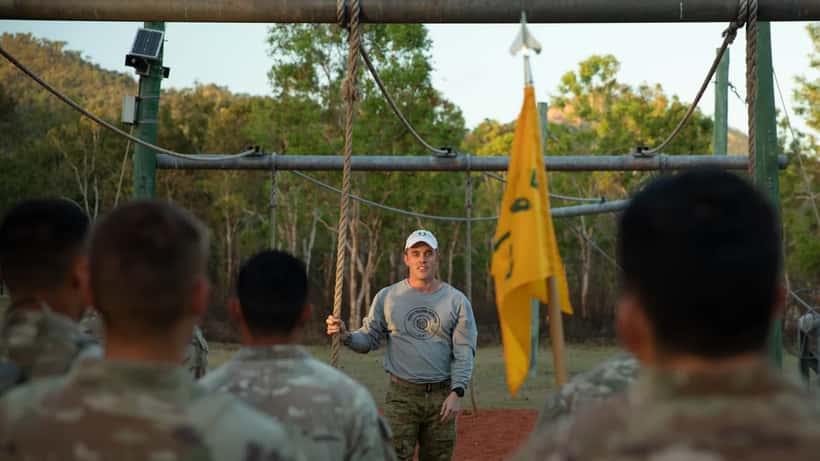
Channel 7's SAS Australia v England launched on April 29, 2026 at 7:30pm with a revamped format: seven Australian celebrities versus seven British celebrities in the Moroccan desert. The episode opened with the now-controversial "milling" exercise, a boxing drill borrowed directly from British Army selection — 60 seconds of unrestricted punching to the head.
Producers paired Seebohm, a 31-year-old female Olympic swimmer, against Jack Joseph, a significantly heavier male British social media personality — based on weight categories, not gender. The result: Seebohm was knocked to the floor within seconds. Viewers flooded social media, calling the pairing "horrible" and questioning Channel 7's duty of care toward contestants.
The episode also drew backlash for Neighbours star Ryan Moloney's expletive-laden rant at British contestant Dani Dyer, who was reportedly nearly reduced to tears. Moloney later confirmed he had secretly carried an undisclosed injury throughout filming.
Reality TV and duty of care: what Australian law says
Reality television productions in Australia are workplaces. This means they are governed by the Work Health and Safety Act 2011 (Cth) for nationally coordinated industries, and state equivalents for productions in Victoria, Queensland, and Western Australia. Under these frameworks, producers and broadcasters owe a primary duty of care to all workers — including contestants — to eliminate or minimise risks to their health and safety, so far as is reasonably practicable.
According to Safe Work Australia, anyone who influences how work is carried out has a duty of care, regardless of contractual terms. This is significant: even if a contestant signs a broad liability waiver before entering a show, that waiver cannot legally override statutory workplace safety obligations in Australia.
What a lawyer would look for in the SAS milling incident
A personal injury or employment lawyer analysing the Seebohm milling scenario would examine several key questions:
Was the risk foreseeable? A professional boxing coach or workplace health and safety officer could almost certainly have predicted that pairing a female swimmer with a heavier male contestant in a head-punching drill created a foreseeable risk of injury. Foreseeability is central to establishing negligence in Australian tort law.
Were adequate precautions taken? Matching contestants purely by weight — without gender or sporting discipline adjustments — could be argued to fall short of what a reasonable production company would do to minimise harm.
Did participants give informed consent? Consent is nuanced. Signing a broad "I accept all risks" waiver before filming is different from giving specific informed consent to a particular dangerous exercise. Courts in Australia have been reluctant to uphold blanket waivers where the specific risk was not clearly communicated.
Was medical staff on standby? For exercises like milling, the presence of trained medical personnel and mandatory safety briefings is standard in military selection but may not be replicated identically in a television production environment.
What reality TV contestants should know before signing up
The SAS Australia controversy is a timely reminder that the excitement of appearing on national television can obscure significant legal and physical risks. Here is what employment and personal injury lawyers consistently advise:
1. Read the contract before you sign — all of it
Reality TV contracts can run to dozens of pages. They typically include indemnity clauses, confidentiality agreements, and limitations on contestants' ability to speak publicly about what happened during filming. A lawyer can identify clauses that are unenforceable under Australian consumer law or that could expose you to significant liability.
2. A waiver is not always ironclad
Under Australian law, liability waivers cannot exclude liability for death or personal injury caused by gross negligence, nor can they override statutory workplace safety duties. If you sustain an injury on a reality TV set, the existence of a signed waiver does not automatically extinguish your right to seek compensation.
3. Workers' compensation may apply
If you are treated as a worker under the production's employment structure, you may be entitled to workers' compensation in the event of injury. The categorisation of contestants as "workers" versus "independent contractors" varies by state and contract — another reason to get legal advice before filming begins.
4. Psychological harm is also covered
The duty of care extends to psychological harm. The Moloney incident, in which a contestant was allegedly nearly reduced to tears by a co-star's aggressive behaviour — raises questions about whether producers took adequate steps to protect participants from foreseeable psychological distress.
5. NDA provisions can limit your options — but not all your rights
Contestants who experience harm during filming may feel their confidentiality agreement prevents them from speaking out. While NDAs are generally enforceable, they cannot prevent a person from reporting an unlawful act or exercising statutory rights — including the right to file a workers' compensation claim or a complaint with workplace safety authorities.
The bigger picture: celebrity or not, your rights are the same
Whether you are an Olympic gold medallist or an unknown member of the public, your right to a safe working environment on an Australian TV production is the same. The public attention on SAS Australia 2026 is an opportunity to understand those rights — before the cameras start rolling.
If you were injured on a TV set, are unsure whether your reality TV contract is fair, or want to understand your workplace rights in a high-risk entertainment context, an employment or personal injury lawyer can provide tailored guidance. Consult a legal expert on Expert Zoom today.
Disclaimer: This article provides general legal information for educational purposes only and does not constitute legal advice. For advice specific to your situation, consult a qualified Australian lawyer.
