 Olivia Thompson
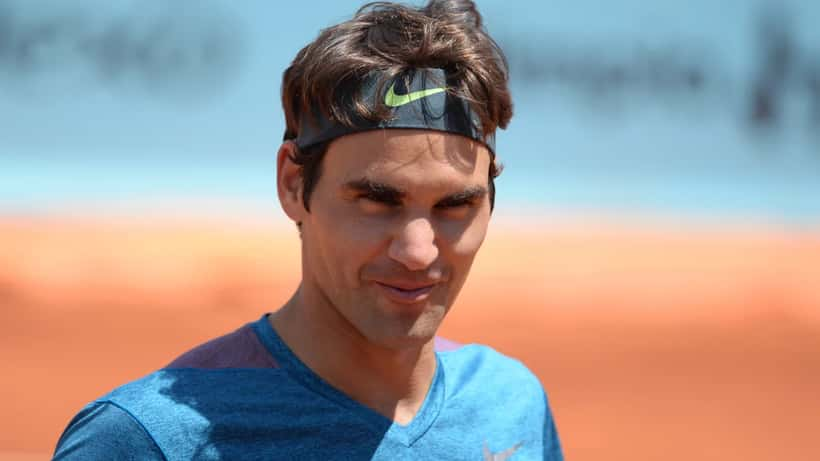
On 11 August 2026, Roger Federer lost approximately $140 million in a single day — not through a poor decision or a failed venture, but because a single stock fell sharply after one earnings announcement. On Holding, the Swiss running-shoe brand whose equity made Federer a billionaire, missed net sales expectations and watched its share price collapse by roughly 19%. In less than eight hours of trading, Federer's estimated net worth dropped from $1.1 billion to $952 million and his billionaire status evaporated. For the wealth management profession, the episode was entirely predictable.
The Numbers Behind Federer's One-Day Loss
On 11 August 2026, On Holding reported quarterly net sales that fell short of analyst expectations. The market responded swiftly: the company's share price fell approximately 19% in a single session, erasing around $3.6 billion from its market capitalisation.
Federer holds roughly 3% of On Holding — an equity stake he secured in 2019, before the company's New York Stock Exchange IPO in 2021. At On Holding's peak valuation of more than $19 billion in 2025, that 3% stake was worth approximately $570 million, a figure that had grown dramatically from his original investment. After the August sell-off, his On Holding equity fell in value by an estimated $108 million in one trading session.
His total net worth, as recently estimated by Forbes at $1.1 billion, fell to $952.4 million — a total decline of approximately $148 million. He is, technically, no longer a billionaire.
The arithmetic is straightforward: a 19% drop in a single asset that represents more than half your net worth wipes out more than 10% of everything you own, in a single afternoon. This is the maths of concentration risk.
How One Stock Came to Dominate His Wealth
Federer's commercial portfolio is genuinely impressive. He holds a decade-long partnership with Uniqlo reportedly worth $300 million. He has long-standing ties to Rolex. His Roger Federer Foundation, which recently marked its 20th anniversary, has supported more than 3.1 million children across partner organisations. His brand is among the most valuable in global sport.
But the On Holding stake, amplified by the company's extraordinary post-IPO growth, gradually became the dominant financial asset in his portfolio. When On went public in 2021, its market capitalisation was approximately $7 billion. By 2025, it had exceeded $19 billion — meaning Federer's 3% stake had roughly tripled in market value over four years. He crossed the billionaire threshold precisely because that single holding rose so dramatically.
The pattern is a well-known one in wealth management circles: an extraordinary run in a concentrated position inflates total net worth rapidly, and the investor's natural instinct is to hold, not sell. Why would you sell something that keeps going up? The answer — and this is what financial planners spend a great deal of time explaining — is not because the company is bad. It is because concentration itself is a form of risk that exists independently of the underlying asset's quality.
What "Concentration Risk" Actually Means for Australian Investors
Concentration risk is the technical term for what Federer's situation illustrates. It refers to holding a disproportionate share of wealth in a single asset, sector, company, or geography. Financial regulators and professional bodies consistently flag it as one of the most common and preventable causes of significant wealth erosion.
ASIC's MoneySmart resource for Australian investors notes that diversification is a foundational principle of risk management: spreading investments reduces the impact of any single loss on a total portfolio. The standard guideline widely observed by Australian financial planners — and referenced across the profession — is that no single stock should represent more than 5–10% of a total investment portfolio. In practice, many licensed advisers set the threshold lower, recommending positions remain below 5% unless the investor has specific reasons and tolerance for the associated volatility.
Federer's On stake, at its peak, represented approximately 50% of his total net worth. That concentration ratio would, in virtually every professional risk assessment, qualify for immediate remediation.
The challenge, particularly for high-net-worth individuals in Australia, is that concentrated positions feel comfortable when they are performing well. The emotional difficulty of selling a winning position — combined with the real tax implications of crystallising large capital gains — means many investors hold concentrated exposure for far longer than a dispassionate risk analysis would recommend.
A Concrete Australian Scenario: The $800,000 Question
Consider a 44-year-old software developer in Melbourne who co-founded a technology business that was acquired by a listed ASX company in early 2024. As part of the acquisition, she received $800,000 worth of shares in the acquiring company, subject to an 18-month vesting period ending in mid-2026. After vesting, those shares represent approximately 68% of her total investable wealth.
In August 2026, the company reports weaker-than-expected revenue for the second consecutive quarter. Its share price falls 22% over five trading days.
Her $800,000 position is now worth $624,000 — a loss of $176,000 in one week.
Now consider an alternative: on the advice of a wealth management specialist immediately after vesting, she had implemented a structured sell-down plan — liquidating 15% of the position every three months and reinvesting the proceeds across a diversified portfolio of ETFs and fixed income. By August 2026, she would have sold down approximately 45% of the original holding.
Under that plan, her remaining exposure at the point of the price drop would be approximately $440,000. A 22% fall on that reduced position costs her $96,800 — instead of $176,000. The difference: $79,200, preserved through one structured conversation with a professional.
This is exactly the modelling a wealth management expert would run. Not "is this company good?" but "how much of your total financial security should ride on any single outcome?"
The ATO's capital gains tax discount — which allows individuals to reduce taxable capital gains by 50% on assets held for more than 12 months — creates a genuine window for tax-efficient diversification that many investors are unaware of. An asset held through the 12-month threshold and then sold in tranches can be substantially cheaper to exit than an immediate full liquidation. A wealth manager can model this across your specific circumstances, income level, and total portfolio. More at ato.gov.au/individuals-and-families/investments-and-assets/capital-gains-tax/cgt-discount.
When to Act — and What to Ask an Expert
The trigger for seeking professional advice is not a market crash — it is the moment a single position exceeds 15–20% of your total investable assets. That threshold is where the mathematical risk profile of a portfolio begins to shift in ways that most individual investors are not positioned to manage on their own.
For Australians in 2026, concentrated positions arise frequently in several situations: employees with significant employee share scheme (ESS) allocations who have never diversified; founders and early-stage advisers who received equity as compensation; retirees who inherited blue-chip shares decades ago and held them out of loyalty or inertia; and property investors whose total wealth is effectively one asset in one suburb.
In each case, the core questions a wealth management specialist will help you answer are the same: What is your true exposure as a percentage of total assets? What does a structured exit look like under current tax law? What level of diversification matches your risk tolerance, income needs, and timeline?
Roger Federer's wealth is still extraordinary. He has an $800,000-a-year Rolex deal, a landmark Uniqlo partnership, a globally valuable personal brand, and meaningful equity in one of the world's fastest-growing athletic footwear companies. He will be fine. Most Australians holding a concentrated position do not have a $300 million Uniqlo contract as a backstop.
That is precisely the point.
This article is for informational purposes only and does not constitute financial advice. Readers should consult a licensed financial adviser before making investment decisions. Past performance is not an indicator of future results.
If you hold a concentrated share position and want a professional assessment, Expert Zoom wealth management specialists are available for consultations. For further perspective on athletes and long-term financial strategy, see our analysis of Rory McIlroy's wealth management lessons for Australians.
