 Mia Jones
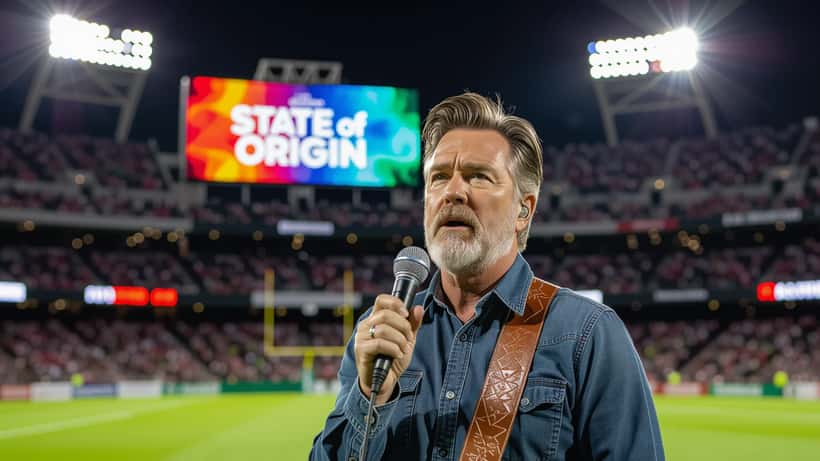
Country singer Robbie Mortimer was trending across Australian social media within minutes of finishing "Advance Australia Fair" at Accor Stadium on 27 May 2026, opening Game 1 of the State of Origin series. By morning, fans were calling his rendition "a sick chainsaw slicing a bagpipe in half" and the pile-on had moved from match reaction to personal attacks on his appearance, family and mental fitness. Within 24 hours the hashtag had reached more than 800,000 impressions on X alone, according to social-listening firm Streamline tracking the State of Origin trend.
The Orange-based artist, son of Rugby League Immortal Peter Mortimer, has not publicly responded. But the backlash has reopened a question Australian lawyers and the eSafety Commissioner are asked every Origin season: what legal protection does a performer actually have when a four-minute national anthem becomes a public flogging?
What the law actually covers
Australia's Online Safety Act 2021 created a complaints scheme administered by the eSafety Commissioner that can compel platforms to remove serious adult cyber-abuse within 24 hours. To qualify, content must be intended to cause serious harm AND be menacing, harassing or offensive in all the circumstances — a deliberately high threshold designed to protect free speech.
According to the eSafety Commissioner's published 2025 framework, complaints rose 87% year-on-year, with public figures making up roughly 11% of adult cyber-abuse reports. Singers and athletes appearing at major sport events are over-represented in those numbers.
A pile-on like the one Mortimer faced sits in a grey zone. Sharp criticism of a public performance is protected commentary. Targeted abuse of a person's body, family or mental health usually is not.
Why "it's just an opinion" rarely ends the story
A solicitor experienced in defamation can move on three fronts depending on what was actually posted:
- Defamation under the uniform Defamation Acts. Imputations about Mortimer's character, professional competence or mental state can be actionable if a reasonable person would think less of him. The 2021 reforms introduced a serious-harm threshold, which most viral pile-ons clear quickly because of the scale of distribution.
- Workplace safety claims. When a performer is contracted to sing through a promoter or rights-holder such as the NRL, that organisation has obligations under Safe Work Australia model laws for psychosocial hazards arising from the engagement. Performers have successfully claimed compensation for post-event abuse in the past.
- Criminal use of a carriage service. Section 474.17 of the Commonwealth Criminal Code makes it an offence to use a carriage service to menace, harass or cause offence. Maximum penalty: five years imprisonment. The AFP has secured several convictions for sustained online abuse of public figures since 2023.
The expert angle: what to do in the first 72 hours
A specialist lawyer will tell any performer in Mortimer's position that the first three days matter more than the next three months.
- Preserve evidence. Screenshot the original post, the URL and the timestamp. Many posts disappear once accounts realise their reach.
- Report to eSafety. Use the cyber-abuse complaint form at the official portal. The Commissioner can issue removal notices with monetary penalties up to A$782,500 for non-compliant platforms.
- Send concerns notices. The Defamation Acts require a concerns notice before suing. A well-drafted notice often produces takedowns and apologies without litigation.
- Engage the contracting body. If the engagement was through the NRL or a sponsor, raise the psychosocial-hazard duty in writing. Many promoters carry public-figure abuse insurance.
The full official guidance on what qualifies as adult cyber-abuse and how to lodge a complaint is published by the eSafety Commissioner.
When media defamation becomes piling-on
Comment from broadcasters such as 3AW's Tom Elliott describing the performance as "very strange" is normal critical commentary and generally protected. The line is crossed when commentary moves from the performance to imputations about the performer's character, fitness or family.
In the Mortimer case, several widely shared posts attacked his family lineage — specifically dragging in his late uncles Steve and Chris Mortimer of Canterbury Bulldogs fame. Those posts cross from criticism of work into imputations about identity, which is exactly the territory where a defamation lawyer can act.
Why this matters beyond one night at Accor Stadium
The State of Origin draws around 3.2 million Australian television viewers per game, according to OzTAM ratings released after Game 1 2025. Any artist who performs the anthem accepts that scrutiny, but the legal system has been clear since the 2021 Online Safety Act that scrutiny is not a licence for sustained abuse.
For performers, sports figures and corporate spokespeople who suddenly become the centre of a national pile-on, an early conversation with a defamation and online-safety lawyer can mean the difference between a 48-hour news cycle and a 12-month reputational injury. Most major firms now offer fixed-fee crisis consultations precisely for this scenario.
This article provides general information only and is not legal advice. Always consult a qualified solicitor about your specific circumstances.
If you or someone you know needs urgent support after online abuse, contact Lifeline on 13 11 14 or visit the eSafety Commissioner's resources for adults experiencing cyber-abuse.
