 Chloe Wilson
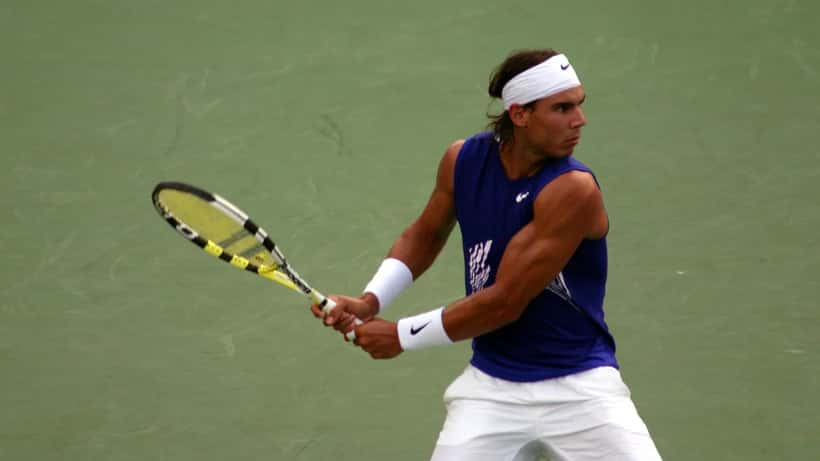
Rafael Nadal has revealed he developed crippling anxiety during his tennis career — so severe he could not leave the house without clutching a water bottle for comfort. The admission, made in a CNN interview published on 21 May 2026 ahead of his Netflix documentary Rafa, is reigniting debate about the mental health cost of elite sport and what Australian athletes at every level should know about injury-related psychological distress.
The Injury Toll Behind the Legend
Across a career spanning more than two decades, Nadal missed 18 grand slams due to chronic wrist, knee and foot problems. He played through pain that would have ended most professional careers, winning 22 grand slams and becoming one of the most decorated players in tennis history. But in Rafa — a four-part Netflix docuseries released this month — the 39-year-old revealed what sustained grit actually cost him off the court.
"It got to a point where he couldn't leave the house without having a bottle of water to hold in his hand," CNN reported following the interview with anchor Christiane Amanpour. The ritual — gripping a water bottle in public — is a textbook coping mechanism for anxiety: a physical anchor when the nervous system feels overwhelmed.
Nadal also expressed regret about his 2023 hip surgery. "The last year and a half, knowing what happened afterwards... well, I would not have done it," he told CNN. He retired from professional tennis in late 2024, describing the sport as "a closed page. I reached the limit of my capabilities, not mentally, but physically" — though his own account makes clear the psychological strain ran far deeper than he acknowledged at the time.
Why Injured Athletes Are Especially Vulnerable
Sports psychologists recognise that athletes who sustain repeated injuries face a significantly elevated risk of anxiety and depression. According to the Australian Institute of Health and Welfare (AIHW), one in five Australians will experience a mental health condition at any given time — and that figure is consistently higher among competitive athletes managing career-threatening physical setbacks.
The mechanism is well understood. Injury forces an athlete off the field. Rest removes their primary source of identity, structure and achievement. The loss of routine triggers anxiety. Anxiety then disrupts sleep and physical recovery, slowing rehabilitation and creating a self-reinforcing cycle.
Sports medicine specialists call this identity fusion: the point at which an athlete's entire sense of self becomes inseparable from their performance. When injury threatens that identity — particularly for someone like Nadal, for whom tennis was central to everything — the psychological fallout can be extreme, and difficult to treat without professional intervention.
Chronic pain compounds the problem further. Sustained physical pain activates the brain's stress-response systems in ways that make ordinary anxiety management techniques — breathing exercises, meditation, journalling — less effective than they would be under normal circumstances.
The Silence Problem: Why "Toughing It Out" Often Backfires
Nadal's case also highlights an uncomfortable pattern: the tendency of high-performing athletes to suppress mental distress in pursuit of physical recovery. For years, the Spaniard presented a public face of steely determination while quietly struggling with anxiety that was, by his own description, affecting his daily life.
Australian sports culture places enormous value on resilience and stoicism. But sports medicine professionals warn that suppressing psychological distress is not resilience — it is a clinical risk factor. Untreated anxiety in injured athletes is associated with impaired decision-making, delayed physical recovery, and a significantly higher risk of re-injury once the athlete returns to competition.
The Australian Institute of Sport (AIS) has expanded its athlete mental health programs considerably in recent years, specifically because injury-related psychological distress is so prevalent and so chronically under-reported. Despite this, many athletes — both elite and recreational — still wait far too long before seeking support.
Signs That a Sports Injury Is Affecting Your Mental Health
Nadal's experience is not limited to grand slam champions. Each year, hundreds of thousands of Australians sustain sports injuries — torn ACLs on suburban football fields, rotator cuff damage on tennis courts, stress fractures from weekend running. For most, the emotional consequences of those injuries are never professionally addressed.
Signs that an injury may be affecting your mental health include:
- Persistent low mood or irritability that extends well beyond the physical recovery period
- Loss of motivation to return to training after being medically cleared
- Sleep disruption that is not fully explained by pain
- Anxiety about re-injury that feels disproportionate to the actual medical risk
- Withdrawal from your team, training partners or sport-related social activities
If these signs persist for more than two weeks following an injury, a sports psychologist or GP with an interest in mental health is the appropriate next step — not another physiotherapy appointment.
When to Seek Help and Who Can Support You
A sports psychologist does not simply offer encouragement or motivation. These practitioners use evidence-based clinical techniques including cognitive behavioural therapy (CBT), acceptance and commitment therapy (ACT), and imagery-based recovery programs. Research consistently shows that injured athletes who receive structured psychological support return to sport faster, with lower rates of re-injury, and with significantly greater confidence.
GPs can also refer patients to psychologists via a Mental Health Treatment Plan, which provides up to 10 Medicare-subsidised sessions per calendar year — an option that remains widely underused by the sporting community.
ExpertZoom connects Australians with qualified health professionals, including those experienced in sports medicine and the psychological dimensions of athletic injury. Whether you are a competitive amateur managing a long-term knee problem or a club-level player struggling to return from a serious setback, seeking professional support is not weakness. As Rafael Nadal's own story makes plain, it is often the step that the most driven athletes leave too late.
This article is for general informational purposes only and does not constitute medical or psychological advice. If you are experiencing symptoms of anxiety or depression related to injury, contact a qualified healthcare professional or call Lifeline on 13 11 14.
