 Liam Campbell
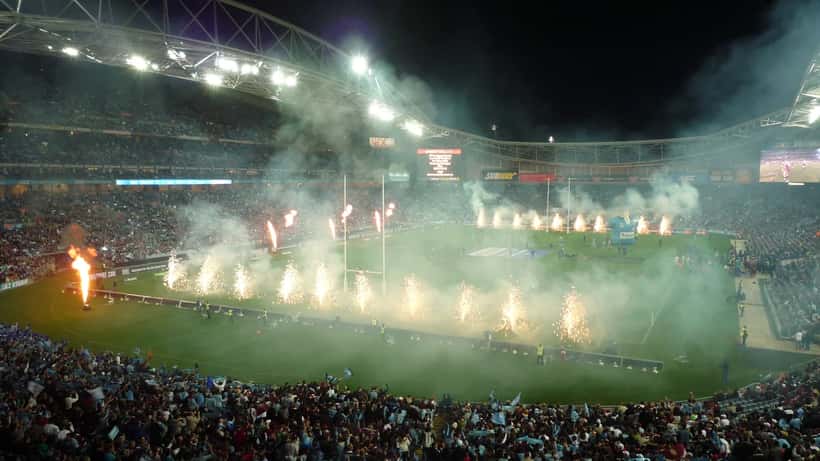
The Queensland Maroons squad for State of Origin I 2026 has been finalised ahead of the series opener on Wednesday, 27 May at Accor Stadium in Sydney. The squad features Cameron Munster at five-eighth and Harry Grant — Storm captain and 2025 IRL Golden Boot winner — as hooker, while a late injury to halfback Tom Dearden opened the door for Sam Walker to step into the starting side. It is one of the highest-pressure sporting assignments in Australian sport, and how these athletes respond to selection, expectation, and injury-driven disruption carries lessons that reach well beyond the rugby league pitch.
What It Takes to Earn a Maroon Jersey
State of Origin selection is the benchmark of excellence in the NRL. Every player in the annual Queensland versus New South Wales series has fought their way through the NRL season on form, not reputation. The selectors review every game, every tackle break, every try assist. There are no favourites who coast into the side. If your form drops for three rounds, someone hungrier takes your spot.
For Cameron Munster, this series represents a continuation of a remarkable run at the Maroons' number six. For Harry Grant, earning the position after a season in which he captained Melbourne Storm and claimed the international game's top individual award represents the peak of an elite career trajectory. For Sam Walker, the Tom Dearden injury is not simply luck — it is the intersection of preparation and opportunity, the moment that rewards years of training for circumstances that may never arrive.
That dynamic — preparation meeting sudden opportunity — is one of the most recognisable patterns in high-performance careers. The worker who steps up when their manager takes leave. The contractor who takes on a major scope because a competing firm fell through. The professional who is ready when the call comes. Origin selection illustrates the principle at its most compressed and public.
The High-Pressure Performance Environment
State of Origin is played at an intensity that exceeds the regular season by a measurable margin. Players routinely describe the first hit-up as unlike anything they experience at club level. The physicality, the crowd, the interstate rivalry, and the knowledge that your performance will be analysed by millions create a cognitive and physiological environment that separates those who can perform under pressure from those who cannot.
According to Sport Australia, the national body responsible for elite and community sport development in Australia, mental performance is increasingly recognised as a decisive factor in athletic outcomes at all levels — not just elite. Research from high-performance environments consistently shows that pre-competition anxiety, self-talk, and routine management are the variables that separate athletes with equivalent physical capacities.
The Maroons who will take the field on 27 May have been developing these psychological skills for years. Their ability to control arousal levels, maintain focus under crowd pressure, and execute technical skills they have practiced thousands of times under match conditions is what distinguishes an Origin player from a merely very good NRL player.
Tom Dearden's Injury and the Opportunity Window
Tom Dearden's absence from Origin I through injury is, for Dearden himself, a professional setback at the worst possible moment. For Sam Walker, it is the kind of opportunity that career trajectories are built on. Walker knew this scenario might come. The question is whether he was ready — and selection implies the Maroons coaching staff believe he is.
The dynamics of injury-driven opportunity are familiar in workplaces far removed from rugby league. When the colleague who was going to lead the pitch is unavailable, who steps up? When the project lead exits unexpectedly mid-delivery, who absorbs the role? In organisations, as in sport, the people who are ready at those moments are rarely those who simply showed up. They are the ones who prepared as though they might be called on, even when circumstances suggested they wouldn't be.
As the case of NRL captains under team pressure has shown, playing in a high-stakes representative environment requires not just physical readiness but psychological and professional maturity. The ability to absorb scrutiny, perform in unfamiliar starting conditions, and deliver when expectations are highest is a capability that experts in performance coaching work to develop systematically.
What State of Origin Teaches Every Australian Professional
The principles behind State of Origin selection do not stay within sport. Across Australian industries, the workers and managers who advance at key career moments share recognisable characteristics with those who earn their Origin jerseys:
Consistent performance over a sustained period: Origin selectors don't pick players based on one standout game. They look for reliability across a season. Career advancement works the same way — single moments of brilliance rarely substitute for sustained, trackable output.
Adaptability under disruption: Every Origin squad handles late changes, injury callups, and unexpected conditions. The players who handle these without losing cohesion are the ones who define the outcome. In workplace terms, this is resilience — the capacity to deliver quality output when the environment shifts.
The mentorship structure: Origin teams include veterans who guide debutants through the first experience. High-performing organisations build the same structure deliberately. The first-timer in a critical role needs access to the knowledge of those who have done it before.
Physical and mental recovery: The NRL season is brutally demanding. Origin players manage their bodies through an intensive schedule. Workplace professionals managing high-output careers face analogous decisions about recovery, energy management, and sustainable performance — questions a performance expert or coach can help address directly.
Finding the Right Expert for Your Peak Performance
Whether you are a young professional preparing for a high-stakes career moment, a manager navigating team disruption, or an individual performer trying to maintain output under sustained pressure, the performance coaching principles that underpin State of Origin preparation are accessible outside the sporting context.
Experienced consultants and coaches working in performance, leadership, and career development can help identify the specific habits, routines, and mental frameworks that distinguish consistent high performers from those who are gifted but unreliable. The lesson from State of Origin 2026 is simple: the jersey doesn't go to the most talented player. It goes to the most ready one.
And readiness is something experts can help you build.
