 Liam Ryan
Property crime is back in the national conversation in 2026, and the latest official figures explain why. In 2024-25, about 196,600 Australian households — 1.8% of all homes — were broken into, while another 217,500 suffered an attempted break-in, according to the Australian Bureau of Statistics. Roughly 8.5% of households, or 913,700 homes, were hit by at least one selected household crime over the year.
For most people, the fear is not abstract. When a break-in happens, 69% of affected households have something stolen, and 44% report property damaged during the same incident. Three in four victims (75%) go to the police. Yet by the time officers arrive, the loss is already done. That is why more Australians are asking a practical, technical question: which security electronics actually stop a burglary before it starts?
What the crime data really shows
The 2026 picture is uneven rather than uniformly grim. Residential break-ins are climbing back toward pre-pandemic levels after the unusually low figures recorded during lockdown years. In Victoria, aggravated burglaries made up 16.3% of recorded incidents in 2026, up from a longer-term average of 12.3%, even as aggravated home burglaries themselves fell 19.9%.
Translation: opportunistic property crime — the kind aimed at empty houses, unlit driveways and unlocked side gates — remains the everyday threat for ordinary households. These are exactly the incidents that visible deterrent technology is designed to prevent.
Why cameras change a burglar's maths
Burglary is a decision made in seconds, and offenders weigh risk before reward. Research by the Electronic Security Association found that around 83% of burglars check whether a home has security cameras before attempting entry, and roughly 60% will move on to an easier target when they spot one.
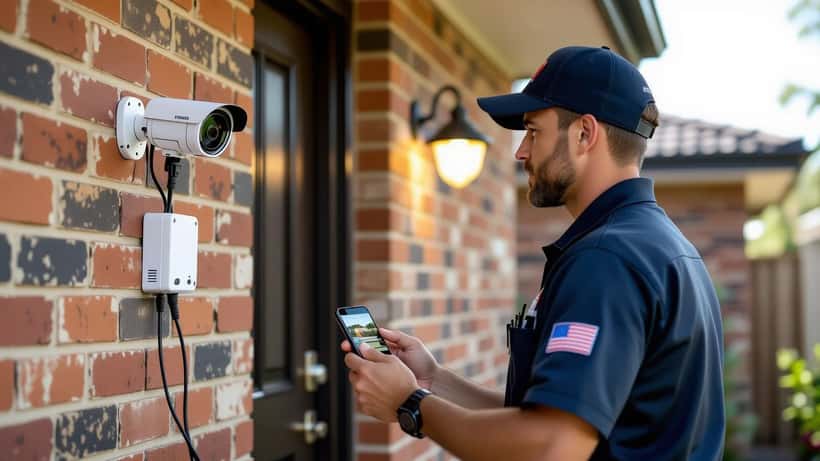
The effect is strongest when the deterrent is obvious. A camera hidden under an eave protects evidence after the fact. A camera mounted where an approaching intruder can see it changes the decision itself. As a security installer would put it, you want the technology working on the burglar's judgement, not just your hard drive.
The layered setup that works in 2026
No single device makes a home burglar-proof. Electronics specialists consistently recommend a layered approach, where each product covers the weakness of the others.
- Visible cameras at decision points. Place them at the front entry, the driveway and the most common rear or side access. Modern 2K and 4K models with colour night vision now cost a fraction of professional systems from a few years ago.
- A monitored or app-linked alarm. Sirens and instant phone alerts shorten the window an intruder is willing to spend inside. Speed matters more than volume.
- Motion-activated lighting. Sudden light removes the cover of darkness that opportunists rely on, and it pairs naturally with camera triggers.
- Smart locks and door and window sensors. These close the gap left by the 44% of break-ins that also involve forced damage.
The goal is not a fortress. It is to make your home a slower, riskier, noisier choice than the house next door.
Buying smart, not just expensive
Price is no longer the barrier it once was, but poor choices still waste money. Before buying, an electronics technician would push you to check a few things.
Look for local storage or an SD-card option as well as cloud, so footage survives a cut internet line. Confirm the camera's real-world night performance, not just the marketing resolution. Check whether the system needs a paid subscription to unlock alerts or recording, because ongoing fees add up fast. And make sure the devices receive regular firmware updates — an unpatched camera is a security hole, not a security tool.
Wi-Fi coverage is the quiet failure point. A doorbell camera that keeps dropping offline protects nobody. If your connection is weak at the front door, a mesh network or a wired PoE camera is worth the extra outlay.
Privacy and the law still apply
Home surveillance is legal in Australia, but it is not unlimited. Cameras should capture your own property, not point into a neighbour's bedroom, backyard or private space. Audio recording carries stricter rules than video in several states. If a device overlooks a shared driveway or a rental, the boundaries get more complex, and disputes do end up in front of tribunals.
This is where property crime overlaps with legal advice. Victims of a break-in also have questions about insurance claims, evidence handling and their rights, much like those facing the legal side of organised crime and criminal investigations. And families weighing how far to go with home defence can learn from the home-security lessons dramatised in recent thrillers.
When to call in an expert
If you own an older home, manage a rental, or simply feel out of your depth with cabling, power and network setup, a professional consultation pays for itself. A qualified electronics or security technician can audit your property's weak points, recommend the right mix of devices for your layout and budget, and install them so they actually work when it counts — rather than sitting offline the one night you need them.
You can review the full official data in the ABS Crime Victimisation, 2024-25 release. The numbers make the case plainly: property crime in 2026 is common, costly and largely opportunistic. The households least likely to feature in next year's statistics are the ones that made themselves the harder target first.
