 Fred Rivers
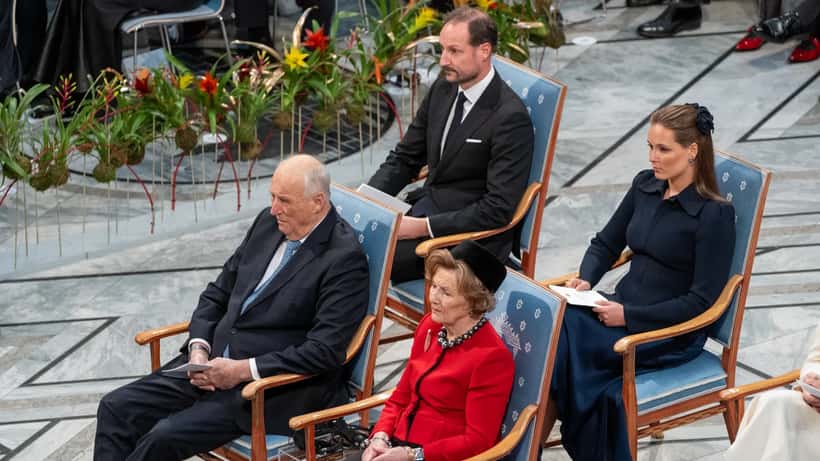
Norway's Princess Astrid, Mrs. Ferner, died in the early hours of 11 September 2026 at the age of 94 — just two days after the state funeral of her brother, King Harald V. The double royal bereavement has drawn international attention, but it also raises a question that thousands of Australian families face every year: what happens legally when two closely related people die within days of each other?
Two Royal Deaths in Less Than a Week
King Harald V of Norway, who had reigned since 1991, died earlier this month after a period of declining health. His state funeral was held on 9 September 2026, attended by royals and heads of state from across Europe. Two days later, his older sister Princess Astrid was gone as well.
Born in 1932, Princess Astrid was the second child of King Olav V and Princess Märtha of Sweden. She married businessman Johan Martin Ferner in 1961 — a love match outside royal custom that meant her husband received no title, giving rise to her distinctive official name "Mrs. Ferner." She is survived by five children and several grandchildren. The Norwegian Royal Court described the family as "deeply grief-stricken" following what is, for them, a second devastating loss in a matter of days.
What makes this story so resonant — beyond its royal dimension — is how universally the scenario applies. When siblings or close relatives die in rapid succession, the practical and legal complications for families left behind can be significant. In Australia, the timing of two deaths relative to each other is not just a matter of grief; it is a matter of law.
Why the Timing of Two Deaths Can Change Who Inherits
Under Australian succession law — governed by state and territory legislation such as the Succession Act 2006 (NSW), the Administration and Probate Act 1958 (Vic), and equivalent statutes nationally — the sequence and timing of deaths can determine whether a gift under a will actually reaches its intended recipient.
The core principle is the survivorship period rule. In most Australian states, if a beneficiary named in a will dies within 30 days of the testator (the person who made the will), the gift lapses. Rather than passing to the beneficiary's own estate, the asset falls back into the residue of the original deceased's estate and is distributed under the residue clause — or, if no residue clause exists, under intestacy rules.
This matters enormously in multi-death scenarios. If Person A leaves a share of their estate to their sibling Person B, and Person B dies three weeks later before probate is finalised, Person B's children may receive nothing from Person A's estate at all.
According to the Australian Law Reform Commission, the rules around simultaneous or near-simultaneous deaths are among the most frequently misunderstood aspects of estate administration, particularly in cases where families are managing grief while also acting as executors.
The Expert Angle — Probate Doesn't Pause for Grief
For a wills and estates solicitor, the Princess Astrid scenario is a familiar professional challenge seen with ordinary Australian families every year. When one family member dies while another relative's estate is still being administered, executors face a layered situation: two probate applications, two sets of beneficiaries, and potentially overlapping inheritance chains.
An estate solicitor engaged early — ideally within 48 to 72 hours of the second death — can advise on which estate is administered first, whether any assets can be preserved in their current form during the process, and how the order of operations affects the final distribution.
The stakes are not abstract. In complex family situations, the difference between a well-structured estate plan (one that includes survivorship clauses and substitute beneficiaries) and a poorly drafted one can determine whether hundreds of thousands of dollars reach the intended recipients, or disappear into a different branch of the family entirely.
This is precisely the scenario that makes legal advice indispensable — not because the law is unfair, but because it operates according to strict rules that most people simply do not know exist until it is too late to change course.
When Your Family Faces the Same Situation: A Concrete Case
Consider a scenario common across regional and suburban Australia. Margaret, aged 78, has a carefully prepared will leaving her $620,000 estate in equal shares between her son David and her older sister Patricia, aged 74. Margaret dies on 4 September. Patricia, who has her own will and who is also named as a beneficiary in a family discretionary trust arrangement, dies on 7 September — just three days later — before Margaret's will has been lodged with the probate registry.
Under New South Wales succession law, Patricia's 50% share of Margaret's estate does not automatically pass to Patricia's own children. Because Patricia died within 30 days of Margaret, the gift to Patricia lapses. Her half-share falls back into the residue of Margaret's estate — and in the absence of a specific residue beneficiary other than David, he now receives 100% of Margaret's $620,000 estate instead of 50%.
Patricia's family receives nothing from Margaret's estate.
If Margaret had included a "substitutionary gift" — for example, "and if Patricia predeceases me or fails to survive me by 30 days, her share passes equally to Patricia's children" — the outcome would have been entirely different. The financial consequence of that missing clause: $310,000 redirected away from the branch of the family Margaret almost certainly intended to benefit.
A solicitor reviewing Margaret's will before she died, or advising the executor within the first few days of her death, could have flagged this exact risk and adjusted the distribution accordingly — or at minimum ensured the executor understood what was happening and why.
The Survivorship Trap in Older Wills
This risk is not limited to unusual circumstances. Many Australians hold wills drafted more than 10 years ago — documents that may not include modern survivorship clauses or substitute beneficiaries. Wills drafted before 2006 national succession law reforms may follow different default rules depending on the state, creating confusion for executors who assume all Australian estates work the same way.
If a will names a sibling, parent, or close friend as a beneficiary — and that person is elderly or unwell — the absence of a survivorship clause represents a genuine legal gap. When two deaths occur close together, that gap becomes a fault line.
Estate lawyers recommend reviewing wills any time a named beneficiary's health changes significantly, any time the testator's own circumstances change (marriage, divorce, new assets, new dependants), and at minimum every five years regardless.
What Australians Should Do Right Now
The passing of Princess Astrid just days after her brother's funeral is a reminder that death does not follow a schedule — and that estate plans must account for the unexpected. Whether you are reviewing your own will or administering a loved one's estate, three actions are worth prioritising:
Review survivorship clauses. Open your will and confirm whether it specifies what happens if a beneficiary dies within 30 days of you. Modern wills drafted by a solicitor typically include this language — but older documents, or those prepared using online templates, may not.
Name substitute beneficiaries. For every major gift in your will, identify a backup recipient. This is especially important if your primary beneficiary is elderly, unwell, or is someone you depend on emotionally — the very people most likely to be affected when you are.
Consult a legal expert within 48 hours of a bereavement. If a family member dies while a relative's estate is still open and undistributed, the window for protecting the correct outcome can be narrow. A wills and estates solicitor can advise executors on the sequencing of applications and the implications of the timing of both deaths.
Expert Zoom connects Australians with qualified estate planning solicitors and probate lawyers across every state and territory. A brief consultation in the first days after a bereavement can prevent months of confusion — and ensure that what your family worked to build reaches the people it was meant to reach.
See also: King Harald V: Estate Planning Lessons for Australians
This article is for general informational purposes only and does not constitute legal advice. Estate and succession laws vary by state and territory in Australia. Consult a qualified solicitor for advice specific to your circumstances.
