 Liam Campbell
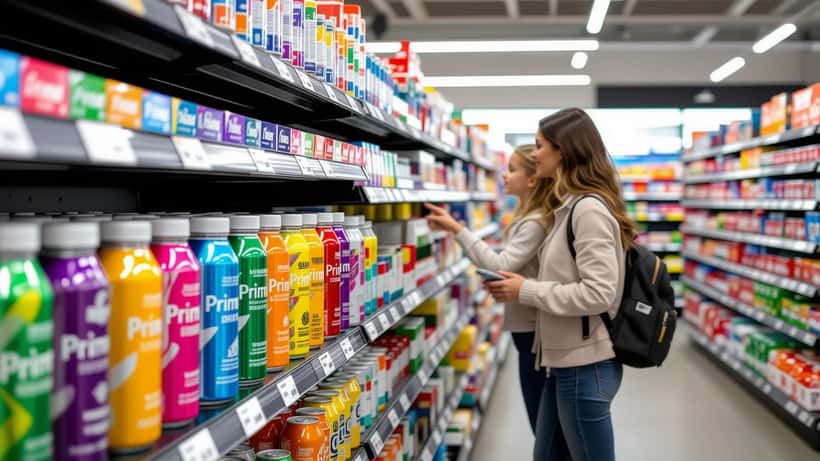
Australians walking into a convenience store in 2026 are met with a wall of neon cans that barely existed three years ago. Prime Drinks—fronted by influencers Logan Paul and KSI—have moved from viral unboxing videos to supermarket shelves, school lunchboxes and workplace fridges. For a country already obsessed with sports hydration and caffeine culture, the arrival of Prime Energy and Prime Hydration is less a novelty and more a case study in how quickly a beverage brand can reshape consumer behaviour.
The numbers tell part of the story. Prime Hydration alone was reported to have generated more than a billion dollars in global sales within its first two years, and Australia has become one of its strongest per-capita markets. Supermarkets, gyms and petrol stations now stock the brand alongside Powerade and Red Bull, while resale groups and schoolyard traders still treat limited-edition flavours as collectibles. For parents, teachers and health professionals, the brand is a recurring conversation starter. For consumer experts, it is a textbook example of demand engineering.
What separates Prime from traditional soft drinks is not just its ingredients list. The company built demand before the product was widely available. Shortages, influencer drops and flavour drops created artificial scarcity in a category better known for reliable supply chains. By the time Australian shelves were consistently stocked, millions of consumers had already decided the brand was worth seeking out. That momentum now carries into 2026 as the company expands into new flavours, functional claims and retail partnerships.
The product line itself is split into two distinct offers. Prime Hydration is marketed as a sports drink containing electrolytes, B vitamins and coconut water concentrate, with no caffeine and relatively low sugar. Prime Energy, by contrast, contains 200 milligrams of caffeine per can and is explicitly positioned as an energy shot for adults. The distinction matters, because the two products are often grouped together under the same brand name even though they serve different audiences and carry different risk profiles.
Nutrition experts consulted on the trend emphasise that hydration products are generally safe for most healthy people when consumed in moderation. The concern arises when a brightly coloured can with a celebrity face is treated as a health food or, worse, as a replacement for water. Children and adolescents are particularly sensitive to marketing cues, and some Australian schools have already restricted energy-drink sales on campus. Dietitians note that while electrolyte drinks have a role during prolonged exercise, the average school day does not create enough sweat loss to justify regular consumption.
The energy variant attracts more scrutiny. At 200 milligrams of caffeine per 355-millilitre can, Prime Energy sits at the upper end of what Food Standards Australia New Zealand considers appropriate for a single-serve caffeinated beverage. For comparison, a standard espresso contains roughly 60 to 100 milligrams. Health professionals warn that consuming one can after a coffee or pre-workout supplement can quickly push an adult into the jittery, sleep-disrupting zone. For teenagers, pregnant women and people with anxiety or heart conditions, the product is generally advised against.
Consumer lawyers add another layer. In a marketplace where influencer marketing blurs the line between entertainment and advertising, brands face growing pressure to substantiate health claims. Australia’s advertising codes already require that testimonials and endorsements be truthful and not misleading, and the Australian Competition and Consumer Commission has previously taken action against brands that overstate benefits. Experts expect that as the functional beverage market matures, regulatory attention will tighten around caffeine labelling, age recommendations and sustainability claims.
For the Expert Zoom marketplace, the Prime Drinks phenomenon is a useful signal of broader consumer anxiety. People are not just buying a drink; they are buying identity, performance and reassurance. That creates demand for independent advice. A parent wondering whether Prime Energy is safe for a fifteen-year-old is not looking for a brand website. A small retailer deciding whether to stock the product wants margin data and liability guidance. An athlete curious about electrolyte balance would rather speak to a sports dietitian than read a can label.
The consultation opportunity is therefore spread across several specialisations. Nutritionists can help families decode caffeine limits and hydration needs. Consumer lawyers can advise retailers on age-restriction signage and product claims. Marketing consultants can explain how scarcity and influencer trust built the brand. Each of these conversations turns a trending product into practical, personalised guidance.
Businesses watching the energy drink boom should also consider supply-chain and reputation risks. Australian retailers that rushed to stock Prime during the 2023 shortage sometimes faced grey-market stock, inconsistent pricing and customer complaints about expired or imported cans. Those operational headaches are a reminder that viral demand can strain logistics and customer service as much as it boosts revenue. Expert advice on procurement, compliance and crisis communication can prevent a trending SKU from becoming a liability.
Looking ahead through 2026, the functional beverage category shows no sign of cooling. Competitors are launching influencer-backed drinks of their own, and supermarket shelves are becoming more crowded. Regulatory agencies are reviewing caffeine thresholds, and public health advocates continue to call for tighter marketing restrictions to children. The brands that survive beyond the hype cycle will likely be those that can back their claims with transparent formulation and responsible marketing, while the brands that rely only on celebrity cachet may fade as quickly as they appeared.
For consumers, the simplest expert guidance remains unchanged: read the label, know the caffeine content, treat energy drinks as occasional rather than routine, and remember that no beverage replaces water, sleep or a balanced diet. For anyone uncertain about how Prime Drinks fit into their health, business or retail strategy, a short consultation with a verified specialist is a far safer investment than a fridge full of neon cans.
