 Emily Watson
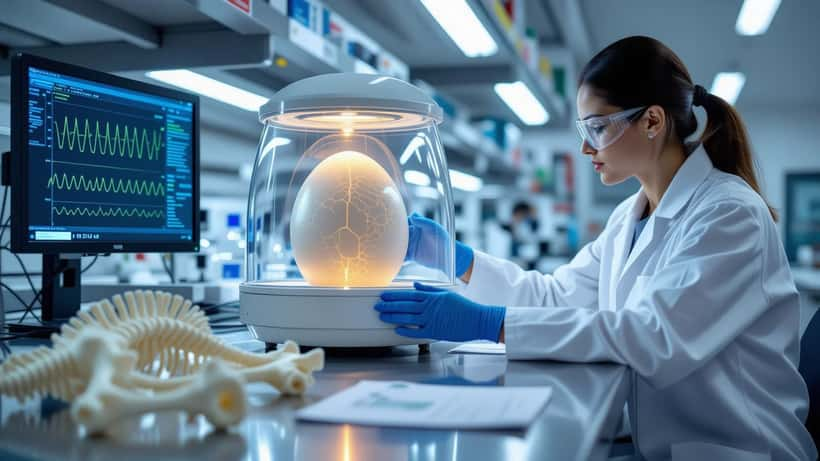
Filmmaker Peter Jackson has thrown his weight — and roughly US$15 million of his own money — behind a project to bring back the South Island giant moa, a flightless bird that New Zealand hunters wiped out around 600 years ago. In May 2026, his partner company Colossal Biosciences unveiled a purpose-built artificial incubator designed to hatch the enormous eggs of the long-dead bird, the clearest sign yet that "de-extinction" has moved from thought experiment to laboratory reality.
For Australian readers watching across the Tasman, the moa story is more than a curiosity. It lands squarely in the middle of a debate that veterinary and animal-genetics specialists here have been having quietly for years: what do we owe an animal that we engineer into existence, and how ready are our welfare and biosecurity systems for creatures that do not fit any existing rulebook?
What Jackson and Colossal are actually building
Colossal Biosciences — the same US company behind headline-grabbing work on the dire wolf and the woolly mammoth — announced the moa project in partnership with the Ngāi Tahu Research Centre at the University of Canterbury. Jackson, a Colossal investor, acted as the facilitator who brought the parties together. He and collaborator Fran Walsh also contributed something no cheque can buy: a private collection of around 400 well-preserved moa bones already analysed for DNA.
The plan is not to clone a moa. It is to read the extinct bird's genome from those bones, identify the genes that made a moa a moa, and edit those changes into the cells of a living relative such as the emu or tinamou. The engineered embryo would then be raised in the custom incubator revealed this year, which had to be built from scratch because no living bird lays an egg anywhere near the size a giant moa did — larger than an ostrich egg.
According to Time, the target is a living bird that resembles the giant moa rather than a genetically identical copy. That distinction matters enormously once the animal is real and someone has to care for it.
Why a vet is watching this closely
Here is the part the movie-trailer coverage tends to skip. A gene-edited bird engineered to look like an animal no living human has ever kept is, from a welfare standpoint, a blank page. There is no established diet, no known disease profile, no behavioural baseline, and no veterinary literature on how it ages, breeds or feels pain.
Animal-health experts point out that de-extinction compresses thousands of years of natural adaptation into a single generation raised in captivity. That raises practical questions a vet would insist on answering before any egg is hatched: How will the bird's musculoskeletal system cope at that size? What happens to an animal with no parent of its own species to learn from? Who monitors it for the genetic disorders that gene editing can unintentionally introduce?
These are not abstract concerns. They are the same welfare principles that govern intensive breeding of pedigree dogs, exotic-pet ownership and livestock genetics in Australia today — fields where a qualified veterinarian is the difference between a healthy animal and a suffering one.
The Australian regulatory backdrop
Australia already has a framework for exactly this kind of science. Gene editing of animals is overseen by the Office of the Gene Technology Regulator (OGTR), an agency within the federal Department of Health, Disability and Ageing. Under current rules, gene-editing techniques that do not introduce new genetic material fall outside heavy regulation, while edits that insert genetic material — closer to what a full de-extinction attempt involves — continue to be regulated as genetically modified organisms. Readers can see how the system works on the OGTR's own explainer at ogtr.gov.au.
Layered on top of that is Australia's famously strict biosecurity regime. Any novel bird — engineered or otherwise — would face intense scrutiny before it could be imported or bred here, precisely because a species with no evolutionary history on this continent is an unknown quantity for native ecosystems.
What this means if you keep animals
Most people reading about the moa will never handle one. But the technology behind it is already trickling into everyday animal ownership, and that is where an expert consultation pays off.
Commercial genetic testing for pets is now widely available, promising to flag inherited disease risks in dogs and cats. Selective breeding aimed at specific traits — coat, size, temperament — is effectively low-tech genetic engineering, and it routinely produces the joint, breathing and heart problems vets treat every week. As gene-editing tools grow cheaper, the line between "resurrecting a moa" and "designing a healthier labrador" will keep blurring.
A veterinary or animal-genetics specialist can help you make sense of it all: interpreting a DNA test result rather than panicking over it, advising whether a breed's known genetic problems make it the wrong choice for your household, and flagging welfare red flags in animals bred for extreme features. If you are buying a purebred pet, planning to breed, or simply trying to understand a testing kit's report, that professional guidance is worth far more than a marketing brochure.
The bottom line
Peter Jackson's moa project is a genuine scientific milestone, and the incubator unveiled in 2026 shows the engineering is racing ahead of the ethics. Whether or not a giant bird ever strides across a New Zealand valley again, the real story for Australian animal owners is closer to home: gene technology is reshaping how animals are bred, tested and cared for, and the rules are still catching up.
Before you act on any of it — a genetic test, a breeding decision, an exotic purchase — the smartest move is to talk to a qualified veterinarian who can weigh the welfare and health realities behind the headlines. De-extinction may be science fiction becoming fact, but responsible animal care remains stubbornly, reassuringly human.
