 Olivia Thompson
The 2026 Repco Bathurst 1000, running from October 8 to 11 at Mount Panorama, is unlike any race weekend in the event's six-decade history. This year, the entire off-track programme has been shaped around one man: Peter Brock, Australia's most decorated racing driver, who died on September 8, 2006 — twenty years ago this month.
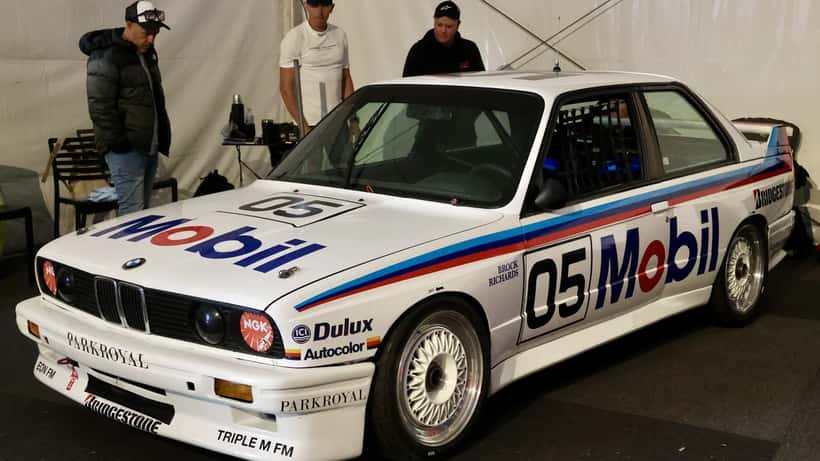
Supercars commissioned Victorian artist David Bromley to produce a series of original artworks. A dome installation called Brocky's Helmet now rises above Church Street in Bathurst, funded by the NSW Government's Open Streets Program. At Peter's Pitlane, alongside the National Motor Racing Museum, the original cars that Brock steered to nine victories sit within view of anyone holding a Bathurst ticket. Craig Lowndes, who drove alongside Brock multiple times, released a public tribute marking the anniversary. The emotion is real. But for a growing cohort of Australian investors, the coverage carries a colder signal: a market moment.
The King of the Mountain's Legacy in Numbers
Peter Brock won the Bathurst 1000 nine times between 1972 and 1987. His HDT Special Vehicles spin-off — founded after a public falling-out with Holden over the controversial "Energy Polarizer" device — produced some of the rarest production cars in Australian motoring history. Only 170 genuine HDT Special Vehicles road cars were ever manufactured.
The auction numbers on those cars have moved sharply. A Lloyds Auctions sale near Mount Panorama in 2018 attracted fierce bidding on Brock-related vehicles, with hammer prices well above guide across the 30-car collection. A race-worn Brock helmet from the early 1980s fetched more than $30,000 at a Shannons sale earlier this decade, up from under $8,000 for comparable items in the mid-2010s. According to Shannons' published annual market reports, collectible Australian-built performance cars have delivered compound annual returns of 6–9% over the past decade — outpacing average residential property yields in Sydney and Melbourne over the same period.
Anniversaries amplify these effects. Lloyds Auctions noted a 15–20% uplift in Brock memorabilia prices in the period around the 10th anniversary in 2016. Wealth advisers who specialise in alternative assets expect a similar — potentially larger — effect through late 2026 and into 2027, as media coverage and event attendance drive new buyers into the market.
Why Brock Collectibles Have Moved Beyond Passion Asset Status
Standard investment theory treats passion assets — art, wine, classic cars, memorabilia — as high-risk, illiquid, and speculative. A subset of iconic Australian motorsport items has started to blur that classification.
Supply is fixed and declining. Only 170 HDT road cars exist. Accidents, modifications, and deterioration have reduced the number of unmodified, documented examples further. A car that leaves the market rarely returns.
Provenance commands a significant premium. Items with documented chains of ownership — pieces that appeared in media coverage or were gifted by Brock personally — sell for multiples above generic examples. A race suit worn during a Bathurst victory year outperforms a suit from a non-winning season by a wide margin, because collectors track the nine winning years obsessively.
Liquidity has genuinely improved. Online auction platforms, combined with specialist houses such as Lloyds and Shannons, have made the secondary market for Brock items a national marketplace. A buyer in Perth can now bid in real time against a buyer in Brisbane. That compression of geographic friction reduces the traditional liquidity discount that made collectibles poor portfolio candidates.
The Tax Trap Most Brock Collectors Walk Into
Here is what most buyers miss when the auction paddle goes up. The Australian Taxation Office treats collectibles held outside a business or superannuation structure as personal use assets for capital gains tax (CGT) purposes — but with a critical threshold.
Any collectible acquired for more than $500 is subject to CGT on sale. The 50% CGT discount applies if held for more than 12 months as an individual. This means a $480,000 Brock HDT Commodore that appreciates to $700,000 generates a $220,000 gross gain. After the 50% discount, you add $110,000 to your assessable income in the year of sale. At the top marginal rate (45% plus the 2% Medicare levy), the CGT bill is approximately $52,000.
Inside a self-managed super fund (SMSF), the tax environment differs. Funds in the accumulation phase pay 15% on investment income; pension-phase funds pay 0%. But the ATO's rules on collectables as CGT assets impose strict conditions on SMSF ownership. The item cannot be displayed, used, or stored at a property of a member or related party. It must be insured in the SMSF's name, stored commercially, and independently valued each year. A classic car in your home garage does not qualify, even if your SMSF technically owns it.
Wealth managers call the gap between these two outcomes "the collector's tax trap": buyers who acquire high-value Brock items personally — for perfectly legitimate emotional and financial reasons — often fail to model the CGT liability at purchase. When the sale or death event arrives, the tax bill is a surprise.
Two Collectors, One Auction, a $67,500 Difference
Consider two Bathurst enthusiasts. Both are 48 years old and live in regional New South Wales. Both intend to bid on the same 1987 HDT Special Vehicles Commodore at a 2026 anniversary auction, with an expected hammer price of $480,000.
Michael buys the car personally, using funds from his savings account, and stores it in a controlled shed on his rural property. Over 12 years the car appreciates to $780,000 — a $300,000 gain. When he sells at age 60, his other income that year is $90,000. After the 50% CGT discount, he adds $150,000 to his assessable income. His effective marginal rate on that increment is 45%. His CGT liability: approximately $67,500.
Karen consults a wealth adviser before the auction. She already holds $620,000 in super. Together, they establish an SMSF that acquires the car through a formal purchase transaction — commercial insurance in the SMSF's name, off-site storage in a compliant specialist facility, and annual independent valuations. The fund transitions to pension phase when Karen retires at 60. Under current law, income and capital gains inside a pension-phase SMSF are taxed at 0%. When the same car sells for $780,000 after 12 years, the fund pays no CGT on the $300,000 gain.
If Karen's annual SMSF compliance and storage costs run $6,000 per year, she spends $72,000 over 12 years on administration. She saves $67,500 in CGT. The arithmetic is close at this scale — but add a second high-value Brock asset or a longer holding period, and the SMSF structure pays for itself many times over. For assets appreciating above 7% per year, the savings compound in Karen's favour every year she holds.
Both Michael and Karen love Peter Brock equally. Only one of them got advice before the auction commenced.
Before You Bid at the Next Brock Sale
The anniversary market for Brock items will remain active well beyond the October 11 event close. Lloyds, Shannons, and specialist dealers are already fielding enquiries; the renewed media cycle will draw new buyers who have not previously participated in the collectibles market.
If you are considering a purchase — whether a $4,000 race suit or a $500,000 Commodore — four steps apply before bidding:
Verify provenance independently. Auction houses bear no authentication liability beyond standard disclaimers. An independent verification from a motorsport heritage specialist costs $500–$2,000 and is worth it on any item above $10,000.
Model the CGT before the hammer falls. What you owe depends on your income profile, the ownership entity, and your projected holding period. Running this calculation after you have bought the car is too late to restructure.
Review ownership entity options. Personal ownership, company, trust, and SMSF each carry different tax, insurance, and succession outcomes. The right answer depends on your age, existing asset base, and retirement timeline.
Arrange specialist insurance before the car moves. A $480,000 agreed-value classic car policy costs far less than the asset is worth. A car that burns in an uninsured shed is a total loss without recourse.
Peter Brock's twenty-year anniversary is a genuine cultural moment for Australia. For investors already holding — or about to enter — the Brock memorabilia market, it is also a prompt to ask whether your tax and ownership structure is keeping pace with the asset's appreciation.
This article is general in nature and does not constitute financial advice. Individual circumstances vary. Speak with a licensed financial adviser before making investment decisions.
