 Sophie Thompson
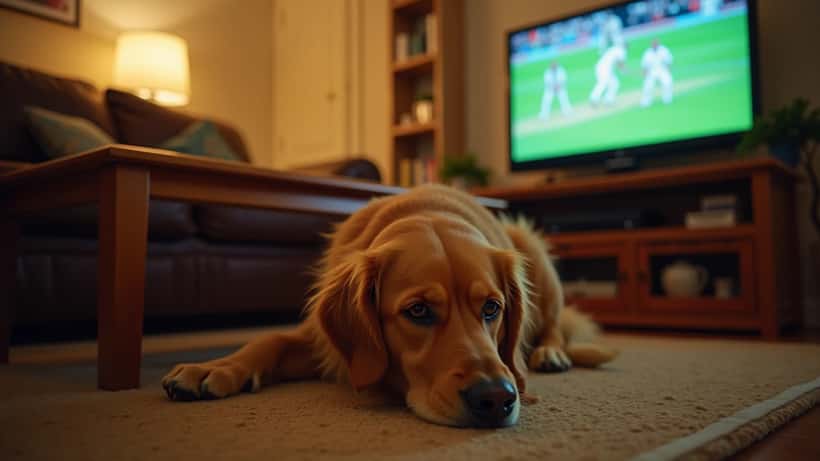
On the evening of 25 April 2026, Lahore Qalandars kept their Pakistan Super League finals hopes alive with a six-wicket victory over Peshawar Zalmi at Gaddafi Stadium in Lahore. Sikandar Raza hit 29 off just 11 balls and Daniel Sams finished unbeaten on 35 off 15, sealing the chase despite Peshawar posting 199 for 4. For cricket fans watching from Australian lounge rooms, it was another dramatic night. For many Australian dogs, it may have been a difficult one.
PSL 2026 has drawn enormous viewership across Australia's substantial South Asian community and cricket-loving public. Night matches, live commentary blaring from televisions, and the sharp emotional swings that come with T20 cricket — from crowd roars to sudden silences — create exactly the kind of unpredictable noise environment that triggers anxiety in dogs.
Noise Fear Is the Most Common Behavioural Problem in Pet Dogs
According to a peer-reviewed study published in the journal Frontiers in Veterinary Science, as reviewed by the National Institutes of Health, fear of loud noises is the most common behavioural problem observed in domestic dogs. The study found that noise-related anxiety affects a significant proportion of the dog population and is consistently underreported by owners who do not recognise the symptoms as a medical issue.
This is a problem with direct relevance to Australian households. In March 2026, Dog Anxiety Awareness Week drew attention from Australian veterinary clinics across the country, with multiple practices in Sydney, Melbourne, and Brisbane reporting a notable increase in consultations for anxiety-related presentations.
The connection to live sports viewing might not be obvious. But the patterns are real: sudden volume spikes, crowd noise, repetitive commentary sounds, and — if watching with other fans — excited shouting and cheering all create the same kind of auditory unpredictability that phobia research has shown triggers fear responses in noise-sensitive dogs.
How to Tell if Your Dog Is Struggling
Many Australian dog owners misread anxiety as misbehaviour. A dog that is panting heavily during a cricket match, hiding under furniture, or becoming destructive is not being difficult — it is communicating genuine distress.
Veterinarians identify the following as common signs of noise-related anxiety in dogs:
- Panting and pacing that begins when loud sounds start and stops when they do
- Hiding behind furniture, under beds, or in cupboards
- Trembling or shaking, sometimes sustained for hours after noise has subsided
- Excessive barking or whining triggered by sudden sounds from the television
- Destructive behaviour — chewing, scratching doors, or breaking items — as a stress outlet
- Loss of appetite on evenings when noise exposure occurs
If your dog displays two or more of these signs during PSL nights or other sporting events, a veterinary consultation is appropriate. Early intervention consistently produces better outcomes than waiting for behaviour to escalate.
What Australian Vets Recommend
Veterinary guidance for noise anxiety in Australia follows a multi-layered approach. No single solution works for every dog, and severity varies widely from mild discomfort to full-blown phobia requiring medication.
Create a Safe Retreat
Before match night begins, establish a quiet, familiar space away from the television — a laundry, a back bedroom, or a crate covered with a blanket. Dogs with noise anxiety genuinely benefit from having a physical refuge that is consistently theirs during stressful periods. Add familiar bedding and a recently-worn garment to reinforce the safe zone.
Try Calming Aids First
For mild to moderate anxiety, Australian vets typically recommend trialling non-pharmaceutical options first:
- Pheromone diffusers (such as Adaptil) release synthetic calming pheromones that mimic those produced by lactating mothers. Studies show measurable reductions in anxiety behaviours in dogs exposed to these products.
- Anxiety wraps (such as ThunderShirts) apply gentle, constant pressure across the torso. Evidence is mixed, but many owners report significant reductions in visible stress markers during noise events.
- White noise or music played softly in the retreat area can help mask sudden sound spikes from the living room.
The Bunnings Dog Hoodies: Cute Trend or Real Necessity? piece explored a related question — whether commercial comfort products genuinely address dog stress, or serve human preferences. A vet can help you assess which interventions are evidence-based for your specific dog.
Exercise Before the Match
A long walk or vigorous play session before an evening cricket match can meaningfully reduce baseline anxiety in many dogs. Physical exhaustion lowers cortisol levels and makes dogs less reactive to environmental stressors. Australian vets recommend at least 45 minutes of active exercise in the three hours before a known noise event.
Desensitisation Training
For dogs with chronic noise anxiety, desensitisation therapy involves gradually exposing the dog to recorded crowd noise at very low volume, building tolerance over weeks and months. This is a structured process and works best when guided by a vet or veterinary behaviourist. Do not attempt rapid exposure — forcing a noise-phobic dog to sit near a loud television does not build tolerance and typically worsens the condition.
When Medication Is Appropriate
For dogs with severe anxiety — full panic responses, self-harm behaviours, or inability to function during noise events — veterinary-prescribed medication is a genuinely appropriate intervention. Options include fast-acting anxiolytics for acute events and daily medication for dogs with chronic generalised anxiety. Both approaches are safe when prescribed and monitored by a qualified vet.
The PSL Finals Are Coming — Plan Ahead
The Lahore Qalandars' six-wicket win on 25 April 2026 keeps them in contention for the PSL 2026 finals. More big match evenings are ahead — and with them, more risk of noise exposure for your dog.
The best time to consult a veterinarian about noise anxiety is before the problem becomes severe, not in the middle of a panic episode. Australian pet owners can connect with experienced veterinarians through ExpertZoom, where consultations are available online without a wait.
If your dog has struggled through PSL nights, AFL evenings, or any sporting broadcast this season, book a consultation now — well ahead of the finals.
