 Emily Turner
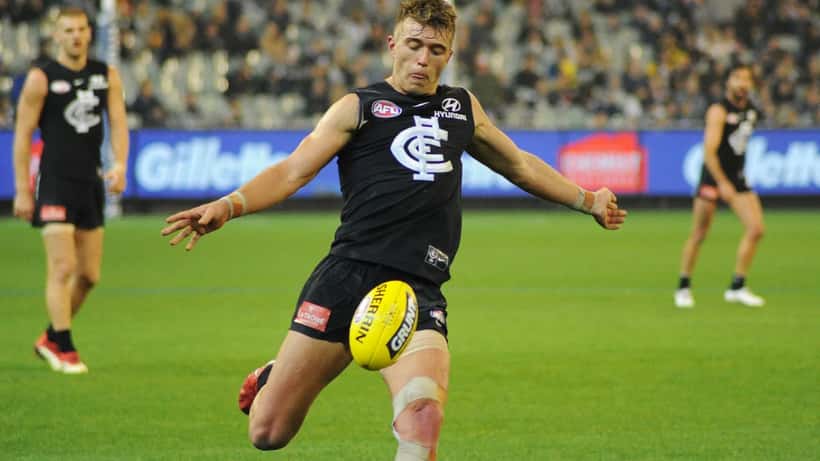
Carlton captain Patrick Cripps found himself on the bench during the second quarter of the Blues' match against the Adelaide Crows on 9 April 2026 — not injured, but rested by coach Michael Voss as part of a deliberate workload management strategy. The decision sparked fierce debate across Australian football, but it also raises a question every weekend athlete and active person should understand: when does managing a high performer's physical load become medically essential?
What Happened at the MCG
Carlton lost the match 17.12 (114) to 12.14 (86). In the opening minutes of the second quarter, Cripps — who had already recorded 12 disposals, six clearances, five tackles, and a goal assist — was pulled from the field. Coach Michael Voss defended the call firmly: "The way forward is to share the load. We don't ask any player to play 100 per cent game time."
The decision was tactical, not injury-driven. But the broader principle — that even elite athletes have a finite physical capacity that requires active management — is one that sports medicine specialists advocate strongly.
The Science Behind Workload Management
In elite sport, the concept of "load management" is well-established in sports medicine literature. Overloading high-use players — particularly those in physically demanding roles like midfielders in AFL — significantly increases injury risk.
According to research published by the Australian Institute of Sport, players who exceed their average weekly training load by more than 15 per cent in a given week face a substantially higher chance of soft tissue injury. Cripps plays approximately 85 per cent of available game time across a season, meaning strategic rests are not just tactical — they are preventive medicine.
The Australian Institute of Sport has published guidelines on athlete load monitoring that apply as much to community sport as to the elite level. The fundamental principle: your body's ability to recover is as important as your ability to perform.
Chronic Load vs Acute Spikes — Why It Matters for Everyone
Sports medicine doctors use a metric called the "acute:chronic workload ratio" — comparing recent activity load to the sustained load over the past four weeks. When the acute load spikes suddenly (a big weekend of sport after a sedentary week, for example), injury risk rises sharply.
This is not an elite athlete problem. It is the core mechanism behind some of the most common injuries seen by sports medicine specialists:
- Hamstring and quad strains in recreational players returning after a break
- Achilles tendinopathy in runners who suddenly increase weekly kilometres
- Stress fractures in weekend warriors who do too much, too fast
- Shoulder rotator cuff issues in overhead sport athletes who spike session intensity
The pattern is almost always the same: a gap in activity, followed by a sudden return to high-intensity effort, followed by injury.
When Should You See a Sports Medicine Specialist?
Most Australians wait until they are in significant pain before seeing a sports medicine doctor. This is backwards. The time to consult a specialist is before the injury becomes chronic — ideally when:
- You are returning to sport after a break of more than three to four weeks
- You are increasing your training load significantly (new season, new programme, new sport)
- You have a history of a recurring injury in a particular area
- You feel persistent tightness, stiffness, or low-grade discomfort that doesn't resolve after 48 hours
A sports medicine consultation typically includes a functional movement screen, a load history review, and specific advice on safe return-to-play protocols — the same process elite clubs like Carlton use, scaled for your individual needs.
The Voss Principle Applied to Real Life
Michael Voss made an unpopular decision because he understood something important: protecting a key asset now prevents losing that asset entirely later. The same logic applies to your body.
Whether you are training for a local fun run, playing Saturday morning football, or simply trying to stay active into your 50s and beyond, the principle is identical. Smart load management — guided by a professional when needed — is not a sign of weakness. It is the strategy that keeps you on the field.
Red Flags That Demand Immediate Attention
Some symptoms should not be managed at home. See a sports medicine specialist urgently — or go to emergency if severe — when you experience:
- Sudden sharp pain at the point of impact or during a sprint, jump, or change of direction
- A "pop" or "snap" sensation in a joint or muscle, which can indicate a ligament tear or acute tendon rupture
- Significant swelling in a joint within hours of activity
- Inability to bear weight on a limb
- Numbness, tingling, or weakness in an arm or leg during or after exercise
These are not situations where ice, rest, and hope are sufficient. Early intervention — a proper diagnosis using imaging if needed — dramatically improves long-term outcomes compared to delayed treatment.
The Bigger Picture: Preventive Sport Medicine Is Mainstream in 2026
Australia has one of the world's most active sporting cultures. Community sport participation has grown steadily since the pandemic years, and with that growth comes increased exposure to injury. Sports medicine clinics across the country report a consistent pattern: most patients arrive with injuries that were preventable with earlier professional advice.
The AFL model — where every club employs a full-time medical and conditioning staff dedicated to individual load monitoring — is simply the high-resource version of what any active person should have access to. Sports medicine specialists in private practice offer the same assessments for general patients, often without a referral.
The conversation about Patrick Cripps's bench time will likely fade by next weekend's match. But the underlying message — that intelligent management of your physical capacity is a medical priority, not just a coaching strategy — applies to everyone who moves.
This article provides general health information only. Consult a qualified sports medicine specialist for personalised advice about your physical condition.
