 Lachlan Mitchell
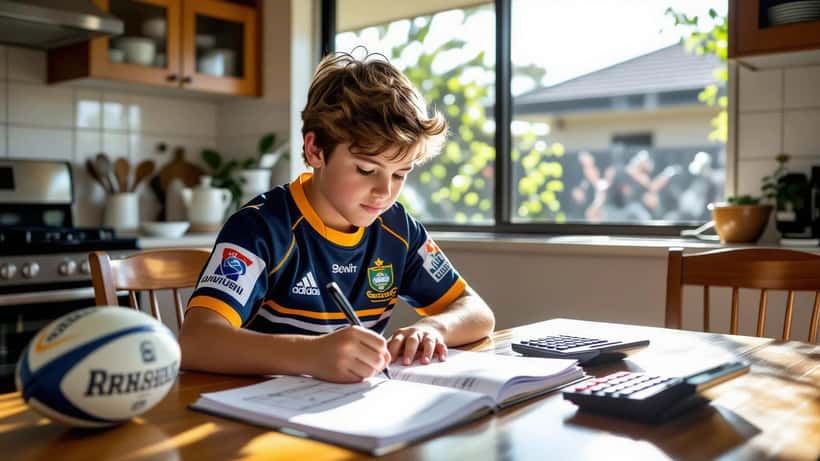
Parramatta halfback Mitchell Moses leads the Eels into their 80th season in 2026 as captain, and for tens of thousands of junior fans across Western Sydney the blue-and-gold obsession is running hot. Tutors say that fixation is a hidden asset: the same child who "hates maths" will happily calculate a winning percentage, compare points differentials or argue about finals probabilities. Used well, the 2026 NRL season is a term's worth of statistics, ratios and data literacy hiding in plain sight.
Why the Eels are trending again
The 2026 campaign is the club's 80th and its 29th in the National Rugby League, with Jason Ryles coaching and Moses captaining for a second year. Parramatta arrive with genuine momentum: they won five of their last seven matches in 2025 — including an upset of eventual premiers Brisbane — to finish 11th, then claimed the NRL Pre-season Challenge in February 2026. Their draw opens with away trips to grand finalists Melbourne and to Brisbane before six of the next seven land at CommBank Stadium.
Every one of those sentences is a number a child can work with. "Five of their last seven" is a fraction, a percentage and a decimal in one breath. "Eleventh out of 17" invites a discussion about ranking and quartiles. A private tutor's job is simply to make the child notice the maths they are already doing for fun.
The maths your kid is already doing
Australian primary and secondary maths — set nationally through the Australian Curriculum administered by ACARA — leans heavily on fractions, percentages, averages and statistical reasoning. Those are precisely the tools a rusted-on Eels supporter reaches for without prompting.
Start with win rate. If Parramatta play 24 regular-season games and you want to model a finals push, ask your child what percentage of matches a team usually needs to reach the top eight. Converting "13 wins from 24" into 54 per cent is a Year 5 skill dressed up as a Saturday-night argument. Points differential — points scored minus points conceded — introduces negative numbers and integers to a child who would otherwise glaze over at the phrase.
Then move to averages. Moses's kicking metres, a fullback's run metres, a team's average points per game: each is a mean waiting to be calculated. Ask your child to track the Eels' points across three rounds and work out the average. Introduce the median and the mode using the same three numbers and you have quietly delivered a full data-handling lesson.
Probability, without the jargon
Finals races are probability lessons in disguise. When commentators say a team "needs to win four of its last five to make the eight," they are describing conditional outcomes. A tutor can turn that into a simple tree diagram: win or lose, round by round, counting the paths that end in September football.
Coin-toss modelling makes it concrete. Flip a coin for each remaining fixture, "win" for heads, and see how often your imaginary Eels reach eight wins. Do it ten times, record the results, and your child has run a basic simulation — the same logic behind the probabilities broadcasters flash on screen. The lesson lands because the child cares about the answer.
This is also where healthy scepticism starts. Real teams are not coins; form, injuries and draw difficulty all skew the odds. Talking through why the model is imperfect is itself a curriculum outcome — students are expected to question data and recognise its limits, not just crunch it.
Data literacy is the real prize
The point is not to raise a generation of bookmakers. Betting is illegal for minors in Australia, and a responsible tutor keeps the maths firmly on the analysis side of the line, never the wagering side. The genuine payoff is data literacy: reading a ladder, interpreting a graph, spotting when a statistic is being used to mislead.
Ask a child to graph the Eels' points differential across the opening rounds and they learn to plot, scale an axis and read a trend. Ask them whether "won five of seven" tells the whole story — it ignores who the opponents were — and they learn that context changes meaning. These are the exact reasoning skills NAPLAN numeracy papers reward, and they transfer far beyond rugby league into science, geography and everyday budgeting.
How a tutor turns fandom into progress
Parents often reach for a tutor when a child is disengaged rather than incapable. An experienced maths tutor will run a quick diagnostic, find the gap — often fractions or place value — and then rebuild confidence using material the child already loves. The Eels' 2026 fixtures become the worksheet; the ladder becomes the textbook.
A few practical moves work well at home before you even book a session:
- Keep a shared "Eels maths" notebook and log points for and against each round, then calculate the running average together.
- After each game, ask one percentage question and one difference question — no more, so it stays fun.
- When the finals maths gets genuinely hard, that is the signal to bring in a specialist rather than let frustration take over.
If your child is a year or more behind, or maths anxiety has set in, a qualified tutor can diagnose the underlying gap and design a plan around their interests — including a footy team. On Expert Zoom you can compare private maths tutors and homework-help specialists across Western Sydney and greater NSW, read verified reviews and book a first session that meets your child exactly where their enthusiasm already is.
The Eels will spend 2026 chasing the top eight. Your child, quietly, can spend it mastering fractions, averages and probability — and never once feel like they are doing homework.
This article is general educational information, not personalised academic assessment. For a tailored learning plan, consult a qualified tutor or your child's teacher.
