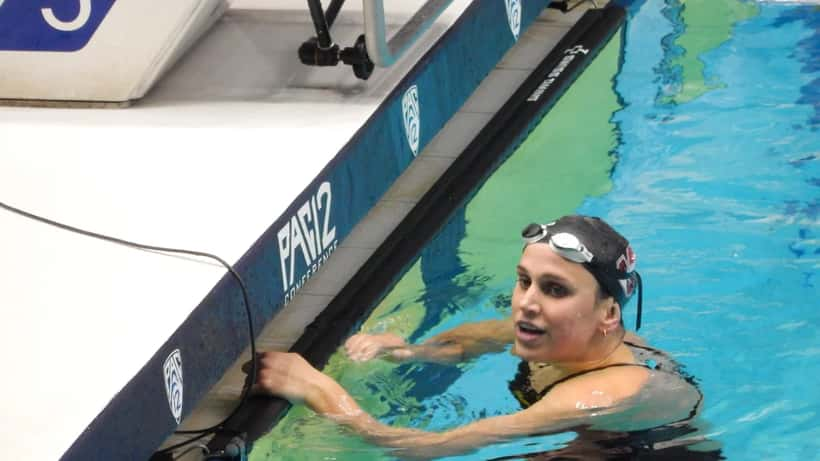
 Chloe Anderson
Australia returned from the 2026 Pan Pacific Swimming Championships in Irvine, California, with the country's most decorated Pan Pacs result in a generation — 35 medals, including 15 golds, in late August 2026. But behind the podium moments and national anthems, the tournament told a secondary story: elite training loads carry real health consequences that reach far beyond the Olympic pool, and they matter to every Australian who swims competitively or recreationally.
Australia's Historic Pan Pacs Result — and the Gaps in the Team
The performances at Pan Pacs 2026 were genuinely remarkable. Lani Pallister won three individual gold medals, setting championship records in all three events: the 200m freestyle (1:53.67), the 400m freestyle (3:58.42), and the 800m freestyle (8:06.10), earning her the title of Female Swimmer of the Meet. Jamie Jack broke the 50m freestyle championship record, clocking 21.35 seconds. Sam Short set a personal best and championship record in the 400m freestyle final. In total, Australia finished second overall in the medal standings behind the United States, with one of the deepest squad performances in Pan Pacs history.
Yet the team that boarded the flight to Irvine was not at full strength. Several key Australian swimmers were absent, sidelined by injuries and health complications — including cases of mononucleosis — in the lead-up to the event, according to reporting from SwimSwam. Those absences raised a question that circulated widely among Australian swimming fans: how do athletes competing at the highest level end up unable to race at a championship meet?
The answer begins with training. To compete at the standard required for Pan Pacs qualification, elite swimmers typically maintain loads that test the limits of what the human body can sustain over months of preparation.
What Elite Training Loads Actually Do to the Body
Competitive swimmers at the elite level often train between 60,000 and 80,000 metres per week — roughly equivalent to crossing the English Channel twice over, every seven days, for months at a stretch. That volume generates extraordinary cumulative stress on specific joints and soft tissue structures.
According to Sports Medicine Australia, swimmer's shoulder — formally subacromial impingement syndrome — affects up to 80% of competitive swimmers at some point in their careers. The repetitive overhead rotation of freestyle and butterfly stroke compresses the tendons of the rotator cuff, leading to inflammation, micro-tears, and, if unmanaged, structural damage that requires surgical intervention.
Breaststroker's knee is the second most prevalent injury category, caused by the repetitive medial stress of the whip kick on the medial collateral ligament. Lower back and cervical spine issues are also common, particularly in swimmers with suboptimal breathing mechanics or stroke asymmetry that develops during high-volume training blocks.
Elite athletes have entire support systems around these risks: physiotherapists, biomechanics analysts, strength and conditioning coaches, and load management software that tracks training stress in real time. Recreational swimmers have almost none of that infrastructure, which is precisely why self-awareness and timely professional consultation become the most important protective tools available to them.
The Weekend Warrior Connection
Australia has millions of regular recreational swimmers. Club memberships, triathlon participation, and open-water event entries have all trended upward in recent years as the country's swimming culture continues to expand. Many of these adults are training with competitive intent — targeting sprint triathlons, masters competitions, or charity ocean swims — but without professional coaching or medical monitoring.
Many carry a shared and consequential misconception: that pain during training is either normal or something to be pushed through. In fact, the distinction between productive discomfort and injury signal is precisely what a sports health specialist is trained to identify — and the difference between the two has major implications for training continuity and long-term joint health.
Soreness that fades within 24 to 48 hours after a hard session is generally a sign of adaptive stress — the body responding to load and recovering. Pain that persists beyond two to three days, sharp sensations during specific movement patterns, or discomfort that disrupts sleep at night are warning signs. So is pain that migrates from one joint to another over time, which often indicates a compensatory movement pattern caused by an unaddressed underlying issue. Catching these signals early is the difference between a one-week modification to training and a six-month rehabilitation process.
What Happens When You Wait Too Long — A Concrete Case
Consider the following realistic scenario, representative of many patients presenting to sports medicine clinics across Australia in the weeks after a major swimming event like Pan Pacs.
A 42-year-old recreational swimmer in Brisbane — inspired by Australia's Pan Pacs haul — decides to enter a local sprint triathlon in November 2026. To prepare, they increase pool training from three sessions per week to six sessions over the course of three weeks, adding an extra 15,000 metres weekly to their previous baseline of 9,000 metres. That is a 67% jump in load over 21 days. By week four, they notice a dull aching sensation in the right shoulder after every session. By week seven, the ache is present during sessions and extends into the evening.
The if/then rule: if shoulder, knee, or lower back pain persists for more than 14 consecutive days after a training load increase of more than 20%, that is a clinically recognised threshold requiring assessment by a sports medicine practitioner or physiotherapist. Waiting beyond that point statistically doubles the likelihood of the injury progressing from tendinopathy (manageable with physiotherapy over four to six weeks) to a partial or full tendon tear (which may require imaging, cortisone injection, or surgery with a recovery window of three to six months).
In this specific scenario, if the swimmer presents at week four — 14 days into persistent symptoms — a physiotherapist can typically diagnose subacromial impingement and prescribe a targeted rotator cuff strengthening protocol, modify technique, and adjust training load, allowing the swimmer to continue preparing for the triathlon. If they wait until week nine, the structural damage may be irreversible without medical intervention. The cost of a 30-minute consultation at week four is modest. The cost of missing the event entirely — or worse, of carrying a chronic injury into subsequent seasons — is considerably higher.
What the Pan Pacs Absentees Can Teach Every Australian Swimmer
The athletes who missed Pan Pacs 2026 through injury are not failures — they are reminders that the human body has load thresholds, and that even the most sophisticated athlete management systems in the world cannot prevent every overuse injury when preparation timelines compress.
For recreational swimmers, the lesson carries more weight still. Without the monitoring infrastructure that elite athletes benefit from, the responsibility for early detection falls entirely on the individual. Knowing what normal training fatigue feels like versus what an injury signal sounds like — and knowing when to pick up the phone and book a consultation — is, in practical terms, the most performance-relevant decision an amateur swimmer can make.
Australia's Pan Pacs result was built on talent and meticulous preparation. But the athletes who weren't there to race are the ones who remind us that staying healthy enough to compete is as much a part of the sport as the training itself.
What to Do Now
If you are currently experiencing joint or muscle discomfort during or after swimming sessions, three steps apply immediately:
- Reduce training load by 30 to 50% until the pain is assessed — do not attempt to train through sharp or persistent pain.
- Apply the 14-day rule — if the pain persists beyond two weeks even at reduced intensity, book a consultation with a sports health specialist.
- Seek professional assessment from a qualified sports medicine practitioner or physiotherapist who can clarify whether the issue is mechanical, inflammatory, or structural — and recommend the appropriate management pathway before the condition worsens.
Expert Zoom connects Australians with qualified health professionals who specialise in sports medicine and musculoskeletal care. A 30-minute consultation can determine whether imaging, physiotherapy, or medical intervention is warranted — before a manageable overuse issue becomes a season-ending problem.
This article is for general informational purposes only and does not constitute medical advice. If you are experiencing acute pain or any symptoms of significant injury, seek immediate medical attention.
