 Sarah Thompson
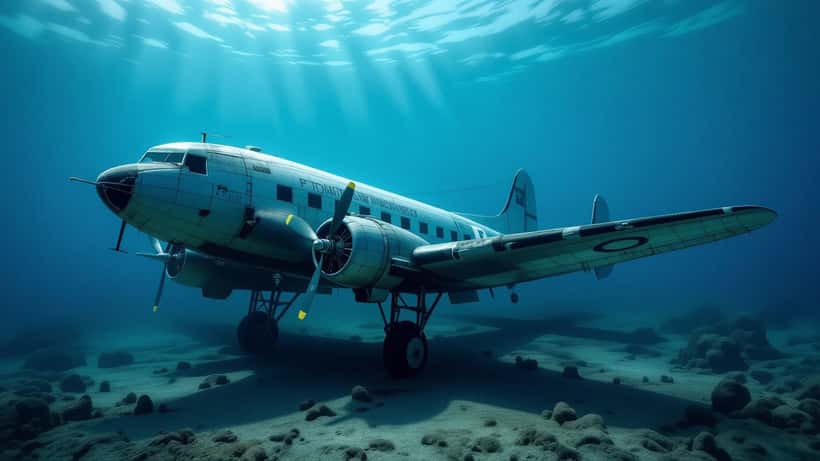
Seventy-four years after a Pan Am airliner plunged into the Atlantic off Puerto Rico, killing 52 people, an aviation search team announced on 21 July 2026 that it had located the wreckage almost 2,000 feet below the surface. The Air/Sea Heritage Foundation identified the Douglas DC-4 "Clipper Endeavor" from sonar and photographic surveys that still showed the winged Pan American logo legible on the battered fuselage, according to CNN. It is a discovery with a modern legacy: the 1952 disaster helped trigger the safety briefing you now hear before every take-off.
For Australian travellers, the find is more than a piece of aviation archaeology. It is a reminder that the rules protecting air passengers were written in the aftermath of tragedy — and that most people boarding a flight today have little idea what those rules actually guarantee them.
The crash that changed how we fly
The aircraft, operating as Pan American Airways Flight 526A, went down after ditching in the ocean during a 1952 service. Fifty-two of the people on board died, many because there was no organised system to brief passengers on how to brace, find exits or use flotation equipment. As The Washington Post reported, the loss became one of the catalysts for the pre-flight passenger safety demonstration that is now mandatory worldwide.
That evolution — from an era of almost no passenger protection to a dense framework of safety and compensation rules — is exactly what many travellers overlook. The briefing is the visible part. The legal machinery behind it is not.
What your ticket really promises you
Modern air travel is governed by international treaties and domestic law that spell out what an airline owes you when things go wrong. For flights to and from Australia, the Montreal Convention sets out an airline's liability for death or injury, delayed or lost baggage, and long delays. Domestic Australian flights are covered by the Civil Aviation (Carriers' Liability) Act.
In practical terms, that means an airline can be held financially responsible for a passenger's death or bodily injury during international carriage, often without the passenger having to prove the airline was negligent up to a set threshold. Baggage that is destroyed, lost or delayed carries its own defined compensation limits. These are not goodwill gestures — they are legal entitlements.
Yet many passengers accept a token voucher after a serious disruption because they do not know a stronger claim exists. A lawyer who works in aviation or personal injury can assess whether a payout offered at the airport reflects the full entitlement under the applicable convention, or whether it falls short.
When an air incident becomes a legal matter
Not every bumpy landing needs a solicitor. But there are moments when professional advice genuinely changes the outcome:
- Injury on board or during evacuation. Turbulence, scalding drinks, falling luggage and evacuation-slide injuries can all give rise to a claim. The Montreal Convention frames how these are handled, and time limits apply.
- A loved one killed in an aviation accident. Dependants may have rights to compensation, and identifying the correct jurisdiction and defendant is rarely straightforward.
- Serious baggage loss. High-value items, medical equipment or business goods can exceed standard reimbursement, and documentation matters.
- Repeated or extreme delays. Australian consumer law and the airline's own conditions of carriage may both come into play.
The two-year limitation period under the Montreal Convention is unforgiving. Miss it, and even a strong claim can be extinguished. This is precisely why acting early, rather than after months of back-and-forth emails, protects your position.
Why the Clipper Endeavor still matters in 2026
The recovery of a 74-year-old wreck is a striking illustration of how long the consequences of an aviation disaster can echo. Families of the 52 people lost in 1952 waited more than seven decades for confirmation of where their relatives came to rest. Investigators used an autonomous sonar drone to locate the fuselage and tail before a photographic survey confirmed the identity, the Anchorage Daily News reported.
Today's passengers benefit from every reform that followed crashes like this one: standardised briefings, cabin evacuation rules, and a legal safety net that did not exist in 1952. Knowing that the net is there — and how to use it — is the difference between accepting whatever an airline offers and claiming what the law actually provides.
What to do if you are affected by a flight incident
If you are involved in an aviation incident, or lose a family member in one, a few early steps preserve your rights:
- Record everything. Keep boarding passes, booking references, medical reports, photographs and the names of any crew or witnesses.
- Report promptly. Notify the airline in writing and, where relevant, keep copies of any incident reference numbers.
- Do not sign a final release too quickly. A settlement signed in the first days may waive rights you have not yet had assessed.
- Get tailored advice. Aviation liability is a specialist area, and the applicable rules depend on whether the flight was domestic or international.
Official investigations into transport accidents in Australia are conducted by the Australian Transport Safety Bureau, whose findings and published safety data can be a useful reference point for anyone seeking to understand what happened and why — you can explore its work at atsb.gov.au.
Connecting with a qualified aviation or personal-injury lawyer through Expert Zoom lets you understand your position before you respond to an airline's offer, so a decision made under stress does not cost you an entitlement the law was designed to protect.
This article is general information, not legal advice. Aviation liability depends on your specific circumstances; consult a qualified lawyer about your situation.
