 Chloe Wilson
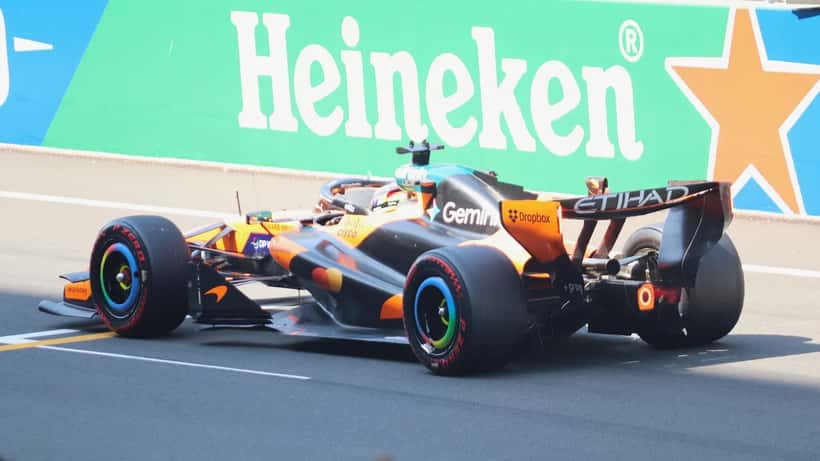
Oscar Piastri didn't make it off the grid at his home race. The Melbourne-born McLaren driver crashed on the formation lap at Albert Park in March 2026 — before a single competitive lap of the Australian Grand Prix — and did not start. By Round 4 in Miami, he was back on the podium in third. The turnaround raised a question that matters beyond Formula 1: what does recovery from a high-speed motorsport crash actually involve, and when should any Australian athlete — or weekend driver — seek professional medical assessment after a collision?
What the Piastri Incident Tells Us About Crash Biomechanics
Piastri's Australian GP incident occurred at low speed relative to racing — but even a 50 km/h impact in a confined cockpit creates G-force loading on the neck, head, and torso that exceeds most everyday accidents. F1 cars are engineered to absorb and redirect crash energy through halo devices, deformable structures, and HANS (Head and Neck Support) systems, but the human body still absorbs a rapid deceleration event.
This is relevant for everyday Australians. A car accident at suburban speeds — 40 to 60 km/h — generates comparable biomechanical loads to a low-speed racing incident. The difference is that F1 drivers are assessed immediately by an FIA-licensed circuit medical team, with mandatory neurocognitive testing before any return to racing. For the average Australian involved in a road accident, that protocol rarely happens automatically.
According to Sports Medicine Australia, post-collision assessment is recommended even when symptoms appear minor. Whiplash, concussion, and soft tissue injuries often present with delayed symptom onset — sometimes 24 to 72 hours after the event.
The Hidden Timeline of Collision Injuries
Piastri returned to podium-level performance within weeks. What the cameras don't show is the structured medical and rehabilitation process that makes rapid athletic return possible. This process typically includes:
- Immediate concussion screening — standardised cognitive and balance tests
- Neurological assessment — to rule out intracranial injury
- Spinal imaging — particularly for high-speed or high-G incidents
- Progressive load testing — graduated return to activity under medical supervision
For elite athletes, this is systematic and mandatory. For the estimated 1 in 3 Australians who experience a minor vehicle accident in their lifetime, access to equivalent care is available — but often not accessed.
General practitioners are the appropriate first point of contact after any collision, even when the person feels fine. GPs can order imaging, refer to physiotherapy, and assess for delayed presentations including post-traumatic stress, which is documented in roughly 30% of serious road trauma cases.
Motorsport and Weekend Sport: The Same Injury Risks
Formula 1 is the extreme case, but the injury patterns repeat at amateur level across Australian motorsport, cycling, football, and even weekend cricket. Australia has one of the highest rates of recreational sports participation in the world, and a corresponding rate of sports-related injuries presenting to emergency departments — over 68,000 hospitalisations annually according to national data.
The pattern clinicians consistently observe is delay: athletes and weekend sportspeople underestimate injuries, return to activity too soon, and compound short-term damage into longer-term problems. An untreated concussion that returns to contact sport carries material risk of second-impact syndrome. An undiagnosed cervical injury may worsen with ongoing physical loading.
The key threshold question is not "do I feel okay right now?" — it is "have I been properly assessed by someone qualified to evaluate this type of injury?" These are different questions, and the gap between them is where preventable long-term harm occurs.
As explored in Reece Walsh's Return from a Fractured Cheekbone, even elite athletes underestimate the timelines and complexity of apparently contained injuries.
When to See a Doctor After a Sports or Vehicle Incident
Australian clinical guidance is clear: seek assessment from a general practitioner or emergency department if any of the following apply after a collision or impact injury:
- Headache that develops or worsens in the hours after the incident
- Neck pain or stiffness, even mild
- Any period of dizziness, visual disturbance, or confusion
- A feeling of being "not quite right" — even without a specific symptom
- Children under 16 involved in any collision
- Prior history of concussion (risk of cumulative injury is higher)
For motorsport and high-impact sport participants specifically, pre-season assessment with a sports medicine physician creates a documented baseline that is genuinely useful if injury assessment is needed later. Most GP clinics can provide this with a standard consultation.
It is also worth noting that injury-related medical costs following vehicle accidents are often covered by CTP (Compulsory Third Party) insurance in Australia. Many Australians do not claim specialist or GP assessment costs they are entitled to because they assume only visible damage qualifies. A consultation with a legal expert can clarify what a CTP claim covers — particularly for soft tissue and neurological injuries that are not immediately apparent at the scene.
Piastri's podium finish in Miami is a testament to elite medical infrastructure, expert rehabilitation, and individual resilience. For Australian recreational athletes and everyday drivers, the same quality of care — medical and legal — is accessible. The barrier is usually knowing when to use it, and who to ask.
