 Olivia Taylor
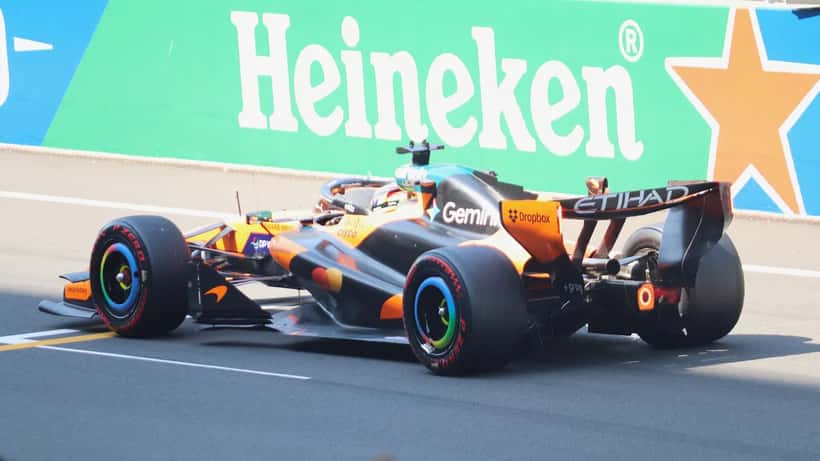
Oscar Piastri arrived at the Japanese Grand Prix in April 2026 and finished second — a podium that came just weeks after he crashed out of his home Australian Grand Prix on the reconnaissance lap before the race even started. For Australia's most talked-about sporting export, the ability to reset, refocus, and deliver elite performance under crushing public scrutiny offers lessons that go well beyond Formula 1.
The Pressure That Piastri Is Under
Piastri, 25, is racing under a McLaren contract through 2028, on a team that won the 2025 Constructors' Championship. Last season, he finished second in the Drivers' standings — just behind his teammate, Lando Norris. This year, he's entered a new regulatory era for Formula 1 with completely redesigned cars and power units, navigating a season where Mercedes has won every race so far.
The narrative around Piastri in Australia is intense. He is the country's biggest active motorsport star, and every result — from a home race crash to a podium in Japan — is dissected across sports media. Despite this, his public statements in 2026 have been notably measured: he's "confident Mercedes are beatable," he has "nothing to prove," and he won't have a "rebellious streak" despite narrowly missing the championship.
Sports psychologists recognise this pattern immediately — not as complacency, but as elite psychological management.
What Neuroscience Says About Performing Under Pressure
When high-stakes performance is required — whether you're driving a racing car at 300 km/h or presenting to your biggest client — the human brain undergoes measurable changes. The prefrontal cortex, responsible for rational decision-making, comes under threat from the amygdala's stress response. The result is what psychologists call "choking" — a well-trained skill suddenly deteriorating under observation pressure.
Elite athletes like Piastri develop specific neurological adaptations over years of competition. Research in high-performance sport consistently identifies three factors that distinguish performers who thrive under pressure from those who collapse:
Process focus over outcome focus: Piastri's comments about having "nothing to prove" reflect deliberate redirection of attention from the result (championship position) to the process (car setup, race execution, lap times). This is not indifference — it's a trained cognitive strategy.
Compartmentalisation: The ability to separate a bad event (crashing before the Australian GP start) from a subsequent performance (podium in Japan) requires active mental skills that most people do not develop naturally.
Regulated self-narrative: Elite performers manage the internal story they tell themselves about failure. Calling a crash "unfortunate" rather than "catastrophic" is not spin — it's a genuine cognitive reframing technique that limits the downstream damage to confidence.
According to Beyond Blue's resources on sport and mental health, performance anxiety affects athletes at all levels, and the gap between elite and amateur performance often comes down to psychological skills rather than physical capability.
Why Most Australians Don't Perform Like Piastri — And What To Do
The same pressure dynamics that affect Formula 1 drivers appear in everyday Australian life: job interviews, medical consultations, client presentations, school exams, even difficult personal conversations. The underlying neuroscience is identical.
The difference is that Piastri has had years of professional coaching, sports psychology support, and structured mental performance training built into his career. Most Australians have not.
Common symptoms of performance anxiety in everyday settings:
- Mind going blank during important conversations or presentations
- Overthinking decisions that should feel routine
- Sleep disruption before high-stakes events
- Physical symptoms: racing heart, sweating, trembling voice
- Post-event rumination ("I should have said...") that extends for days
These are not character flaws. They are predictable neurological responses to perceived threat — and they are amenable to intervention.
The Techniques That Actually Work
Sports psychologists and GPs who specialise in performance anxiety broadly agree on a core set of evidence-based techniques:
Pre-performance routines: Piastri, like most F1 drivers, will have a precise pre-race preparation sequence. The ritual nature of routines activates familiar neural pathways and reduces the brain's threat response. Even a simple pre-presentation routine (specific breathing, a short walk, reviewing key notes) measurably reduces cortisol.
Controlled breathing: A 4–7–8 breathing cycle (inhale 4 seconds, hold 7, exhale 8) activates the parasympathetic nervous system within minutes. This is not a metaphor — it's a direct physiological intervention on the stress response.
Deliberate post-event processing: Rather than ruminating on what went wrong, elite performers schedule a structured debrief — what worked, what didn't, what changes for next time — and then mentally close the event. This prevents the brain from repeatedly re-experiencing the stressor.
Regular psychological maintenance: Just as Piastri maintains his physical fitness year-round, peak performers treat mental health as an ongoing practice, not a crisis response. Many elite Australians work with sports psychologists before they need to — building capacity when pressure is low.
When to Seek Professional Support
If performance anxiety is interfering with your work, relationships, or daily functioning — not just occasionally, but consistently — it warrants professional attention. A GP is the right first step: they can assess whether what you're experiencing is situational anxiety, an anxiety disorder, or a different condition requiring specific treatment.
In Australia, a Mental Health Treatment Plan from a GP enables access to rebated sessions with a psychologist through Medicare. This is not reserved for clinical cases — it's available to anyone experiencing significant functional impairment.
Oscar Piastri will race again next weekend with millions watching. The psychological toolkit that gets him back on the podium after a home race crash is available to you too — it just requires the right guidance. Expert Zoom connects Australians with qualified health professionals who can help you build exactly these skills.
