 Fred Rivers
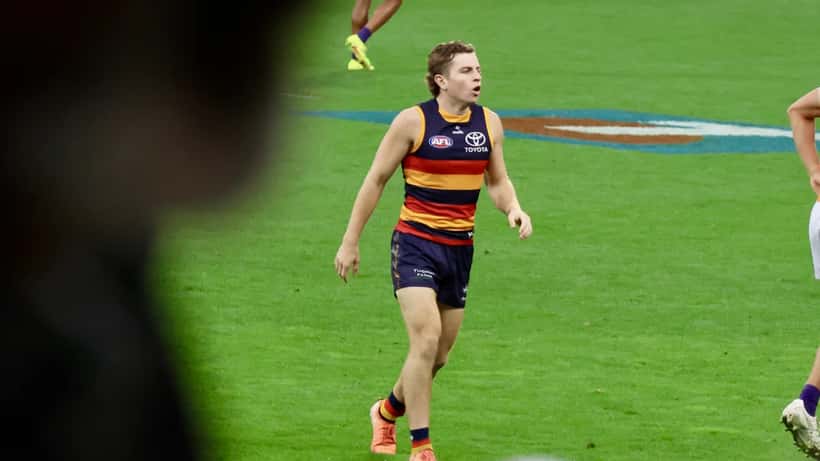
On Friday 11 September 2026, Ollie Dempsey executed one of the most audacious moves of the AFL finals season — a bicycle kick overhead in the goal square at Perth Stadium. Within minutes, Geelong Cats fans had their hands on their heads. The Automatic Review Centre (ARC) had ruled there was insufficient evidence to overturn the umpire's call of a touched behind. Six points were gone, Geelong trailed by 14 at the final siren, and coach Chris Scott had left a dent in the coaching box wall.
But amid the stunned silence — and the viral footage — one question is cutting through the outrage: when officiating bodies get it demonstrably wrong in professional sport, do clubs and players actually have any legal recourse?
What the ARC Actually Ruled — and Why It Matters Legally
The ARC's role in AFL matches is to review score calls and certain incidents using multi-camera technology. In the Dempsey incident, vision appeared to show the ball making contact with Fremantle defender Matthew Johnson's forearm before reaching Dempsey's boot. Under AFL rules, if the ball is last touched by an opposition player before crossing the line, it counts as a goal.
The ARC determined there was "insufficient evidence" to overturn the umpire's on-field call of a touched behind. The standard — critically — is not whether a goal occurred, but whether technology can prove it with enough certainty to reverse the original decision. It is a review standard, not an accuracy standard.
This distinction has significant legal weight. Australian administrative law distinguishes between a decision that is wrong and a decision that is legally flawed — and only the latter can typically be challenged through courts or tribunals. The ARC was not asked whether the ball hit Johnson's arm. It was asked whether the evidence was sufficient to conclude that. Those are different questions with very different legal consequences.
Sports Arbitration in Australia: What the Law Actually Offers
Australia operates one of the more developed sports dispute systems in the world. The National Sports Tribunal (NST), established by the Australian Government, provides an independent body to resolve disputes between athletes, sporting organisations, and governing bodies — covering anti-doping, selection, and general sports disputes.
But does a contested ARC call fall within its jurisdiction?
Sports lawyers working in Australian professional sport point to a narrow but real legal framework. Governing bodies such as the AFL hold significant authority to administer their own competitions, and courts have consistently been reluctant to intervene in on-field sporting decisions. However, challenges have succeeded — and can succeed again — on specific grounds:
- Procedural failure: where the review body did not follow its own stated process
- Unreasonableness at law: a decision so irrational that no properly constituted body could have reached it
- Breach of published rules: where the AFL's own Score Review Policy was demonstrably not applied
- Natural justice violations: in tribunal proceedings involving player suspensions or sanctions
Pure umpiring discretion is protected. But umpiring process — the steps a review centre must follow under its own rules — is not automatically exempt from scrutiny.
What types of AFL decisions can be formally challenged?
- AFL Tribunal sanctions: player suspensions, reportable contact charges — all carry a formal appeals pathway through the AFL Appeals Board, exercisable within 2 business days of the original decision
- Employment and contract disputes: governed by the AFL-AFLPA Collective Bargaining Agreement, with independent arbitration available
- Anti-doping violations: managed under the AFL Anti-Doping Code, aligned with WADA and subject to the NST's jurisdiction
- Governance and rule breaches: where a club or player can show the AFL failed to follow its own by-laws
Important note: This article provides general information about Australian sports law only. It is not legal advice. Anyone facing a sports dispute should seek independent legal counsel.
Concrete Case: What a Geelong Formal Grievance Would Actually Look Like
Consider this scenario: Geelong's legal team lodges a formal grievance with the AFL's dispute resolution framework within 48 hours of the match — the standard notice window under AFL dispute procedures. Their grounds: the ARC failed to apply "best available camera angle" as specified in the AFL's 2026 Score Review guidelines.
Here is what would realistically unfold under Australian sports law:
Step 1 — AFL internal review (within 7 days): The AFL's legal team examines whether the ARC followed its own process. This step almost never overturns score review determinations — the AFL has consistently defended ARC decisions in internal reviews, and the "insufficient evidence" standard gives the ARC substantial cover.
Step 2 — Escalation to the National Sports Tribunal: If Geelong could demonstrate a procedural failure — not merely that the ARC reached the wrong conclusion, but that it skipped a step in its own process — they could apply to the NST. Applications must be lodged within 28 days of the decision. NST arbitration for a general dispute typically involves application fees and potential hearing costs ranging from a few thousand dollars upward, depending on the complexity of the matter.
Step 3 — The financial stakes: The AFL finals prize pool allocates materially different payments at each stage. Moving from a semifinal exit to a preliminary final appearance represents a meaningful jump in both direct prize money and downstream revenue — including membership renewals driven by finals runs, merchandise sales, and broadcast share calculations. For a club of Geelong's size, the downstream impact of an additional finals week is estimated in the hundreds of thousands of dollars when all revenue streams are factored in.
The critical if/then logic here: If Geelong could show the ARC breached a specific procedural step — not merely that it reached the wrong answer — then an NST application would have legitimate grounds. If the ARC correctly applied its own "insufficient evidence" standard, however — even if most viewers believe it clearly got the result wrong — the challenge would almost certainly fail.
This is the uncomfortable reality of sports law in Australia: the ARC's function is not to find truth. It is to determine whether evidence crosses a defined threshold. And that threshold is written by the AFL itself — a private governing body with wide discretion over the rules of its own competition.
What AFL Clubs and Players Actually Have a Right to Challenge
The Dempsey ruling sits within a pattern of controversy that has followed technology-assisted officiating since the ARC was introduced. As score review becomes more central to finals outcomes, understanding the limits of legal recourse is no longer optional for professional clubs.
Rights AFL clubs and players do hold under Australian sports law:
- Procedural fairness in all tribunal proceedings — the right to be heard, to know the case against you, and to have an impartial decision-maker
- AFL Appeals Board access for any player sanction, within 2 business days
- AFLPA arbitration for employment and CBA disputes, independent of AFL control
- NST jurisdiction for anti-doping matters, selection disputes, and general disputes where a sporting body has breached its own rules
Rights that clubs and players do not hold:
- The right to have a score review decision reversed because it looked wrong on television
- The right to challenge the outcome of any decision made within the proper exercise of the AFL's discretion
- The right to prevent the AFL from setting and amending its own review standards for future matches
Australian courts have reinforced this boundary consistently. The legal protection for umpiring decisions — even technology-assisted ones — exists because the alternative would make professional sport unworkable. If every disputed call became a court matter, no season would ever reach a conclusion.
What to Do When You're Facing a Real Sports Dispute
The Dempsey incident will fire up debate about whether the AFL's score review system needs reform — and that debate is legitimate. But for clubs, players, and sports organisations dealing with actual disputes, the legal pathway depends entirely on the category of decision being challenged.
Whether you're a professional club contesting a tribunal sanction, a player challenging a suspension on procedural grounds, or a sporting body facing a governance dispute with a member, Australia's sports law framework provides genuine protections — but the windows are short and the standards are specific. Most appeal timeframes are measured in days, not weeks.
A sports lawyer who knows the AFL's by-laws, the NST's jurisdiction, and the AFLPA's CBA can be the difference between a successful challenge and a missed window. Understanding your rights before a dispute arises is always better than discovering them after the final siren has already sounded.
