 Olivia Miller
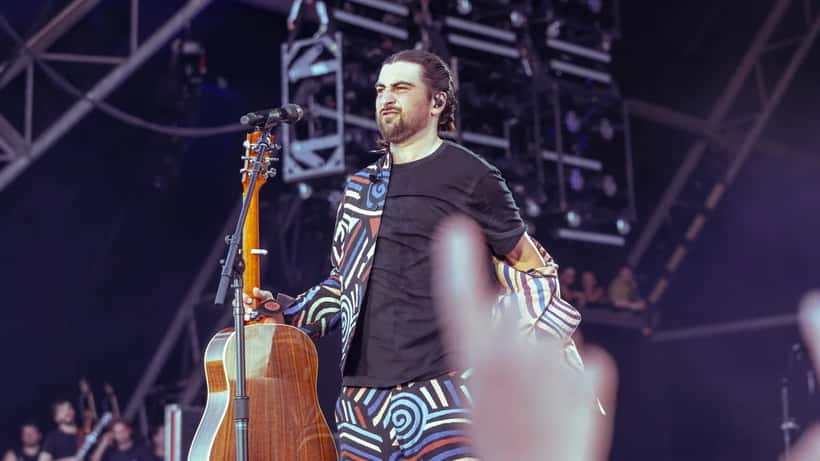
American folk-pop artist Noah Kahan announced his biggest Australian tour to date this week, with Melbourne and Sydney shows at Rod Laver Arena and Qudos Bank Arena in September and October 2026. Tickets go on general sale April 17, but the cultural moment around his visit is already generating conversations that go well beyond music — because Noah Kahan has become one of the most openly mental-health-focused artists of his generation, and Australians are responding.
Why Noah Kahan Resonates With Australian Audiences
Kahan's breakout album Stick Season dealt unflinchingly with anxiety, isolation, and the feeling of being stuck in your home town while the world moved on. His follow-up, The Great Divide, releasing April 24, 2026, continues in that vein. His concerts are widely described as cathartic rather than simply entertaining — audiences know every word, and the lyrics are often the words people struggle to say out loud about their own mental health.
This matters in the Australian context because the statistics are sobering. According to the Australian Institute of Health and Welfare, approximately 1 in 5 Australians aged 16–85 will experience a mental health condition in any given year. Among young people aged 16–24, the figure is even higher: nearly half will meet the criteria for a mental disorder at some point during those years. The artists and cultural figures who speak openly about their own struggles play a meaningful role in reducing stigma — and Kahan has become one of the most prominent of them.
Ticket demand for his Australian shows has been intense, with multiple presale windows rolling out from April 14 through April 16, 2026, ahead of general on-sale. This level of audience engagement — beyond the music itself — reflects something deeper than concert attendance.
When Fan Culture Becomes a Mental Health Moment
There's a well-documented phenomenon in mental health research that tracks how parasocial relationships with public figures — musicians, athletes, actors — can create genuine therapeutic moments. For fans who identify deeply with Kahan's lyrics about anxiety and depression, attending a concert can feel validating in a way that formal therapeutic contexts sometimes don't. You are in a room of thousands of people who understand exactly what you've been feeling.
But there is also a risk. For people who are already experiencing significant mental health challenges, the emotional intensity of a Kahan concert — and the way his music can surface buried feelings — sometimes acts as a trigger rather than a relief. Mental health professionals working with young clients regularly find that music, while therapeutic in many contexts, can also bring difficult emotions to the surface in ways that need proper support to process.
The distinction is important: engaging with emotionally resonant art is healthy and valuable. But it is not a substitute for professional mental health support when support is what's actually needed.
Signs That You or Someone You Know Needs More Than a Concert
Australia's mental health system offers several pathways, but many people delay accessing them — waiting until a crisis point rather than addressing difficulties when they are still manageable. If you recognise any of the following, speaking to a mental health professional is a meaningful next step:
Persistent low mood or anxiety lasting more than two weeks that interferes with daily life, work, or relationships.
Social withdrawal — declining invitations, reducing contact with friends, finding it hard to engage even with things you normally enjoy.
Sleep disruption: either chronic insomnia or hypersomnia (sleeping excessively) can be symptoms of an underlying condition.
Difficulty at work or study: concentration problems, missed deadlines, reduced performance that isn't explained by external circumstances.
Thoughts of self-harm or that you'd be better off not being here: these require immediate support. Contact Lifeline on 13 11 14 or Beyond Blue on 1300 22 4636 if you're in crisis right now.
A GP can provide a Mental Health Treatment Plan (MHTP) in Australia, which allows eligible individuals to access up to 10 subsidised sessions with a psychologist or mental health professional under Medicare. This pathway is widely underused — many Australians don't realise they qualify or how straightforward the process is.
Connecting Culture and Care
Noah Kahan's music opens doors that are sometimes hard to open. For his Australian fans, September and October 2026 will be a powerful live experience. But if the emotional resonance of his songs feels like more than just music to you — if it feels like recognition — that's worth paying attention to.
According to the Australian Institute of Health and Welfare, mental health conditions are the third leading cause of disease burden in Australia, yet less than half of those affected seek professional help. The most common reason given is not wanting to be seen as weak, or not knowing where to start.
ExpertZoom connects Australians with qualified health professionals including GPs and mental health practitioners who can help you take that first step — whether that's understanding your symptoms, navigating a referral, or simply having a conversation with someone qualified to listen.
Mental Health Disclaimer: This article is for general information purposes only. If you are experiencing mental health difficulties, please consult a qualified healthcare professional. In an emergency, call 000. Crisis support is available 24/7 from Lifeline (13 11 14) and Beyond Blue (1300 22 4636).
