 Mia Jones
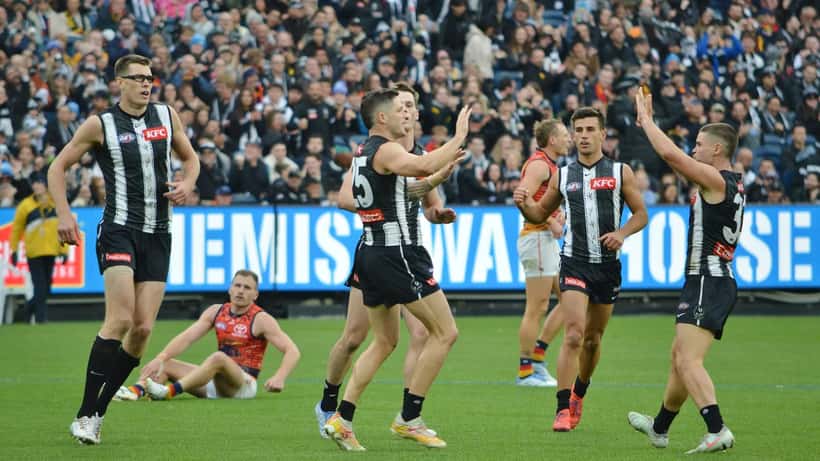
Nick Daicos produced one of the games of his career against Waalitj Marawar on Saturday — 34 disposals, three goals, and a Collingwood win. But it is not his best-on-ground performance dominating post-match conversation. A free kick he drew in the second half, which critics labelled blatant staging, has reignited one of AFL football's most contentious debates: when does clever play cross into misconduct, and what can the AFL actually do about it?
The Free Kick That Started the Debate
The incident: Daicos appeared to push West Coast's Reuben Gibney, then fell heavily when Gibney gave him a returning nudge. Umpires overturned the initial call and paid a free kick to Daicos, who slotted the goal. The reaction was immediate.
Former Collingwood premiership coach Mick Malthouse — rarely short of an opinion — publicly called on the AFL to intervene. "If they're fair dinkum, they'll fine him for staging," Malthouse said. His view was that the free kick reward for exaggerated contact undermined the integrity of the laws of the game.
To date, the AFL has not referred the matter to its Match Review Officer (MRO). Daicos has not been charged. But the episode has prompted a genuine question: what does the AFL's staging rule actually say, and what rights do players have if they are charged?
What AFL Rules Say About Staging
Under the Laws of Australian Football, staging — sometimes called simulation — is defined as deliberately falling to the ground or exaggerating the effect of contact to deceive the umpire into paying a free kick. It is a reportable offence and, under the AFL Tribunal guidelines, can attract sanctions from a reprimand through to a two-match suspension depending on the severity and the player's record.
The challenge for the AFL in staging cases is proof. Unlike a high contact charge or a dangerous tackle, staging requires evidence that the fall was deliberate rather than a genuine reaction to contact. Video analysis is central to any MRO assessment, but even then, the line between "playing on" and genuine exaggeration is contested.
The 2026 AFL Tribunal Guidelines introduced clarifications on what counts as "unreasonable exaggeration" of contact, but the standard remains a judgment call. Legal experts who work alongside players and clubs note that staging is one of the most genuinely contested charge types precisely because intent is so difficult to prove.
How the AFL Tribunal Process Works
If the MRO refers a matter after reviewing vision, a player has two options:
Accept the charge: The player agrees with the assessed penalty. For a first-time staging offence, this typically results in a fine or a reprimand. Accepting the charge avoids a hearing and reduces the penalty by a set percentage.
Challenge the charge at the AFL Tribunal: The player can contest the finding, the classification of the offence, or the severity of the penalty. The Tribunal — composed of a panel of retired players, legal professionals and neutral appointees — hears evidence from both sides. The AFL is represented by its Counsel Assisting; the player can be represented by a lawyer or advocate of their choosing.
The Tribunal sits as a quasi-judicial body. Its decisions can be reviewed under an internal appeals process, though AFL Tribunal outcomes are not routinely subject to external court review absent exceptional circumstances.
Players' Rights When Facing a Tribunal Hearing
A player who receives a charge from the MRO has enforceable procedural rights:
- Right to know the charge: The player receives written particulars of the alleged offence, including the MRO's video evidence and reasoning
- Right to representation: Players may be represented by a lawyer, a Players Association advocate, or an agent at the hearing
- Right to present evidence: The player and their witnesses can give evidence. Video footage, medical reports, and expert testimony about typical physical reactions to contact have all been used in staging defences
- Right of appeal: If the Tribunal finds against the player, there is a formal internal appeal pathway
The AFL Players Association provides welfare and representation support for players facing charges, and a growing number of clubs now engage external legal counsel for complex Tribunal matters — particularly where a player's contract value, standing in the Brownlow count, or finals availability is at stake.
The Daicos Injury Issue: A Separate Legal Consideration
Post-match, Daicos also joined Collingwood's injury list after undergoing precautionary foot scans following what he described as "getting my foot stomped on." He was best afield despite the discomfort.
This serves as a reminder that even in the same game where a staging charge might arise, a player can also be a genuine injury victim. The two are not mutually exclusive.
Players who are injured at AFL matches — and the legal obligations clubs owe them — have been a growing focus of litigation in 2026, particularly as the AFL's updated concussion and injury management protocols place greater duties on team medical staff to act without commercial pressure.
What Collingwood and Daicos Face Next
As Collingwood navigates a significant injury list heading into Round 11 — including Darcy Moore (hamstring), Jamie Elliott (knee) and Will Hayes (dislocated shoulder) alongside Daicos' foot concern — the club's medical and legal staff will be managing multiple competing priorities.
If the AFL were to refer the staging incident to the MRO retrospectively (which remains possible), Daicos' legal position would be straightforward: he received a free kick that umpires assessed in real time, and the deliberate intent required for a staging charge would need to be established beyond a reasonable doubt on the available footage.
Legal observers who cover the AFL Tribunal closely note that retrospective staging charges are rare and difficult to sustain. The most likely outcome — absent a clear and compelling vision package showing unambiguous simulation — is that the matter is not pursued.
When to Get Legal Advice About a Sports Tribunal Matter
Sporting tribunal proceedings are not criminal proceedings, but their consequences are real: suspension, fines, reputational impact, and contract implications. Players at any level — AFL, AFLW, or community — benefit from understanding their rights before accepting or contesting a charge.
If you or someone you represent is facing a tribunal hearing:
- Read the charge particulars carefully — the exact wording determines what needs to be proved
- Preserve all relevant footage — your own video of the incident, not just the AFL's cut
- Seek independent legal advice before accepting a penalty, particularly if the charge carries suspension
- Contact the AFL Players Association for free initial guidance if you are a contracted player
- Act quickly — response deadlines in AFL tribunal matters are tight, often measured in 48-72 hours from notification
The Nick Daicos staging debate may ultimately go nowhere legally. But it highlights how rapidly a sporting incident can move from field to potential tribunal, and why players are best served knowing the rules before they are caught up in them.
This article provides general information about AFL Tribunal procedures only and does not constitute legal advice. For advice about a specific situation, consult a qualified legal professional or contact the AFL Players Association.
