 Chloe Davies
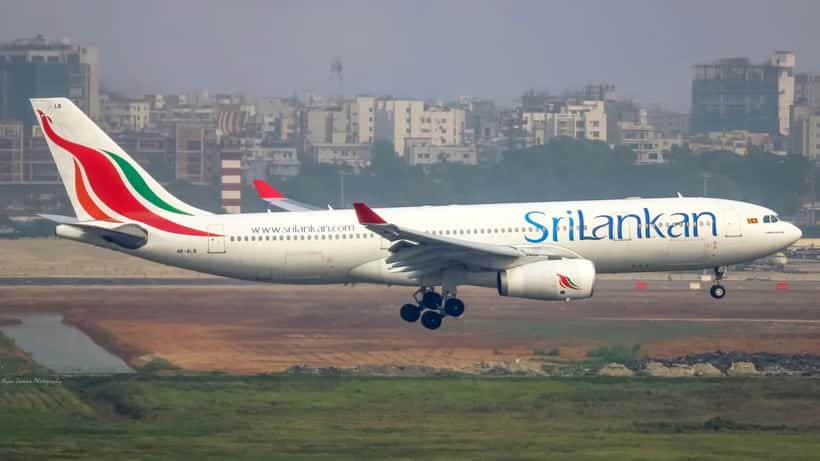
Australia's most direct gateway to South Asia became significantly more accessible this month. SriLankan Airlines lifted its Colombo Bandaranaike–Melbourne Tullamarine schedule from seven to 10 weekly flights on 2 August 2026, adding Tuesday, Thursday, and Sunday services under flight codes UL608 and UL609. The timing coincides with a significant policy moment: Australia's Department of Foreign Affairs and Trade has opened applications for the New Colombo Plan 2026 round — its flagship programme funding undergraduates to live, study, and intern across the Indo-Pacific, including Sri Lanka.
For Australian students weighing an Asia-based exchange, the combination creates an opening that did not exist in the same form 12 months ago.
Why Colombo Has Become a Viable Study Destination for Australian Undergraduates
Sri Lanka is an eligible New Colombo Plan destination. The same DFAT-funded scholarships that send Australian undergraduates to Tokyo, Jakarta, and Singapore can fund a semester at the University of Colombo, Sri Lanka Law College, or Sri Lanka Institute of Information Technology — spanning disciplines including management, law, IT, and international relations.
Until recently, one practical barrier was travel logistics. SriLankan Airlines was already the only full-service carrier offering non-stop services between Melbourne and Colombo, but at seven flights per week, scheduling constraints could mean arrivals with tight semester windows. At 10 weekly flights, students have flexible departure options that align more easily with semester start dates in both countries. According to Travel and Tour World, the airline's expansion was driven by surging demand from both the Sri Lankan diaspora in Melbourne and growing inbound tourism — and for scholarship holders, increased seat supply typically translates to lower average fares.
The route is roughly nine hours each way with no stopover and no transit visa required from an Australian passport. As Indo-Pacific study destinations go, Colombo is now among the most logistically straightforward.
What Changed in the 2026 NCP Round
The 2026 New Colombo Plan round reflects reforms announced by the Minister for Foreign Affairs on 30 July 2025 and now in effect. Three changes reshape the competitive landscape for applicants:
More scholarship places — DFAT increased the total number of scholarships available relative to previous rounds, responding to bipartisan political support for strengthening Australia's Asia literacy and Indo-Pacific capability.
Asian language priority — Applications now receive higher scores when students include a credible plan for learning an Asian language relevant to their host country. For Sri Lanka placements, this means Sinhala or Tamil. Students who can demonstrate prior enrolment in language training — or who already hold language credits — will score better under 2026 criteria than they would have in 2025.
Long-form immersion over short trips — The 2026 Mobility program explicitly deprioritises study tours shorter than four weeks. Semester-length and year-long placements are where the funding follows. A student planning six months in Colombo is a significantly stronger candidate than one planning a two-week trip.
The NCP also operates a separate Semester program and Mobility grants stream alongside the flagship Scholarship Program. Each serves a different commitment level, but all three streams now share the same policy emphasis on deep, language-inclusive Indo-Pacific engagement. Understanding which stream fits your situation — and how to frame your application around DFAT's 2026 scoring criteria — is where professional guidance makes a measurable difference.
When a Study Abroad Advisor Changes the Outcome
Education consultants who specialise in government scholarship programmes see the same pattern across applicant cohorts year after year: students with comparable academic records get different outcomes depending on how clearly their application communicates intent, language commitment, and alignment with the programme's strategic goals.
The 2026 NCP Scholarship application requires two referee reports — at least one from an academic referee at the student's home institution — a personal statement, and evidence of genuine engagement with the host country. Under the new language emphasis rules, a personal statement that commits to Sinhala lessons during a Colombo placement will outscore a generic "cultural exchange" paragraph even when transcripts are identical.
A qualified study abroad consultant can help applicants:
- Match their degree discipline to eligible host institutions in Colombo and across the wider Indo-Pacific region
- Draft a language-learning commitment that satisfies the 2026 scoring rubric rather than a previous year's template
- Select referees and brief them specifically on what DFAT values in 2026 — general academic praise is not enough
- Time the submission relative to the university's internal Expression of Interest window, which opens for most Australian institutions in September and closes by November
Missing a university's EOI window by even a week means waiting another 12 months. Most applicants who lose that year describe the same experience: they discovered the programme existed but assumed the DFAT portal was the first step, not their own university's internal process.
ExpertZoom connects Australian students with education consultants experienced in NCP applications and other government-funded scholarship programmes. Browse study abroad advisors on ExpertZoom to find a specialist who understands the 2026 round's updated requirements.
Sophie's Semester — What the Numbers Look Like With and Without a Scholarship
Take the example of a third-year Bachelor of Commerce student at the University of Melbourne — let's call her Sophie, aged 21 — who wants to complete one semester at the University of Colombo's Faculty of Management and Finance starting February 2027.
If Sophie secures a 2026 NCP Scholarship, she could receive up to AU$25,000 in combined funding. This typically covers return airfares (Melbourne–Colombo economy return on SriLankan Airlines currently ranges from AU$1,100 to AU$1,600 with the expanded schedule), tuition at the host institution, a monthly living allowance, and health insurance for the placement period.
Without a scholarship, the same semester involves:
- Tuition at the University of Colombo for international students: approximately USD $2,000–3,500 per semester (roughly AU$3,000–5,300 at current exchange rates)
- Living costs in Colombo: approximately AU$800–1,200 per month — significantly lower than Melbourne's AU$2,500–3,500 average monthly cost
- Return flights: AU$1,100–1,600
- Health insurance: AU$400–600
Total out-of-pocket without a scholarship: approximately AU$9,500–13,000 for one semester.
Here is the if/then that matters most: if Sophie submits her Expression of Interest through the University of Melbourne before her institution's internal EOI window closes (typically late October), and if she is nominated and selected for the scholarship, her effective personal cost drops to near zero — and she returns with an Indo-Pacific academic credential, a foreign transcript, and potentially Sinhala language credits that are rare among Australian Commerce graduates competing in graduate recruitment.
If she misses the internal EOI window, she waits 12 months, pays AU$9,500–13,000, or forgoes the experience entirely.
The financial spread — AU$0 versus AU$9,500–13,000 — means a consultation with a study abroad advisor at AU$200–500 is one of the most cost-effective professional engagements available to an Australian undergraduate. The investment is recoverable within the first month of scholarship living allowance alone.
For context on navigating consumer and traveller rights on international routes to the Pacific and beyond, see what Australian travellers need to know about planning international trips.
YMYL disclaimer: Scholarship amounts, eligibility criteria, and application timelines are set by DFAT and change annually. Verify all current details directly with the Department of Foreign Affairs and Trade before submitting any application.
Act Before Your University's Internal Deadline
The 2026 NCP round is open — but the critical first step is not DFAT's portal. It is your university's own Expression of Interest window, which gates all nominations and typically opens in September. Students who wait until they find the DFAT website often discover they have already missed their institution's internal cut-off.
Steps to take this week:
- Check your university's study abroad or global mobility office for the 2026 NCP EOI opening date
- Confirm your eligibility: Australian citizen, enrolled as an undergraduate, aged 18–30 as of 1 January 2026 (or 18–35 for Indigenous applicants)
- Identify host universities in Colombo — or elsewhere in the Indo-Pacific — that align with your degree and have a language programme you can credibly commit to
- Book a session with an education consultant now, before the September rush, to build a competitive application before your university's window opens
Official programme guidelines, eligibility requirements, and application documents are available at dfat.gov.au/people-to-people/new-colombo-plan.
With SriLankan Airlines now flying 10 Colombo–Melbourne services weekly and the 2026 NCP round actively rewarding long-term, language-inclusive placements, a funded semester in Colombo is more logistically and financially accessible than at any previous point in the programme's history. The window, as always, is the question — and it opens sooner than most students expect.
