 Chloe Wilson
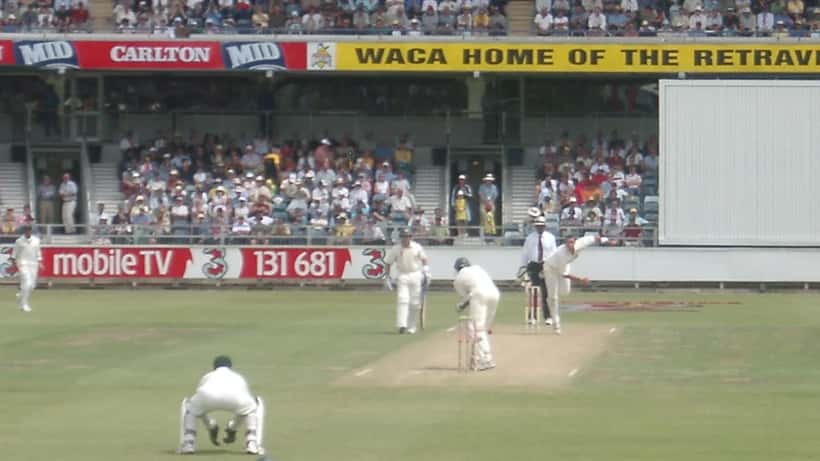
Namibia's Windhoek staged the opening match of the 2026 T20I Tri-Series on 28 August, as Gerhard Erasmus's home side faced a South Africa outfit under new captain Bjorn Fortuin. The cricket community is watching closely — for Namibia, this series is direct preparation for the 2027 Cricket World Cup; for South Africa, a chance to blood a youthful group in competitive conditions. But behind the scorecard, a physiological reality is playing out that concerns sports medicine practitioners far more than the result: this tournament is contested at 1,700 metres above sea level, in a compressed ten-day schedule, and neither factor is trivial for player health — at any level of the game.
High Stakes, Higher Altitude
Windhoek sits at approximately 1,700 metres above sea level — high enough that ambient oxygen levels fall to around 83% of what players would breathe in Cape Town, Sydney, or Johannesburg's eastern suburbs. For squads flying in from near-sea-level environments, the body's haematological adjustment is not complete for seven to fourteen days, according to guidelines published by the Australian Institute of Sport. Yet the tournament begins on arrival day or within 24 to 48 hours of it for most touring squads.
At altitude, the cardiovascular system compensates by elevating resting heart rate — typically by 10 to 20 beats per minute in the first 72 hours. Muscle recovery slows because reduced oxygen delivery impairs the aerobic pathways that clear lactate after exertion. And critically for a tournament structured the way the Namibia Tri-Series is — six round-robin matches followed by a final between 28 August and 6 September — the cumulative physiological load is substantially greater than the same schedule would produce at sea level. Players are asked to recover between matches in less time, with bodies that are already working harder just to maintain baseline function.
South Africa's youthful squad under Fortuin is adapting to altitude and competitive T20 cricket simultaneously. Namibia's experienced core — Ruben Trumpelmann, Jan Frylinck, JJ Smit, and the recalled Michael van Lingen — has home advantage in the acclimatisation equation, but the bowling workload across six-plus matches in ten days still carries overuse risk even for conditioned athletes. Zimbabwe, the third team in the competition, faces identical exposure.
What a Sports Medicine Specialist Would Say
The health risks of altitude competition are well-documented in sports science, but they are frequently underestimated by recreational cricketers who watch elite tournaments from Australia and draw conclusions about their own resilience. "If they can play six T20s in ten days in Windhoek, I can manage a long weekend tournament" is not a safe inference — it ignores the medical infrastructure that surrounds every elite squad on tour.
At professional level, embedded sports medicine teams monitor resting heart rate, blood oxygen saturation (SpO2), hydration status, and subjective wellbeing scores before each match day. Thresholds exist: a player whose SpO2 drops below 94% at rest, or whose heart rate recovery after a standardised effort exceeds twice their normal baseline, is flagged for reduced or zero workload that session. These protocols are invisible to television audiences but are why elite players rarely present with altitude sickness in the clinical sense — their risk is managed systematically.
For amateur and club cricketers in Australia — the audience most likely to watch NAM vs SA and feel inspired to push their own limits — there is no equivalent safety net. This is precisely where a sports medicine consultation, rather than self-management, becomes valuable.
If You Played Three Matches Last Weekend and Your Body Is Telling You Something — Listen
Consider a 34-year-old amateur cricketer from Brisbane who competes in a three-day, four-match club tournament in Cairns during the Queensland summer. The environmental shift — humidity above 80%, temperatures reaching 33°C by mid-morning — creates a physiological load comparable in some respects to altitude: cardiac output rises to compensate, sweat-driven haemodynamic stress accumulates, and muscle recovery is delayed by the heat's impact on peripheral blood flow.
After the third match of the tournament, the Brisbane player notices three things in combination: persistent tightness in the right quad that has not eased overnight; a resting heart rate tracking at 14 beats per minute above their usual morning measurement; and fatigue that eight hours of sleep has not resolved.
Individually, each sign might be attributed to general tiredness. Together, they constitute early-stage overreaching — a physiological state that, if met with continued competition rather than rest and professional assessment, carries a materially elevated risk of a moderate muscle tear. A Grade 2 hamstring strain — the most common cricket-related acute injury, according to Sports Medicine Australia data — typically produces four to ten weeks of recovery time and, for a physically active worker, a corresponding period of reduced function in daily and professional life.
The cost calculation is direct: an initial sports medicine consultation in Australia runs between $150 and $280 for a private appointment, depending on location and provider. If the specialist recommends ultrasound imaging to rule out a Grade 2 tear, add $120 to $250. The total early-intervention cost: $300 to $530. The alternative — ignoring the signals, playing the fourth match, sustaining a Grade 2 tear — produces physiotherapy costs of $90 to $150 per session across eight to twelve weeks of rehabilitation, plus the productivity and lifestyle impact of six to ten weeks off active sport.
If symptoms in combination persist beyond 48 hours, or if any single signal worsens during play, the threshold for professional advice has been crossed. This is not overcaution — it is the same logic applied by the sports medicine teams protecting Erasmus, Fortuin, and every other athlete competing in Windhoek today.
Signals That Mean Stop Playing and Start Consulting
Sports medicine practitioners identify the following as criteria for professional assessment rather than self-management in a cricket context:
Cardiovascular: resting heart rate persistently elevated by 10 or more beats per minute above your personal baseline on two consecutive mornings; shortness of breath that is disproportionate to your exertion level during or after play.
Musculoskeletal: localised pain — rather than generalised soreness — that does not reduce between match days; any sensation of structural instability in a joint; sharp rather than dull pain during a bowling, batting, or fielding movement.
Systemic: persistent headache, disrupted sleep quality despite subjective fatigue, or loss of appetite lasting more than 24 hours following competition.
Environmental modifier: any of the above occurring in the context of a significant environmental change from your training baseline — altitude, extreme heat, or high humidity — should lower your threshold for seeking advice, not raise it. The unfamiliar environment is the variable most commonly underestimated by self-managing athletes.
If you are an Australian club cricketer who recognises any combination of these signals after your last tournament or match, a sports medicine practitioner or GP with musculoskeletal expertise is the appropriate first contact. ExpertZoom connects you with health professionals who can assess your specific situation before you decide whether to continue competing.
Why This Tri-Series Matters Beyond the Result
The Namibia T20I Tri-Series is not a marquee fixture in global cricket's hierarchy — but it represents something significant. Namibia has beaten South Africa in T20I cricket before: the two teams' only previous T20I encounter went Namibia's way by six wickets. A competitive result in this series would reinforce the ICC's case for continued investment in sub-Saharan cricket development ahead of the 2027 World Cup.
For that development to be sustainable, player welfare infrastructure — altitude protocols, injury management, access to sports medicine — needs to be as embedded in emerging programmes as it is in established ones. The same principle applies at club level in Australia: the conditions of competition are a health variable, not merely a logistical one.
Whether it is Bjorn Fortuin's medical team monitoring SpO2 readings at 1,700 metres or an Australian weekend cricketer recognising that their body is signalling something worth acting on, the decision to consult a professional before the damage is done is always the right one. It is what serious athletes — at every level — are increasingly choosing to do.
Health disclaimer: This article is for informational purposes only and does not constitute medical advice. If you are experiencing symptoms of injury or illness, consult a qualified health professional before continuing physical activity.
format_used: Expert reaction produced: 1 (out of max 3) early_stop_reason: hard cap not reached — only 1 topic provided
