 David Kelly
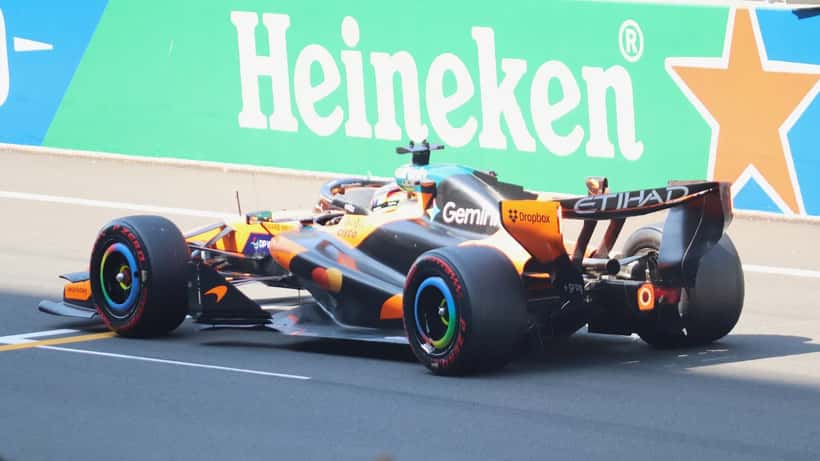
Australian McLaren driver Oscar Piastri ended Friday practice at the 2026 Monaco Grand Prix seventh fastest, clocking 1:14.088 ahead of Sunday's 11pm AEST start, as McLaren prepared to contest its 1000th Formula 1 Grand Prix — only the second team in F1 history to reach the milestone after Ferrari, according to Formula1.com.
The 2026 Monaco GP arrives in the first season of F1's most significant technical reset in over a decade: new hybrid power units, a 50/50 split between the internal combustion engine and electric motor, and fully sustainable fuels. Australian mechanics and car owners watching Piastri navigate the principality this weekend are seeing the future of road-car powertrain technology — earlier and more concentrated than anywhere else in motorsport.
What changed under the bonnet in 2026
The headline change is the power split. Previous F1 power units relied on the combustion engine for roughly 80% of output; the 2026 specification triples electric contribution to around 350kW, drawn from a battery roughly three times more powerful than the previous Energy Recovery System.
Sustainable fuels — synthetic or biomass-derived — are mandatory across every car on the Monaco grid this weekend. The FIA has framed the rule as a "drop-in" pathway: the same fuels could, in theory, run in road cars without modification. That ambition is what makes 2026 relevant beyond pit lane.
Why this matters for Australian car owners
Australia's car parc is heavily petrol-dependent. The Bureau of Infrastructure and Transport Research Economics records that internal combustion engine vehicles still account for more than 90% of registered passenger vehicles nationally as of late 2025. The fleet turnover that hybrid and electric vehicles require remains decades away.
That gap is where motorsport-derived synthetic fuels enter the conversation. If commercial production scales, drop-in fuels could let existing Australian petrol vehicles run cleaner without engine replacement. Several European refiners have pilot plants running in 2026; the Federal Chamber of Automotive Industries flagged synthetic fuel pathways in submissions to the New Vehicle Efficiency Standard consultation last year.
The maintenance angle few drivers see coming
Hybrid systems — even the relatively simple ones in current Toyota or Hyundai road cars — already require different servicing knowledge than pure combustion vehicles. As 48-volt mild hybrids and full hybrids spread across new Australian car sales (now above 24% of new vehicle deliveries, per VFACTS data), the skills gap at independent workshops widens.
Three areas where the gap shows:
- High-voltage battery diagnostics. A hybrid system fault often looks like a conventional electrical fault until you read the dedicated CAN bus messages. Cheap OBD-II scanners miss them.
- Regenerative braking calibration. Brake pad wear patterns differ on regenerative systems. A pad-and-rotor refresh on a hybrid that ignores the regen calibration can leave pedal feel inconsistent.
- Cooling system complexity. Hybrids run two or three separate cooling loops. A simple coolant flush done the wrong way can introduce air pockets in the battery loop.
What a qualified mechanic can actually do for you
Australian car owners running newer hybrid or future synthetic-fuel-ready vehicles benefit from finding a workshop with manufacturer-specific diagnostic equipment and ongoing training. A general mechanic will keep your car running. A specialist tuned to current powertrain technology will catch failures earlier and protect resale value.
When choosing a workshop, ask:
- Do you have access to the manufacturer's diagnostic software, not just generic scan tools?
- Are your technicians certified on high-voltage systems if mine is a hybrid or EV?
- Do you have a relationship with parts suppliers for current models, or do you mostly service vehicles more than five years old?
The Australian Government's vehicle safety standards page outlines the Australian Design Rules that all road vehicles — including hybrids — must meet, and is a useful reference when comparing what a mechanic should know about your specific car.
Piastri, McLaren's 1000th, and the longer arc
McLaren reaching its 1000th Grand Prix in Monaco with an Australian behind the wheel is a marketing moment. The deeper story is that Monaco — the slowest, tightest circuit on the calendar — is also where small engineering choices get magnified. Drivers gain or lose hundredths through suspension geometry, brake-by-wire balance, and energy recovery deployment. Those same disciplines are the ones that will define road-car servicing for the next decade.
For Australian car owners, the takeaway is practical: as power units get more electrified and fuels more synthetic, the gap between a workshop that adapts and one that does not will widen quickly. A consultation with a specialist mechanic before the next major service can identify whether your current shop is equipped for what your vehicle actually needs.
What to do this weekend
If Piastri's Monaco campaign has you thinking about your own car, the simplest first step is documentation. Pull the service history, check whether your vehicle is hybrid, plug-in hybrid, or mild hybrid (many newer "petrol" cars are mild hybrids without being labelled as such), and note the date of the last brake fluid and coolant changes. A specialist mechanic can give you a clearer picture in 15 minutes of paperwork than 90 minutes guessing.
The Monaco GP starts at 11pm AEST Sunday on Fox Sports 506 and Kayo. McLaren's 1000th milestone is the headline. The longer-term story for Australian drivers is what arrives at the dealership two or three model years later.
