 Jess Johnson
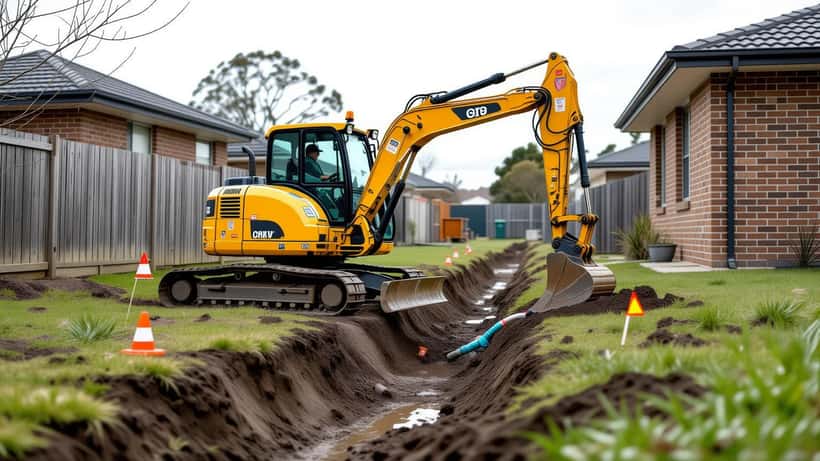
Mini diggers have become one of the most-hired pieces of equipment in Australian backyards this winter, as homeowners tackle trenching, drainage and landscaping jobs themselves. But a July 2026 report from Before You Dig Australia (BYDA) has put a sobering number on the trend: more than 15,000 underground utility strikes now occur across the country every year, costing the national economy an estimated $4.6 billion in delays, repairs and disruption. For the weekend renovator behind the controls of a hired excavator, one clipped cable can turn a $300 hire into a five-figure bill — and, in the worst cases, a criminal safety investigation.
Why "digger" is trending — and the risk nobody reads on the hire form
Compact excavators are cheap to hire, easy to drive and, on social media, oddly satisfying to watch. That combination has made "digger" one of the season's most-searched terms as Australians dig footings, pool holes, retaining walls and garden beds themselves rather than paying a contractor.
The problem sits about 300 millimetres below the lawn. Beneath a typical suburban block runs a tangle of electricity, gas, water, sewer and NBN telecommunications assets — and their exact depth is rarely where you'd guess. According to BYDA, which fields more than 2.7 million enquiries a year for underground asset information, the sheer volume of strikes reflects how many people dig without ever checking what's underneath.
The consequences scale fast. Hit a water main and you flood the street. Clip an NBN conduit and you knock out the neighbourhood's internet. Strike a live electricity cable or a gas line and the risk is no longer financial — it is electrocution, fire or explosion. This is the same category of avoidable, preventable-harm exposure that turns an ordinary job into a liability case, much like the workplace-safety questions raised in Matt Wright's recent case.
The law: what you must do before the bucket touches the ground
Many DIYers assume digging safety rules only apply to commercial builders. They don't. Under the Work Health and Safety Regulations 2011, which apply across most states and territories, anyone carrying out excavation work must obtain information about underground essential services in the area and take that information into account before they start (regulation 304). The obligation attaches to the person doing the work — not just to a licensed contractor.
In practice, that means one free step: lodge an enquiry with Before You Dig Australia (the national service formerly known as Dial Before You Dig) at least a few business days before you dig. BYDA returns plans showing the registered underground assets around your job so you can pothole, hand-dig or set "no-go zones" before the machine goes anywhere near them.
BYDA's 2026 research goes further, warning that Australia lags international best practice and calling for a national mandate. The organisation is preparing to launch a multi-state pilot of a new underground data portal in 2026 — with early indications pointing to Western Australia, Greater Sydney and potentially Brisbane — and estimates that better data standards could save $782 million a year, with consistent laws requiring an enquiry before all excavation saving a further $322 million a year.
Who pays when you hit a cable?
This is where a lawyer earns their fee. If you strike an asset, the utility owner can pursue you for the full cost of repair — and those costs are not trivial. Restoring a severed high-voltage cable, a gas main or a fibre trunk can run into the tens of thousands of dollars, plus the utility's losses from the outage.
Several factors decide how exposed you are:
- Did you lodge a Before You Dig enquiry? Skipping it undermines any argument that you took reasonable care and can expose you to WHS penalties on top of the repair bill.
- Whose insurance responds? Home-and-contents policies frequently exclude damage caused by excavation or "escape of water" you triggered. Equipment-hire agreements often make you liable for third-party damage, not the hire company.
- Was anyone hurt? A strike that injures a person — you, a neighbour or a passer-by — shifts the matter from a debt into potential safety-regulator action.
- Did you dig near a boundary or an easement? Damaging a shared or neighbouring service adds a second party who can claim against you, similar to the property-damage compensation questions that surfaced after the Alice Springs unrest.
The uncomfortable reality: "I didn't know it was there" is not a defence when a free plan was one online form away.
A lawyer's five-step checklist before you hire
If you are set on operating a digger yourself, a legal or WHS-savvy adviser will tell you to do five things first.
- Lodge a free BYDA enquiry and wait for the plans — treat them as a legal record, not a suggestion.
- Read the hire agreement's damage clause. Understand exactly what you are liable for and whether damage waivers actually cover third-party assets (they often don't).
- Check your own insurance in writing. Ask your insurer specifically about accidental damage to underground services during excavation. Get the answer by email.
- Pothole by hand within the "tolerance zone" around any marked service before using the machine — most guidance treats the area near a located asset as hand-dig only.
- Know your stop rule. If you expose an unexpected pipe or cable, stop and call the asset owner. Do not "have a go" at working around it.
The bottom line
The digger trend is not going away, and for straightforward jobs on a well-mapped block, hiring one can genuinely save money. But the line between a smart weekend project and a costly legal problem is drawn before the engine starts — in the enquiry you lodge, the insurance you confirm and the plans you actually read.
If you have already struck a service, or you are planning major excavation near boundaries, easements or services you can't identify, it is worth a short conversation with a professional before the next dig. A qualified legal expert can review your hire agreement, clarify where liability sits and help you respond if a utility comes asking for money.
This article is general information only and is not legal advice. Laws differ between states and territories, and individual circumstances vary. Speak to a qualified lawyer or your relevant work-health-and-safety regulator about your specific situation.
