 David Kelly
Melbourne drivers are heading into one of the wettest, coldest stretches of the year, with the Bureau of Meteorology forecasting a run of grey July mornings, temperatures sinking to around 6°C on the coldest nights and more than 20 rain days across the month. For most people it means an extra layer and a slower commute. For your car, it means the hardest four weeks of its year — and a mechanic will tell you it is exactly when small, ignored problems turn into a no-start morning on Punt Road.
What Melbourne is actually facing this July
The numbers behind the "weather Melbourne" searches are unremarkable on paper and brutal in practice. Average daytime highs sit near 12.9°C, overnight lows hover around 7°C, and the coldest point of the month is expected around 9 July at roughly 6°C, according to long-range climate data for the city. Rainfall is the real story: Melbourne typically records over 20 wet days in July and about 55mm of rain, with showers most likely in the afternoon and evening and the chance of small hail in the south-eastern suburbs overnight. Winds average around 17km/h, enough to drive rain sideways across a windscreen at dusk.
None of that is a natural disaster. But cold, damp, stop-start winter conditions are quietly the toughest environment a suburban car faces, and they expose every component that was already living on borrowed time.
Why your battery is the first thing to fail
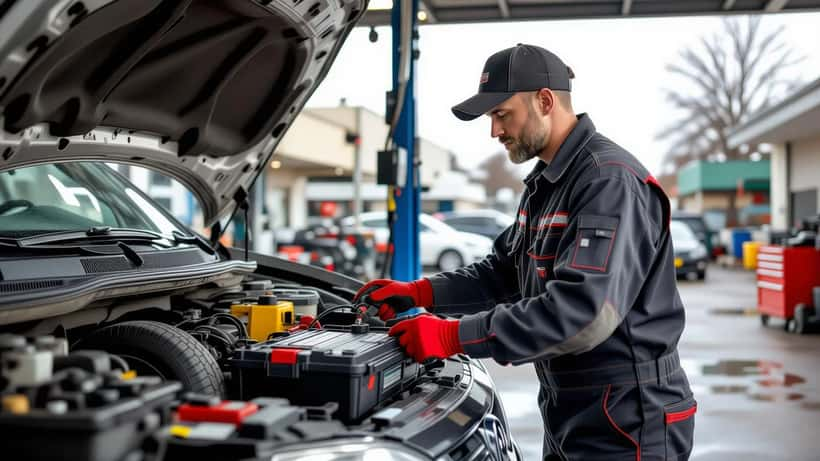
Ask any Melbourne mechanic what they tow in most on a frosty July morning and the answer is almost always the same: flat batteries. Cold slows the chemical reaction inside a lead-acid battery, so it delivers less cranking power exactly when a cold, thick engine demands more. A battery that started fine all summer can drop below the threshold in a single 6°C night.
The warning signs are easy to miss — a slightly slower crank, headlights that dim at idle, an engine that hesitates before catching. Most car batteries last three to five years, and if yours is in that window, winter is when it will announce its retirement. A specialist can load-test a battery in minutes and tell you whether it will survive the month or leave you stranded in a Coles car park. It is a far cheaper conversation to have on your terms than at 7am with a jumper lead and a stranger.
Wet roads change how your car needs to stop
Twenty rain days means twenty-plus commutes on slick roads, and this is where tyres and brakes stop being a background concern. Water on the road lengthens stopping distances dramatically, and worn tyres cannot channel it away fast enough, raising the risk of aquaplaning at freeway speed. In Australia the legal minimum tread depth is 1.5mm, but mechanics widely recommend replacing tyres well before that in wet-weather months, because grip falls off a cliff long before you hit the legal limit.
The 20-cent test is the driver's shortcut — insert a 20-cent coin into the tread and if you can see the platypus's bill, the tyre is too worn. But tread is only half the picture. Under-inflated tyres, uneven wear from an out-of-alignment front end, and tired brake pads all compound in the wet. A winter safety check that covers tyres, pads, rotors and alignment is one of the highest-value services you can book before the worst of the rain arrives.
The unglamorous parts that ruin a wet drive
Winter also punishes the components nobody thinks about until they fail. Wiper blades harden and split over a hot summer, then smear instead of clearing when you finally need them in a July downpour — a two-minute, low-cost replacement that dramatically improves visibility at dusk. Foggy, condensation-filled windows point to a cabin air filter or a demister that needs attention. And if small hail does hit the south-eastern suburbs overnight, as forecasters warn is possible, a quick body inspection can catch paint damage before moisture starts rust under the surface.
If you drive a newer hybrid or electric vehicle, cold weather has its own effects — reduced range, slower charging and different servicing needs. It is worth reading our guide on why EV owners should use a qualified EV servicing specialist, because a general mechanic is not always equipped for high-voltage systems. Owners of older, discontinued models face the opposite problem — parts and know-how — which we cover in keeping a classic Holden running.
What to do before the coldest week
The practical takeaway is simple: do not wait for the breakdown. In the next fortnight, before the forecast low around 9 July, book a winter check with a qualified mechanic covering four things — battery load test, tyre tread and pressure, brake condition, and wipers and demister. It is a modest spend that removes almost every common winter failure from the table.
You can confirm the official forecast and any severe-weather warnings for your suburb on the Bureau of Meteorology's Melbourne page before planning wet-weather trips. And if you are not sure whether a noise, a slow crank or a dashboard light is urgent, describing the symptom to a qualified mechanic before you drive is the difference between a scheduled service and a roadside rescue. A short consultation with an automotive expert can tell you exactly what your car needs to get through a Melbourne winter — and what can safely wait until spring.
The weather is not the emergency. The car you ignored through summer is.
