 Mark Campbell
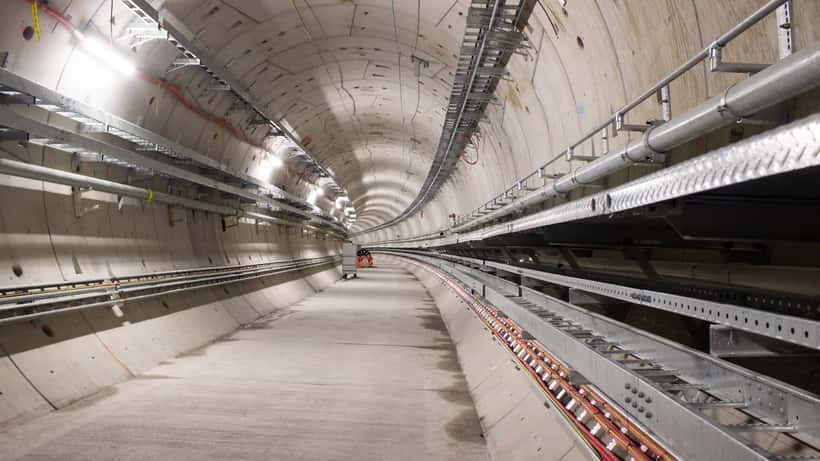
Melbourne's Metro Tunnel officially opened for full passenger service on 1 February 2026, completing a 9-kilometre dual-tunnel project that had been under construction since 2017 — and "metro tunnel" is now trending in Australia as commuters, property owners, and real estate watchers process what it means for their suburb, their building, and their investment.
If your property is near one of the five new underground stations — Arden, Parkville, State Library, Town Hall, or Anzac — or along the tunnel alignment between South Kensington and South Yarra, there are specific steps you should take now that construction is complete.
What the Metro Tunnel Opening Means for Property Owners
The Metro Tunnel is the largest rail infrastructure project in Victoria's history. The project introduced three fully underground stations in the CBD (State Library, Town Hall) and near the university and hospital precinct (Parkville), plus Arden in North Melbourne and Anzac in South Yarra.
The three priority lines — Sunbury, Cranbourne, and Pakenham — now run exclusively through the tunnel, with peak frequencies of every three to four minutes. For property owners near these lines, the tunnel's operation has changed the noise, vibration, and access landscape permanently.
The key question now is: has your building been affected by years of tunnelling and construction — and do you know before the window to make a claim closes?
Construction Vibration: What the Official Record Shows
During the tunnelling phase, the Metro Tunnel Project operated under DIN 4150 vibration standards — the same German engineering standard used internationally for construction near sensitive structures. Official assessments predicted that for the majority of the project duration, vibration would be "insignificant at sensitive receivers."
In practice, that reassurance did not fully satisfy major affected institutions. The Victorian Comprehensive Cancer Centre, the University of Melbourne, and the Manchester Unity Building in the CBD all submitted formal objections during the planning process, citing "serious risk of damage from construction and operation vibration."
This matters because formal institutional objections — from organisations with buildings directly above or beside the tunnel — confirm that vibration risk was not theoretical. If large institutions with engineering teams retained concerns throughout the project, individual property owners near the alignment have good reason to conduct their own assessment now.
The Free Condition Survey: Did You Get One?
The Metro Tunnel Project offered free pre-construction property condition surveys to owners of properties near the tunnel alignment. These surveys included professional interior and exterior photography and documentation of pre-existing structural conditions, creating a baseline for comparison after construction.
If you received and accepted this survey, you now have a reference document. If you declined, were never offered one, or are a new owner of a property that was surveyed under the previous owner, your situation is different — and more complicated.
For properties that sustained visible changes since construction began (new cracks, door or window frames that stick, settlement visible in walls or floors, water ingress in previously dry areas), the process for filing a damage claim runs through the Metro Tunnel Project's official complaints pathway:
- Phone: 1800 105 105 (available 24 hours)
- Online: via bigbuild.vic.gov.au
- Post: GPO Box 4509, Melbourne VIC 3001
The project commits to acknowledging claims within five business days and resolving most property damage cases within 30 business days. For higher-value claims, the Victorian Managed Insurance Authority (VMIA) is the responsible body. Act promptly — statutes of limitation apply to construction damage claims.
When to Engage a Building Inspector or Structural Engineer
Not every mark on a wall is a tunnel problem — and not every tunnel problem is obvious. A building inspector or structural engineer can provide the independent assessment you need, both for a potential compensation claim and for your own peace of mind.
You should engage a building inspector if:
- You've noticed new or widened cracks in walls, ceilings, or foundations since 2017
- Doors or windows that previously operated smoothly now stick or no longer close properly
- You are planning to sell a property in the affected area and need disclosure documentation
- You want a professional baseline now that construction is complete
You should engage a structural engineer if:
- Your building is heritage-listed, pre-1960s, or constructed from unreinforced masonry
- The property is within 100 metres of the tunnel alignment or a new station entrance
- You have already filed or intend to file a damage claim and need independent evidence
- Water ingress has appeared in basement or below-ground areas that were previously dry
An independent engineering report is significantly stronger evidence in a compensation claim than relying solely on the project's own property assessors. The Metro Tunnel Project uses its own assessors for initial claim evaluation — having your own expert creates a level playing field.
Property Values: Who Benefits and Who Doesn't
The Metro Tunnel's property value implications are not uniform. Research on transit-oriented development consistently shows that properties within 400–800 metres of a new train station experience upward price pressure — but only when the station is within genuine walking distance and the suburb lacks existing rail access.
In Melbourne's case, the clear beneficiaries are Footscray and Kensington, which have gained new or significantly improved tunnel access. Properties near the Arden station in particular have been a focus of developer interest.
South Yarra is a more complex story. The tunnel does not stop at South Yarra station for the Sunbury, Cranbourne, or Pakenham lines — these passengers must change at Caulfield to access the Sandringham line. For owners or buyers who assumed improved connectivity, this operational reality is worth understanding before making purchase decisions.
If you're buying or selling a property in the tunnel corridor, a property adviser or conveyancer familiar with the project's footprint can help you accurately price the transit accessibility premium — or flag where expectations don't match the operating reality.
According to Victoria's Big Build, the Metro Tunnel project website maintained by the Victorian Government, further operational information and property damage claim forms are available for affected owners.
Act Before the Window Closes
The Metro Tunnel has been fully operational since 1 February 2026. For property owners who experienced disruption during the construction phase — 2017 through to late 2025 — the time to formalise any outstanding claims is now. Construction-related damage doesn't always appear immediately; settlement and cracking can take months to manifest after tunnelling ends.
A building inspection costs a few hundred dollars. An unidentified structural issue in an older Melbourne terrace or apartment block can cost tens of thousands to repair — or become a disclosure liability at the worst possible moment.
If you're near the Metro Tunnel line, get the inspection done.
Disclaimer: This article is for general information purposes only. For advice specific to your property and circumstances, consult a qualified building inspector, structural engineer, or legal professional.
