 Emily Turner
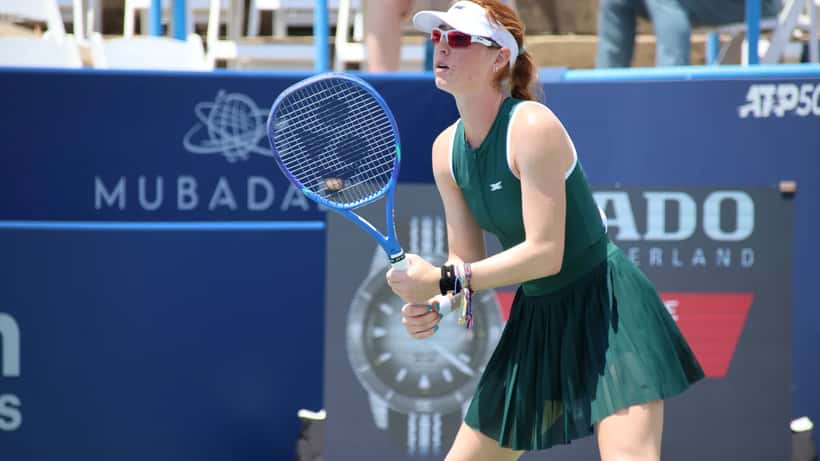
Maya Joint walked onto Wimbledon's Centre Court on 1 July 2026 as a 20-year-old ranked 87th in the world. She left it as the player who had ended Serena Williams' storybook comeback — winning 6-3, 6-7(6), 6-3 in front of a packed house that had arrived expecting to witness tennis history of a different kind. Alongside the crowd's stunned applause, Australian sports medicine practitioners noticed something else: a 20-year-old body performing at the highest level of professional sport at precisely the age when overuse injuries are most likely to permanently derail a career, if left unmonitored.
The Rise That Redefined Australian Women's Tennis
Joint was born in Grosse Pointe, Michigan, on 16 April 2006, but relocated to Brisbane in mid-2023 to train at Tennis Australia's National Academy. Her father, Michael Joint, is a former professional squash player — a background that gave Maya a technical understanding of racket sport biomechanics from an unusually early age. She began playing tennis in kindergarten, turned professional in 2024, and made her Grand Slam debut at the 2024 US Open. By February 2026, she had climbed to a career-high WTA ranking of No. 28.
Before the Wimbledon draw was even posted, Joint had become the first home women's seed at the Australian Open since Ash Barty retired in March 2022 — a symbolic milestone that carried enormous weight in Australian tennis circles. Her 2025 season produced WTA singles titles at the Morocco Open in Rabat and the Eastbourne Open, alongside two doubles titles. By the time she arrived at the All England Club, she was a recognised threat on every surface, even if the broader tennis world had not yet fully registered how fast her development had moved.
The Serena Williams match lasted two hours and six minutes. Williams, competing at 44 after a carefully staged return from retirement, had generated enormous global interest — and Joint's calm dismantling of the seven-time Wimbledon champion, without conceding a break point in the deciding set, was immediately recognised as the defining moment of Joint's young career.
What Sports Experts See in the Age Gap
The match placed a 24-year age differential in plain view: a 20-year-old body at the early peak of its athletic potential against a 44-year-old body carrying the accumulated load of two decades at professional level. Sports medicine practitioners who watched the match noted what it illustrated about physical development at opposite ends of the athletic lifecycle.
The ages between 16 and 22 represent both peak physical potential and peak structural vulnerability for young athletes. Unlike adult players whose connective tissues have fully matured, young players' tendons, ligaments, and skeletal growth plates are still completing development. The same training loads a fully matured adult body absorbs without incident can cause cumulative, chronic damage in an adolescent or young adult — damage that is rarely dramatic at first, but that progresses silently over weeks or months until it becomes performance-limiting.
Sports Medicine Australia, the peak body for sports health professionals in the country, notes that junior players who avoid career-altering injury are consistently those who had structured health monitoring as a routine part of their training environment — not just as an emergency response when something went wrong. Joint's trajectory through the Tennis Australia national academy included this kind of structured support. For the hundreds of thousands of competitive young Australians playing tennis outside elite academy structures, the same medical vigilance is often absent until acute pain forces a clinic visit.
As the sport's data shows, the most common presentations in junior development squads are shoulder rotator cuff impingement, patellar tendinopathy (commonly called "jumper's knee"), and stress fractures of the lumbar vertebrae — particularly in female players who began intensive training before skeletal maturity. All three are highly preventable with early assessment. All three become significantly more costly — in treatment time, money, and long-term athletic potential — when they are managed with rest-and-hope rather than expert input. You can read more about tennis-specific injury patterns and their health implications in this analysis of how injuries reshaped Roland Garros 2026 finals.
Three Warning Signs That Cannot Wait
For parents and coaches supporting competitive junior tennis players outside elite programs, knowing when a developing body needs professional attention is not always obvious. Sports health experts identify three specific presentations that should prompt a consultation rather than a "rest and see" response:
Shoulder, elbow, or knee discomfort persisting more than 48 hours after play. Delayed-onset muscle soreness — the normal ache of hard training — resolves within two days. Joint pain that extends beyond this window may indicate structural stress on still-developing connective tissue, which worsens rather than resolves with continued loading.
A measurable drop in serve speed or shot power that has no clear technical explanation. Coaches who track performance metrics will often notice the body compensating before the player is consciously aware of it. A first-serve speed reduction of more than 10 per cent, sustained across multiple sessions, is a clinically meaningful signal that load distribution has shifted — frequently because the body is protecting an area of developing injury.
Night pain — discomfort that disrupts sleep or wakes a player in the early hours. Night pain is a red flag across all ages in sports medicine. In young athletes specifically, it is associated with more serious structural involvement, including stress fractures of the lumbar spine, which are disproportionately common in female tennis players who trained through rapid growth phases without adequate monitoring.
Concrete Case: What Delayed Assessment Actually Costs
Consider Mia, a 17-year-old ranked junior from Sydney training six days per week at a regional club academy. Her coach notices, over eight weeks, that her first serve has dropped from 162 km/h to 148 km/h — a 9 per cent reduction — and that her shoulder audibly clicks on the follow-through of her service motion.
If Mia books a sports medicine assessment in week nine, the clinical picture is most likely a grade 1 rotator cuff impingement: a minor tendon irritation that is common in serve-heavy young players and highly responsive to early treatment. A structured physiotherapy program — typically three to five sessions — plus a temporary load reduction restores pain-free mechanics within three weeks. Total cost: $320 to $480 for the initial consultation and follow-up sessions.
If Mia's family waits until the end of the competitive season — a further ten to twelve weeks — the same impingement has a 40 to 60 per cent probability of progressing to a partial rotator cuff tear, according to clinical data from Sports Medicine Australia. A partial tear requires a minimum of 8 to 12 weeks completely off court, diagnostic imaging at $180 to $350, and a physiotherapy program totalling $1,200 to $2,400 out of pocket. Surgical referral, required in some cases, adds a further $800 to $2,000 in specialist fees.
The if/then logic is direct: if Mia presents in week nine, she returns to full training by mid-season and loses nothing from her competitive year. If she waits until acute pain forces the issue, she misses the entire second half of the junior circuit, faces total treatment costs of $2,200 to $4,750, and carries a 15 to 20 per cent risk of permanent performance limitation at elite level. Early assessment is not a precaution — it is the economically and medically rational choice.
Taking Action Before the Next Season
Maya Joint's Wimbledon moment will send thousands of young Australians onto tennis courts in the weeks ahead. Australian tennis centres across Brisbane, Sydney, and Melbourne are already reporting increased junior enrolments in the wake of her high-profile victory — the same effect Barty's Australian Open title generated in 2022.
The most valuable investment parents and coaches can make alongside additional court time is building a clear health monitoring framework into the training calendar. Joint's own access to a full support team of sports medicine doctors, physiotherapists, and exercise physiologists has been a documented part of her development pathway. Players who replicate her trajectory will need to replicate not just the work ethic, but the health infrastructure that kept her body available to train consistently over the two years it took to climb from outside the top 200 to the Wimbledon fourth round.
Sports health practitioners recommend that junior athletes playing more than 10 hours per week from age 14 onwards include a formal sports medicine review at least twice per competitive year — not as a response to injury, but as a proactive baseline. The cost is modest. The alternative is not.
To connect with a sports medicine doctor, physiotherapist, or exercise physiologist who specialises in junior and recreational athletes across Australia, ExpertZoom's Health specialists can match you with qualified practitioners in your area. For evidence-based guidance on sports injuries, physical activity, and when to seek professional care, the Australian Government's Healthdirect provides verified clinical resources for families.
This article is for general information purposes only and does not constitute medical advice. Anyone experiencing pain or changes in physical performance should consult a qualified health professional.
format_used: Expert reaction
