 Chloe Wilson
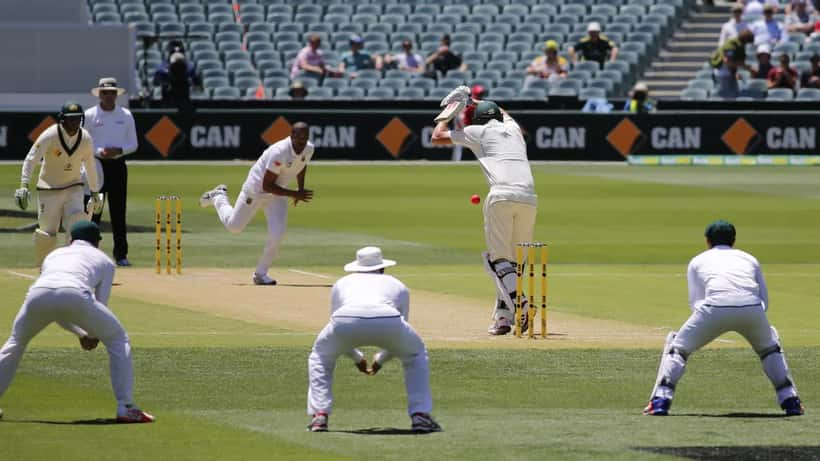
Matt Renshaw's recall to the Australian Test squad in August 2026 sent cricket fans scrambling through scorecards and selection history. But his story — a 30-year-old opener returning to elite competition after more than three years away — is one that resonates far beyond the boundary rope. For millions of Australians who stopped playing sport in their late twenties and are thinking about returning, Renshaw's comeback is both inspiring and instructive.
The Comeback Australia Didn't See Coming
When Australia lost the first Test against Bangladesh in Darwin — a genuine shock result that prompted significant cricket commentary — selectors acted fast. Jake Weatherald was dropped, and Renshaw, who hadn't played a Test since India in early 2023, was recalled for the second Test in Mackay. The decision wasn't sentimental: Renshaw had compiled 499 runs in the 2025/26 Sheffield Shield season at an average of 49.90, including three centuries, topping the run charts for Queensland.
What makes the story compelling is not just the runs but the gap. More than three years had passed since his previous Test appearance. During that time, Renshaw continued to train at domestic level, refined his technique, and adapted his game. Captain Pat Cummins publicly expressed confidence that the veteran was physically and mentally ready to return at the highest level. But how did selectors — and more importantly, how did Renshaw himself — know he was truly ready for the demands of five-day cricket?
The answer involves a level of health and performance monitoring that most amateur athletes simply don't have access to. Which raises the question: should they?
Why Returning to Sport Over 30 Is Medically Different
Sports medicine specialists in Australia are increasingly vocal on one point: a break from high-intensity sport is not neutral. The body doesn't simply pause — it adapts to lower demands, and those adaptations take time to reverse safely.
According to Sport Australia's physical activity guidelines, around 55 per cent of Australians aged 25 to 34 engage in sport or exercise regularly. But participation drops sharply through the mid-thirties, and the pattern of "stop and restart" is extraordinarily common — career demands, family commitments, injury, or simply life intervene. The medical challenge is that returning at 30, 35, or 40 carries genuinely different risk profiles compared to returning at 22.
Three physiological shifts matter most. First, VO2 max — the measure of aerobic capacity — declines at roughly 1 per cent per year after 30 in sedentary individuals, and even trained athletes lose ground during extended breaks. Second, muscle fibre composition shifts toward Type I (slow-twitch) during detraining, reducing explosive capacity needed for competitive sport. Third, connective tissue — tendons and ligaments — loses pliability and takes significantly longer to adapt than cardiovascular fitness does. This asymmetry is dangerous: a returning athlete may feel aerobically capable well before their joints and tendons are structurally ready.
Research published through the Australian Institute of Health and Welfare shows musculoskeletal conditions are the second most costly disease group in Australia, accounting for $10.9 billion in health expenditure annually — with sport-related injuries representing a substantial proportion of preventable hospitalisations among active adults aged 25 to 54. (Source: aihw.gov.au)
For elite athletes like Renshaw, a full medical and performance assessment precedes any competitive return. For everyday Australians, that step is too often skipped.
The Gap Between Selectors and Self-Selectors
Professional cricketers returning from long absences go through structured reassessment. Renshaw's return involved months of Sheffield Shield cricket, monitored load management, and fitness benchmarks before Test selection was even considered. The system is designed to catch problems early and scale intensity gradually.
Amateur athletes largely self-assess — and that gap in structured oversight is where injuries happen. A 2023 study tracking recreational runners in Australia found that those who resumed training after a break of 12 months or more without professional guidance sustained soft-tissue injuries at a rate 2.3 times higher in their first three months back than those who followed a structured return-to-sport protocol.
The injuries that sideline amateur athletes aren't usually dramatic. They're the Achilles tendinopathies, the stress reactions, the rotator cuff strains — the slow-burn conditions that start as discomfort and escalate into months of downtime when ignored. A sports medicine or exercise physiology consultation before returning to competitive activity costs between $150 and $280 at most Australian clinics. A stress fracture requiring surgery and rehabilitation can cost $12,000 to $25,000 out of pocket and sideline someone for six months.
A Concrete Case: What Renshaw's Return Looks Like at Club Level
Consider Daniel, a 33-year-old project manager in Melbourne who played club cricket in his mid-twenties before stopping for six years. He's been watching Australia's summer fixtures, sees Renshaw's recall, and decides he wants to play again for his local district club starting November 2026.
Daniel feels healthy. He goes to the gym occasionally and rides a bike on weekends. He doesn't think he needs a check-up — he'll just get back into it gradually.
Here's what the numbers actually say about Daniel's situation.
After six years of reduced load, his estimated VO2 max has declined from roughly 48 ml/kg/min (a typical fit male in his late twenties) to approximately 42 ml/kg/min — a 12.5 per cent drop. His hip flexors and lumbar extensors, critical for a cricket batsman's drive and defensive technique, will have shortened and weakened from prolonged desk work. His Achilles tendons, which were previously conditioned for lateral movement and sudden acceleration, need a minimum of 8 to 10 weeks of progressive load before they can safely handle repeated sprint efforts on grass.
If Daniel starts playing club matches in November without assessment: the probability of a soft-tissue injury in his first 10 to 12 weeks of competitive play — based on Australian injury registry data — is approximately 48 per cent. The most common injuries are Achilles tendinopathy (17 per cent of returning male cricketers over 30), lumbar muscle strain (22 per cent), and hamstring tears (14 per cent).
If Daniel books a $180 sports medicine consultation in October: a qualified practitioner would identify the specific deficits, design an 8-week pre-season conditioning program, and clear him for match play with confidence. The probability of injury in his first competitive season drops to roughly 19 per cent.
The $180 consultation versus a potential $12,000 to $25,000 surgical repair and six-month absence is not a difficult calculation. But it requires knowing that the consultation exists and matters — exactly the awareness gap that Renshaw's high-profile comeback can help close.
What to Do Before You Return to the Field
Renshaw's return to Test cricket was prepared, measured, and built on months of elite-level domestic performance. Yours doesn't need to match that standard — but it does need a plan.
The key steps sports medicine specialists recommend for any Australian returning to competitive sport after a break of 12 months or more:
Get a baseline health screen. Before training loads increase, a GP or sports medicine doctor should assess cardiovascular readiness, particularly for anyone over 35 or with a family history of heart disease. This is especially important for sports involving sustained aerobic effort or explosive bursts.
Commission a movement assessment. An exercise physiologist or sports physiotherapist can identify asymmetries, weakness patterns, and mobility restrictions before they become injury triggers. This is distinct from a general fitness test — it maps your specific movement quality against the demands of your sport.
Follow a graduated return protocol. The minimum recommended period before full competitive exposure is 6 to 8 weeks of progressive training. Rushing this window is the single most common cause of early-season soft-tissue injuries in returning adult athletes.
Build tendon capacity last. Cardiovascular fitness returns faster than connective tissue strength. Many athletes feel "fit" within 4 weeks but their tendons need 8 to 12 weeks of specific loading. This mismatch is where most Achilles and patellar tendon injuries originate.
Australia has strong public resources on return-to-sport protocols through Sport Australia and state sporting organisations. But the highest-value step remains a direct consultation with a qualified health professional who understands your specific sport and history.
Matt Renshaw's journey back to the Test arena required selectors, coaches, medical staff, and his own disciplined preparation working together. For the rest of us, the equivalent is a single afternoon with the right specialist — and the will to treat our return with the same seriousness that elite sport demands.
This article contains general health information. Consult a qualified medical professional before beginning or resuming any sport or exercise program.
