 Theo Manning
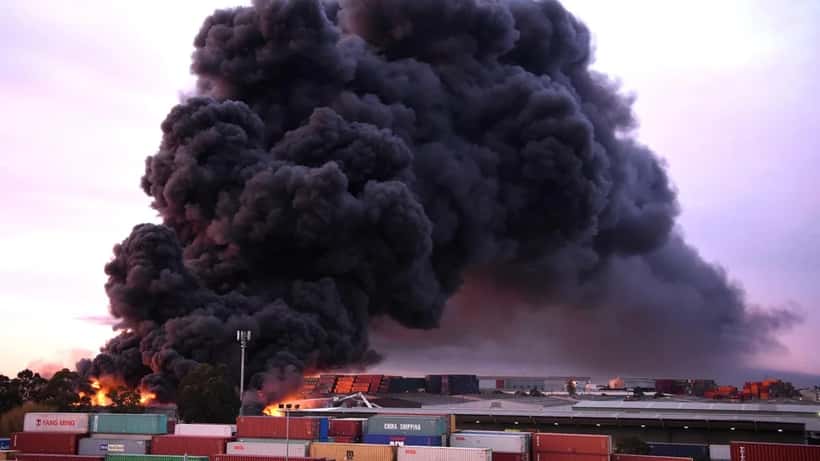
A massive factory-warehouse on Cook Road, Marrickville, was destroyed by fire in Sydney's inner west in the early hours of 22 June 2026, with 60 firefighters and 16 trucks battling the blaze for over two hours. When fire strikes a commercial or residential property, knowing your legal rights immediately can be the difference between a full recovery and a financial catastrophe.
What Happened at Marrickville on 22 June 2026
At approximately 3:15am on 22 June 2026, Fire and Rescue NSW crews were called to a large industrial blaze on Cook Road, Marrickville. The fire rapidly spread through the roof of the factory-warehouse before a partial structural collapse occurred. By 5:30am, 60 firefighters using 16 trucks — including ladder platforms — had contained the blaze, according to Fire and Rescue NSW.
Cook Road between Addison Road and Victoria Road remained closed as investigators worked to establish the cause. No injuries were reported and no residents were evacuated, though nearby businesses and residents were advised to keep doors, windows and vents closed due to a significant smoke plume spreading across the inner west.
For the business owner whose warehouse was destroyed, and for tenants, neighbouring operators and property owners affected, the legal and financial aftermath begins now.
1. Your Right to Make an Insurance Claim — and Dispute a Rejection
If you hold property, contents or business insurance, you are entitled to lodge a claim regardless of whether the fire originated from your own premises. Under Australian financial services law, you also have the right to:
- A written explanation if your insurer denies or reduces your claim
- A review through the insurer's internal dispute resolution (IDR) process
- A free external review through the Australian Financial Complaints Authority (AFCA) if the IDR outcome is unsatisfactory
Document everything before any cleanup begins. Photograph all damage, keep records of every insurer communication and request a written scope of works before authorising any repairs. Authorising remediation before your insurer has assessed the damage can void your policy entitlements entirely.
A legal professional can help you contest a reduced payout or outright rejection — particularly if the insurer argues you contributed to the loss or failed to maintain fire safety equipment on site.
Previous fires in NSW have highlighted similar challenges: when a major industrial fire destroyed a whitegoods store in Newcastle, owners faced months of negotiation before insurance settlements were finalised.
2. Landlord and Tenant Rights When a Property Is Destroyed
A fire that destroys or makes a property uninhabitable raises immediate questions about existing leases. For residential tenants, the Residential Tenancies Act 2010 (NSW) provides clear protections: you may terminate your tenancy immediately if the property is rendered uninhabitable through no fault of your own, and your landlord cannot retain your bond on a property that no longer exists in a liveable state.
For commercial tenants, the position is more complex and depends heavily on your specific lease terms. If the lease contains no provision for fire destruction, you may need legal advice on whether the doctrine of "frustration of contract" applies — which would automatically discharge both parties from further obligations. Without that guidance, you could unwittingly remain legally liable for rent on a destroyed premises.
Landlords of affected properties must also act promptly: failure to release tenants or reimburse bond deposits in a timely manner can attract penalties under NSW fair trading legislation.
3. Neighbouring Businesses: Loss of Trade and Denial of Access
Even if your business was not directly in the Marrickville warehouse, the road closure on Cook Road on 22 June 2026 could have shut you out of your own premises for hours. This type of loss — known as "denial of access" or "prevention of access" — is sometimes covered under business interruption insurance policies.
However, many standard policies exclude losses not directly caused by physical damage to your own property. If your policy contains a "prevention of access" extension, you may be covered for lost trade during the closure period. If you are unsure what your policy covers, the time to check is now — most policies impose strict notification timeframes, and delay can forfeit your entitlements.
4. Workers' Compensation If an Employee Was Injured
No injuries were reported in the Marrickville fire — a fortunate outcome. But fire events in commercial districts do sometimes result in employee injuries, either from the fire itself, smoke inhalation, or evacuation procedures. Under the Workers Compensation Act 1987 (NSW), employees injured at or near their workplace as a result of a fire are entitled to workers' compensation regardless of whether the fire was started by a third party.
Employers also carry obligations under the Work Health and Safety Act 2011 (NSW) to maintain functional emergency procedures and fire safety systems. Where those systems were inadequate, an injured employee may have additional grounds for a civil claim alongside their workers' compensation entitlement.
5. When the Cause Is Unknown — Preserving Evidence and Liability Options
Fire and Rescue NSW investigators had not yet determined the cause of the Marrickville fire as of the morning of 22 June 2026. If the investigation later finds that an electrical fault from a neighbouring tenant, a contractor's negligence or a defective product caused the fire, questions of civil liability arise directly.
If a third party's negligence caused or contributed to the destruction of your property, you may have grounds to pursue a separate negligence claim — potentially in addition to any insurance payout. Critically, this requires evidence to be preserved now: CCTV footage, inspection records, witness statements and the formal fire investigation report.
A lawyer consulted early can help you identify what evidence to secure before it is lost, and whether a third-party liability claim is worth pursuing alongside your insurance process. In cases like the Ed Harris wildfire property loss, early legal consultation made a significant difference in the final outcome for affected parties.
What to Do Right Now
If your business, rental property or workplace was affected by the Marrickville fire or any similar event, act on these five steps immediately:
- Lodge your insurance claim as soon as possible — most policies require notification within 30 days
- Photograph all damage before any cleanup begins — this is your primary evidence
- Do not authorise repairs before your insurer inspects — this can void your claim
- Review your lease with a legal professional — determine whether obligations have been discharged by the fire
- Consult a lawyer on ExpertZoom — a commercial or property lawyer can advise on insurance disputes, tenancy termination and third-party liability specific to your situation
Fire damage is devastating, but the legal rights that exist to protect you are only useful if you act on them promptly.
This article provides general legal information only and does not constitute legal advice. For advice specific to your circumstances, consult a qualified legal practitioner.
