 Isla Henderson
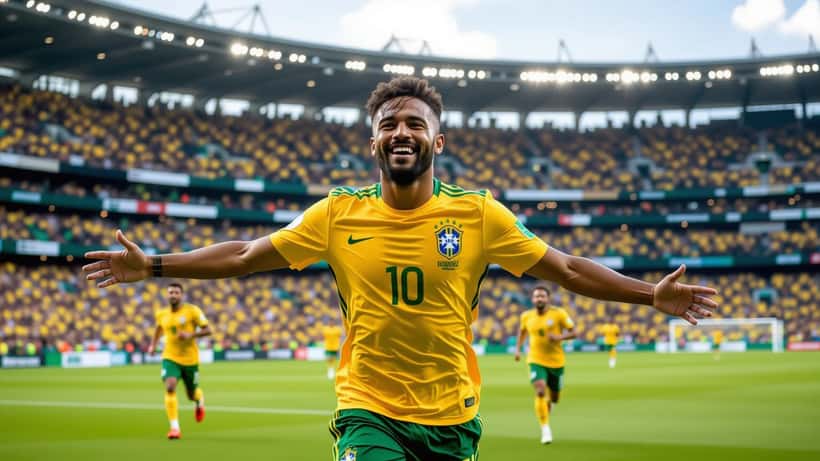
Luiz Henrique, the Brazilian winger who joined Zenit Saint Petersburg for €33 million in January 2025, has been named in Brazil's official 2026 World Cup squad by coach Carlo Ancelotti — and his market value could more than double before the tournament ends. Reports from Transferfeed and FWC Times place Zenit's current asking price between €40 and €70 million, with the higher figure contingent on his performance in the United States, Canada, and Mexico. His story is a textbook example of how a single peak-performance event can radically rewrite someone's financial trajectory — a lesson that extends well beyond football.
From Botafogo to Zenit: A €33 Million Turning Point
Luiz Henrique's move from Botafogo to Zenit Saint Petersburg in January 2025 represented a defining moment in his career. The Brazilian club received €33 million for a player who had been largely unknown outside South America. In St Petersburg, he delivered a solid first season: 34 appearances, six goals, and four assists in a league that gave him consistent playing time.
That steady output earned him a call-up from Carlo Ancelotti to replace the output of Rodrygo, who missed the tournament, in a Brazilian squad heavy with expectation. A single World Cup summer — six to seven matches if Brazil progress deep into the tournament — now has the potential to add €30 to €40 million to his market price. That is not an anomaly in modern football. It is a pattern.
Why the World Cup Functions as a Financial Accelerator
The World Cup is unique among sporting events in its capacity to revalue athletes almost overnight. A player who enters the tournament at one valuation can exit at a dramatically different one, based on a handful of high-profile performances broadcast to a global audience of billions.
Brazilian forwards who perform well at World Cups consistently attract immediate attention from Europe's wealthiest clubs. The bidding competition that follows drives transfer fees to levels that bear little relationship to their pre-tournament market position. Luiz Henrique's Zenit valuation of €40 to €70 million — depending on how far Brazil advance and how central his role becomes — illustrates precisely this dynamic.
For Luiz Henrique personally, the financial implications run deeper than a transfer fee. A move to a top-five European league following a strong tournament would likely come with a salary increase of two to four times his current Zenit package, image rights contracts, and endorsement deals from global brands seeking tournament momentum. A single good month, in the right competition, can alter a career's earnings potential by tens of millions of euros.
Performance-Linked Windfalls Are Not Just for Footballers
Most Australians will never negotiate a transfer fee. But the financial dynamic Luiz Henrique faces — a sudden, performance-linked uplift in personal financial value — is far more common than sport makes it appear.
An executive whose company lists on the ASX and holds significant equity suddenly acquires a paper windfall that may be worth very little one week and a great deal the next. A professional receiving a substantial performance bonus for the first time faces decisions about tax strategy, investment allocation, and long-term planning that they have never encountered before. A tradesperson building a successful business reaches the point where the company itself becomes a significant asset worth protecting and eventually realising.
According to MoneySmart from ASIC, financial windfalls — whether from a business sale, a bonus, an inheritance, or an investment gain — are among the moments when people most benefit from professional financial advice. Without a structured approach, windfalls are frequently consumed by tax inefficiency, reactive spending, or poorly timed investment decisions.
The parallels with Luiz Henrique are direct: the World Cup is his performance event, but every Australian professional has their own version of it.
What a Wealth Advisor Can Do at a Financial Inflection Point
When a significant financial event arrives — expected or otherwise — the decisions made in the first few months tend to have the longest-lasting consequences. Wealth management specialists typically focus on several priorities at these moments:
Tax structuring is often the most time-sensitive concern. A large bonus or equity release has tax implications that depend on timing, the type of income, and the structures in place. Acting after the event is often too late to optimise the outcome.
Investment allocation requires a clear framework. The question of whether to hold cash, invest in property, contribute to superannuation, or diversify into shares is rarely answered well under time pressure or emotional excitement. A structured approach, tailored to life stage and risk tolerance, produces better long-term outcomes than reactive decisions.
Asset protection becomes relevant when financial wealth reaches a meaningful threshold. Structures such as trusts, companies, or insurance frameworks can protect assets from unexpected events — a principle as relevant to a footballer managing image rights as it is to a small business owner protecting personal assets from company liability.
Real Madrid's financial model has long illustrated how elite sports clubs approach asset management at a strategic level — but the principles of protecting, growing, and eventually realising wealth apply at every scale.
The Timing Question: Why Now Matters
Luiz Henrique's financial window is short. If Brazil perform well and he plays a significant role, the transfer market will move quickly. Clubs who want him will act in July and August, before the next European season begins. His own advisers will have a narrow window to negotiate the best terms across transfer fee, salary structure, signing bonus, and image rights.
For Australian professionals, the equivalent windows are equally time-limited. The ASX listing window closes. The business buyer moves on. The bonus year ends. The superannuation contribution cap resets. Waiting until the dust settles before seeking financial advice frequently means the best options have already closed.
The lesson from Luiz Henrique's World Cup 2026 story is not that ordinary people should think of their careers as transfer negotiations. It is simpler than that: when performance creates a financial inflection point, the professionals who navigate it well are the ones who sought expert guidance before — or immediately at — the moment of change.
This article is for general informational purposes only and does not constitute financial advice. For guidance specific to your circumstances, consult a licensed financial adviser.
