 Andrew Thompson
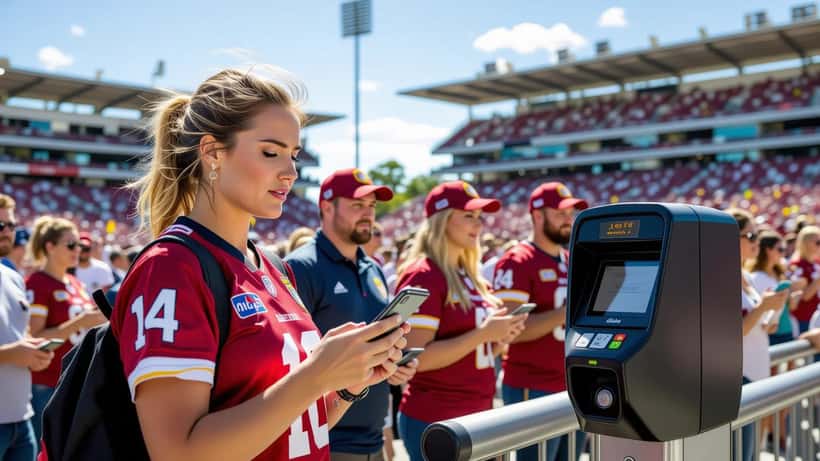
The Gabba is packed to its 50,000-seat capacity on the evening of 12 September 2026, and the noise is deafening. Brisbane Lions supporters — draped in maroon and gold — are willing their back-to-back premiers toward an unprecedented three-peat. Adelaide Crows fans, many of whom made the trip from South Australia for a side that snapped a nine-year finals drought just seven days ago, are equally ferocious. The winner of tonight's Second Semi-Final advances to a Preliminary Final; the loser goes home. For one set of fans, this is where the season ends and the post-match questions begin — including, for thousands who purchased tickets through unofficial channels, a far more pressing legal one: what exactly are my rights here?
The Match That Has All of Australia Watching
Brisbane Lions vs Adelaide Crows is the story of the 2026 AFL Finals Series. The Lions were beaten by Sydney in last week's Qualifying Final despite finishing the home-and-away season with the competition's best record. Tonight they must win or their dynasty ends. The Crows, meanwhile, have rediscovered a finals identity under their new coaching staff, having demolished a fancied opponent in the Elimination Final.
The rivalry between these two clubs is electric. Brisbane defeated Adelaide by 52 points in their Round 7 meeting — the only home-and-away clash of 2026 — and fan demand for finals tickets has been extraordinary. According to data from ticket resale platforms, secondary-market prices for Saturday night's Semi-Final reached as high as $600 per seat in the days before the match, well above the $78–$95 face-value range set by the AFL.
It is precisely this secondary-market frenzy — combined with the legal complexity few fans consider — that has consumer rights experts paying close attention.
What the AFL's 2026 Ticket and Entry Conditions Actually Say
The AFL published its 2026 Ticket and Entry Conditions before the season began. This is a binding legal document that every ticket purchaser agrees to, whether they realise it or not, and it contains several provisions with real consequences.
First, the AFL and venue operators reserve the right to search fans — including bags, clothing, and personal possessions — upon entry and at any point while inside the venue. Refusal to comply with a search can result in denial of entry or ejection, with no refund obligation on the AFL's part.
Second, tickets purchased through channels other than AFL-authorised outlets (including Ticketek and the club's own website) may be invalidated at the gate. The AFL's conditions explicitly state that "tickets obtained through unauthorised resellers may not be honoured." This is not merely a warning — it is a contractual term that shifts the risk of a bad purchase entirely onto the buyer.
Third, the AFL retains discretion to eject a patron for behaviour deemed "unlawful or unreasonable" by venue staff. That discretion is broad, and in practice it means ejection decisions are difficult to challenge in the moment — though they may be reviewable afterwards.
When Australian Consumer Law Steps In
Here is where it gets interesting for fans. While the AFL's conditions are binding, they do not override Australian Consumer Law (ACL), which is administered by the Australian Competition and Consumer Commission (ACCC). The ACL applies to all goods and services sold in Australia, and its consumer guarantees cannot be contracted out of.
Under the ACL, a seller of a ticket must ensure the ticket is "fit for purpose" — that is, it actually grants the buyer entry to the event. If a ticket sold on a secondary market fails to work at the gate because the original purchaser cancelled or transferred the barcode, the secondary seller has breached the ACL's guarantee that a service (access to the event) will be delivered. The buyer has rights.
Legal experts in consumer law note that for purchases over $100 — which describes virtually every resold AFL finals ticket in 2026 — the ACL's "major failure" provisions apply. This gives buyers the right to a full refund rather than merely a replacement or credit. The seller cannot hide behind "all sales final" policies when the product was fundamentally unfit.
A $450 Resold Ticket — What Happens When It All Goes Wrong
Consider this scenario, drawn from the kind of case consumer lawyers see regularly during AFL finals season.
Mia, a 34-year-old Adelaide Crows supporter living in Fortitude Valley, Brisbane, purchased two Lions vs Crows Semi-Final tickets through a Facebook Marketplace listing for a combined $450 — roughly five times the $85 face value per seat. The seller, a Brisbane Lions member, claimed the tickets were transferable and valid. Mia pays via bank transfer, receives the PDF tickets by email, and arrives at the Gabba with her brother on match night.
At the gate, both QR codes fail. The venue scanner flags the barcodes as "already used." What happened: the seller, apparently unaware of the AFL's barcode-invalidation policy on member tickets, had also scanned through another entry point before Mia arrived. Both Mia and her brother are turned away — missing the match entirely.
Under the ACL, because the purchase price exceeded $100 and the service was not delivered (no entry to the event), Mia has a claim for the full $450. If the seller refuses to refund voluntarily, Mia can file a dispute with Queensland's Civil and Administrative Tribunal (QCAT). For claims under $25,000, QCAT's small claims process is designed for self-represented litigants, with filing fees starting at approximately $51.20 as of 2026. The process does not require a lawyer, though consulting a legal expert before filing strengthens the case considerably — particularly if the seller argues good faith.
The if/then logic is clear: if the ticket fails at the gate and was purchased above face value through an unofficial channel, then the ACL entitles the buyer to a full refund from the seller, regardless of any "no refunds" claim. The question is how to enforce it.
Your Rights Inside the Ground
Beyond ticketing, fans should understand what the AFL's entry conditions mean once they are through the gates.
Security searches are lawful under venue conditions agreed at point of sale, and refusing a search is grounds for removal without refund. However, searches must be conducted by an authorised security officer and must not involve unreasonable force or humiliation — standards enforced under Queensland's Security Providers Act.
Alcohol restrictions vary by venue zone. In designated family areas at the Gabba, alcohol service stops at the end of the third quarter. Fans found intoxicated to the point of posing a risk to others may be removed — and in cases of physical altercation, Queensland Police Service can be involved immediately.
Ejection without lawful cause — say, a fan is removed because a security officer makes an error — is worth documenting. Take photos, note the time, ask for the officer's name or badge number. A contemporaneous record is your strongest asset if you later seek compensation for losses (missed event, travel costs).
For fans who experienced incidents similar to injuries at AFL matches covered elsewhere in this series, it is worth noting that venue liability for spectator injury is a separate question from ticket conditions — one where legal guidance is particularly valuable.
What to Do If Your Rights Are Violated
If you are turned away from tonight's Lions vs Crows match — or any AFL finals fixture — on the basis of an invalid resold ticket, act quickly:
- Document everything immediately: photograph the scanner error, your ticket PDF, and any communication with the seller.
- Contact the seller in writing within 24 hours: make a formal demand for a full refund, citing the ACL's consumer guarantees.
- Escalate to Consumer Affairs Queensland if the seller does not respond within 7 days. Consumer Affairs can mediate disputes at no charge.
- File with QCAT if mediation fails. For claims up to $25,000, the small claims process takes approximately 6–12 weeks and does not require legal representation.
- Consult a consumer law expert before filing if the amount is significant or the facts are disputed — a one-hour consultation can clarify your strongest argument and avoid procedural errors.
The AFL finals season is also a prime period for digital ticketing scams. Consumer advocates have flagged a rise in fraudulent listings on social platforms, particularly for high-demand matches like Lions vs Crows. The digital rights and data privacy considerations that apply to AFL apps and streaming platforms extend to transaction data too — if a marketplace collected your payment details, you have the right to request deletion under the Privacy Act 1988 (Cth) if the transaction fails.
Know Your Rights Before the Siren Sounds
The Lions vs Crows Semi-Final is the kind of match that people talk about for years — regardless of the result. But the legal framework around attending that match is something far too few fans understand until something goes wrong.
The AFL's 2026 Ticket and Entry Conditions are binding, but they do not override your rights under Australian Consumer Law. Resold tickets carry real risk, and fans who pay premium prices for unofficial tickets are entitled to protection — provided they know how to claim it.
If you are unsure about a ticketing dispute, a rights question at a venue, or any consumer issue arising from tonight's match or any AFL fixture, speaking with a legal expert is the fastest way to understand your options. Platforms like Expert Zoom connect Australians with qualified lawyers and consumer rights specialists who can provide guidance specific to your situation — often within hours.
The above is general information only and does not constitute legal advice. For advice specific to your circumstances, consult a qualified legal professional.
format_used: Expert reaction
