 David Kelly
Sydney Roosters fans are loading the cooler, pulling on the red, white and blue, and setting Google Maps to McDonald Jones Stadium — because Round 21 of the 2026 NRL Premiership kicks off at 6pm tonight, and the only thing between them and a high-stakes Newcastle showdown is 127 kilometres of M1 motorway. But before you lock in the playlist and debate the halftime score, there is one question worth asking that has nothing to do with team selections: is your car actually match-fit for a 250-kilometre round trip?
It sounds like a minor concern against the backdrop of finals-race drama. It is not.
Round 21: What Is at Stake on the M1 Tonight
The Newcastle Knights host the Sydney Roosters at McDonald Jones Stadium in a Round 21 clash that carries real ladder significance. The Roosters have won four consecutive NRL matches and sit within two competition points of the ladder leaders. Newcastle, meanwhile, have built a formidable home fortress — they have won five straight matches at McDonald Jones Stadium and have not lost there since earlier in the season.
For Roosters fans making the trip north, this is the kind of game that demands being in the stands. Thousands of Sydney supporters take the M1 Pacific Motorway for marquee away fixtures, typically departing mid-afternoon to make a 6pm kick-off with time to spare. But July in New South Wales means cold mornings, short days, and the kind of winter driving conditions that expose every unaddressed mechanical issue on your car.
As the ACCC reported on 22 July, average petrol prices across Australia's five major cities hit 179.5 cents per litre following the partial excise restoration on 1 July 2026. That is real money for a 250-kilometre return trip — and a breakdown will cost you far more than the fuel bill.
What Mechanics See Every Time There Is a Big Away Game
Automotive mechanics who work near Sydney's M1 entry points say they know exactly when an NRL or AFL away game is on. Roadside callouts spike on Friday afternoons and Sunday evenings, particularly around matches that draw supporters from out of town.
The reason is not that Australian drivers are careless. It is that most people only notice their car when something goes wrong — and a long highway run at sustained speed is precisely when minor problems become major ones.
"The motorway is unforgiving," one Newcastle-based mechanic explained. "City driving masks a lot. You're rarely above 80 km/h, you're constantly slowing down. But put the same car on the M1 at 110 km/h for 90 minutes and everything that was borderline becomes a problem."
The five issues mechanics most commonly identify in pre-road-trip checks — the ones that cause the bulk of M1 breakdowns on game days — are not glamorous. They are entirely preventable.
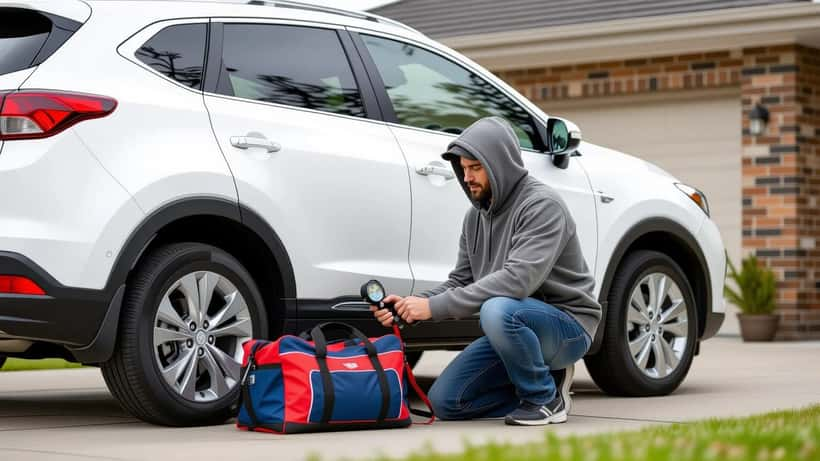
Tyre pressure. The M1 is a 110 km/h motorway for much of its length. Running tyres that are 6-8 psi below the recommended inflation (typically 32–36 psi for a mid-size SUV or sedan; check your door jamb sticker) increases fuel consumption by 2–4% and dramatically raises the risk of a sidewall failure at speed. Pressure drops naturally in cold weather — by roughly 1 psi for every 5°C fall in temperature — making July particularly risky for anyone who has not checked since summer.
Engine coolant. Motorway running at sustained load is the hardest thing you can ask of a cooling system. If the coolant reservoir is below the minimum mark, even a car that runs fine around the suburbs can overheat on the M1. Check the transparent reservoir under the bonnet: the fluid should sit between the MIN and MAX lines, with no brown or rust-coloured discolouration.
Engine oil. A litre low on oil is not always visible on the temperature gauge until it is too late. Pull the dipstick with the engine cold, wipe it, reinsert it, and read the level. It should sit in the crosshatch zone between the two marks. If it is below the lower mark, add oil before leaving.
Brake pads. City braking rarely reveals worn pads — the stopping distances are short and speeds are low. Highway braking is different. Pads below 3mm of remaining material are at risk of grinding metal-to-metal, and at 110 km/h the consequences of reduced braking performance are serious. If you hear a high-pitched squeal when you brake, that is the wear indicator. If you hear grinding, you have already waited too long.
Wiper blades. This one is underrated. Night driving back from Newcastle after a wet July evening — smearing, streaking wipers on the motorway at 110 km/h with oncoming headlights is a hazard that should not be exported into NRL traffic. Replace blades if they have been on the car more than 12 months.
The Concrete Case: What Happens When the Checks Are Skipped
Take a common scenario on game days: a Roosters fan departing Bondi Junction at 3pm for the 6pm kick-off, driving a five-year-old mid-size SUV. The M1 run to Newcastle is approximately 127 kilometres. The return trip makes it 254 kilometres total.
At the national average fuel consumption for a mid-size SUV — around 9.5 litres per 100 kilometres — the return trip requires roughly 24 litres of fuel. At today's Sydney average of 179.5 cents per litre, that is approximately $43 in fuel costs for the round trip.
Now apply the tyre pressure issue. If the car's tyres are at 26 psi instead of the recommended 33 psi — which is not unusual after a winter without a pressure check — fuel efficiency drops by roughly 4%, adding $1.70 in fuel costs. That is the minor version of the problem. The more serious scenario: a tyre sidewall that has been running underinflated develops a bulge or blister that becomes a blowout on the M1. Emergency roadside tyre replacement on a motorway, including callout fee, runs between $300 and $600. That is without factoring in the Roosters match you just missed.
If the coolant level was below minimum at departure and the car overheats on the northbound M1 around Berowra, then the likely repair is a blown head gasket — one of the most expensive outcomes in passenger car mechanics, ranging from $1,800 to $3,500 in labour and parts alone. The cost of filling the coolant reservoir: approximately $8 for a litre of premixed coolant. The cost of not doing it: a tow truck, a repair bill that dwarfs the weekend's entire travel budget, and a Round 21 experience that ends on the breakdown lane somewhere near Gosford.
According to Transport for NSW, tyre failures and mechanical defects contribute to a disproportionate share of serious highway incidents. The data is consistent with what mechanics on the ground observe: preventable issues compound under the sustained demands of motorway driving.
If you are interested in longer-term car maintenance for older or higher-mileage vehicles, this guide on keeping classic and ageing Australian cars in top shape covers what expert mechanics recommend for vehicles that see regular highway use.
When You Actually Need a Professional, Not Just a Driveway Checklist
The five items above are within reach of any driver who has five minutes and a torch before leaving. But there are situations where the right call is to book a mechanic before the trip, not after.
Warning lights on the dashboard — particularly the engine temperature light, traction control light, or tyre pressure monitoring system (TPMS) alert — should not be ignored for the sake of kick-off. A mechanic can diagnose a warning light and clear it, or identify whether it reflects a real risk, in under an hour. A pre-trip safety inspection at most workshops costs between $80 and $150 for a basic check.
Vibrations at highway speed that do not occur in the city, a steering wheel that pulls to one side, any smell of burning while driving, or brakes that feel soft or pulse underfoot — these are not "check it later" issues when you are about to put the car on a motorway.
The NRL regular season has nine rounds left in 2026. If the Roosters keep their finals charge alive, there could be more road trips ahead, including finals matches that draw even larger travelling support. Getting a professional mechanical review now, rather than after a breakdown, is the kind of decision that pays off across multiple away games.
What to Do Before Tonight's 6pm Kick-Off
If you are leaving Sydney this afternoon for McDonald Jones Stadium, the full pre-trip checklist takes under 10 minutes with the engine cold:
- Check tyre pressure on all four tyres (and the spare). Match your door jamb sticker specification.
- Check the coolant reservoir. Top up with premixed coolant if below the MIN line.
- Pull the oil dipstick. Top up with the correct grade if below the lower mark.
- Listen for any brake squeal when reversing out of the driveway.
- Test your wipers on a dry screen — smearing or streaking means replacement before the return trip.
If any of these checks reveal a problem that goes beyond a straightforward top-up — unusual oil colour, discoloured coolant, a tyre that loses pressure within minutes of being inflated, brakes that grind rather than squeal — that is the moment to seek expert advice rather than assume it will hold for 250 kilometres.
A qualified mechanic on Expert Zoom can assess your car's readiness before major trips, identify issues that are borderline but manageable, and tell you what can wait versus what needs attention now. For Roosters fans who want to make the Round 21 trip safely — and the Round 22 trip, and every finals match after that — it is worth the call.
Disclaimer: This article contains general information about vehicle maintenance. It does not constitute professional mechanical or safety advice. Always consult a qualified mechanic before undertaking long highway journeys if you have concerns about your vehicle's condition.
