 Emie Wang
Kmart's $89 Anko camera glasses have sold out across Australia in the days since their July 2026 launch at Kmart and Target stores, triggering a national debate about covert recording, wearable AI, and whether existing laws can keep pace with technology that is nearly impossible to detect. Australia's information commissioner confirmed the rollout is being monitored closely, while Tom Sulston, head of policy at Digital Rights Watch, described the product as a "privacy nightmare" — words that have resonated with Australians searching for clarity about what these glasses can legally do, and what rights bystanders actually have.
The Glasses Selling Out Across the Country
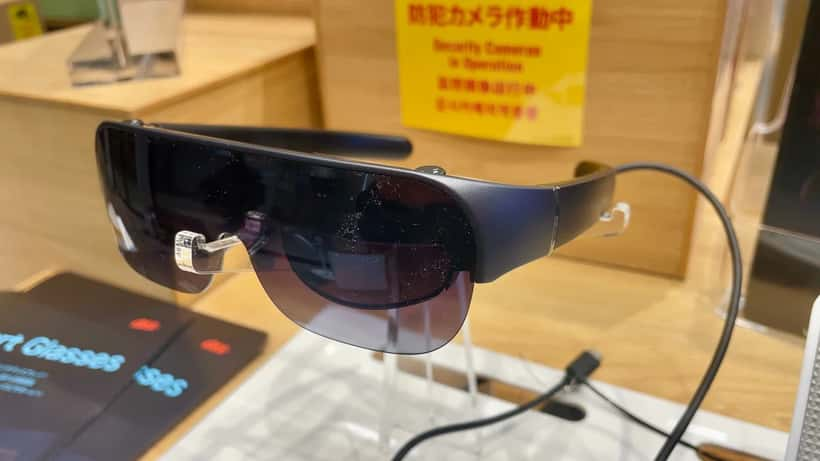
The Anko smart glasses look almost identical to ordinary thick-rimmed prescription or fashion frames. Concealed within the arms is an 8-megapixel camera capable of recording 1080p video, a live microphone, Bluetooth speakers, and image recognition software accessible via a companion smartphone app. At A$89, they cost less than a quarter of Meta's Ray-Ban smart glasses (which start from A$337 in Australia), putting wearable camera technology within reach of millions of everyday Australians for the first time.
That affordability is at the heart of the public concern. Unlike a smartphone, there is no gesture, no raised arm, and no visible lens to signal to bystanders that recording is underway. Security researchers and legal experts have noted that the glasses are nearly impossible to detect at normal conversational distance. According to a 2025 survey of 2,500 Australians commissioned by Digital Rights Watch, 33 per cent of respondents wanted smart glasses completely banned from public spaces — a figure that has likely risen since the Anko launch brought the issue into everyday retail.
Kmart has reminded buyers on product packaging to follow local laws and community standards, but multiple legal experts warn that most consumers have no clear idea what those laws require — or how easily they can be breached.
What Australian Law Actually Says: The Expert Reaction
Australia's surveillance legislation was designed in an era of hidden cameras, wire taps, and fixed optical devices. It was not written with mass-market consumer eyewear in mind. A February 2026 analysis by DW Fox Tucker Lawyers concluded that existing laws struggle to address wearable AI recording devices cleanly, a view echoed across multiple legal publications following the Anko rollout.
The legal framework splits sharply along two lines: audio and video.
Audio recording: strict criminal liability applies in every state. Every Australian jurisdiction has enacted legislation making it a criminal offence to record a private conversation without the consent of the parties involved. In New South Wales, the Surveillance Devices Act 2007 prohibits using a listening device to overhear, record, monitor, or listen to a private conversation without the principal party's consent. Victoria's Surveillance Devices Act 1999, along with equivalent laws in Queensland, Western Australia, and South Australia, impose the same restrictions. In NSW, penalties reach up to 5 years' imprisonment for deliberate unlawful audio recording. In Victoria, the maximum is 2 years' imprisonment. The Anko glasses include a microphone that activates when recording begins — meaning any ambient conversation captured, even unintentionally, may trigger criminal liability.
Video recording in public: more permissive, but not without limits. Filming openly in genuinely public spaces — streets, parks, shopping centres — is generally lawful in Australia. Courts have consistently held that people visible to others in public have a reduced expectation of privacy. However, recording in spaces where privacy is reasonably expected — gym changerooms, bathrooms, medical waiting rooms, or private homes — is an offence regardless of the device used. Publishing footage of identifiable individuals to large social media audiences may also engage obligations under the Commonwealth Privacy Act 1988 or state-based harassment and stalking legislation.
The enforcement gap is real. A 2025 incident at Bondi Beach, in which NSW Police investigated a US-based influencer who used Meta smart glasses to film women without their knowledge and post the footage online, revealed the difficulty of applying existing laws to real-time wearable recording. No charges were ultimately laid due to jurisdictional complexities, but the case prompted review discussions within multiple state attorney-general offices. The Anko launch has brought the same unresolved questions to a far broader consumer context.
The Bunnings facial recognition ruling of early 2026 demonstrated that Australian regulators are willing to apply privacy law aggressively to novel technology. Smart glasses are next on the agenda.
You can review guidance from Australia's official privacy regulator — including rules on consent, surveillance, and data handling — at the Office of the Australian Information Commissioner.
Concrete Case: When a Training Session Becomes a Criminal Offence
Consider this scenario: Mia, a 31-year-old Melbourne nurse, buys a pair of Anko camera glasses for A$89 to record her personal training sessions at her local gym. She is focused on improving her deadlift technique and starts a video recording session before her first set. Two metres away, two other members are discussing a workers' compensation dispute — a conversation they consider private. Mia's microphone captures the exchange clearly for 4 minutes and 12 seconds before she manually stops the recording.
Under Victoria's Surveillance Devices Act 1999, those 4 minutes and 12 seconds constitute a potentially criminal recording. The legislation does not require that Mia intended to capture the conversation. It does not require that she replayed or shared the audio. It requires only that a private conversation was recorded without the consent of the participants. A first offence in Victoria carries a maximum penalty of up to 2 years' imprisonment; in NSW, equivalent conduct under the Surveillance Devices Act 2007 can attract up to 5 years.
If/then: If the Anko glasses are set to automatic recording mode in any enclosed or semi-enclosed setting — a gym, a café, a medical waiting room, or a workplace — then any ambient conversation captured without participant consent may expose the wearer to criminal liability, even if the recording was never deliberately listened to, shared, or saved.
The stakes escalate further if Mia later uploads a workout montage that includes the audio, without reviewing what the microphone captured. Sharing unlawfully recorded audio amplifies the criminal exposure and opens the door to civil action by the individuals recorded. If Mia's social media account has a significant following, Commonwealth privacy obligations under the Privacy Act 1988 may also apply to how she stores and uses the captured data.
The purchase price of A$89 could prove considerably more expensive in legal terms than it first appeared.
What You Can and Cannot Do in 2026
Generally permissible under current Australian law:
- Recording video in genuinely public outdoor spaces where no reasonable expectation of privacy exists
- Recording audio of conversations you are an active, willing participant in (permitted in most, though not all, states — check your jurisdiction)
- Using image recognition features on your own devices without transmitting data to third parties
- Wearing the glasses in public without active recording mode enabled
Likely unlawful or legally high-risk:
- Recording audio of conversations you are not a party to, regardless of location
- Recording video in changerooms, bathrooms, medical premises, or private homes
- Publishing footage of identifiable private individuals without their knowledge or consent, particularly to large audiences
- Enabling continuous background recording in workplaces, schools, or health facilities
Areas experts are watching closely:
- Real-time streaming through wearable glasses in public spaces
- AI-powered facial recognition run through the companion app against third-party databases
- Automatic cloud uploads of footage to servers outside Australian jurisdiction, which may engage cross-border data transfer obligations under the Privacy Act
The law is genuinely unsettled in some of these areas. Parliamentary reviews are underway in several states, and federal privacy law reform has been flagged for 2026-27. Acting now without legal advice — especially in a workplace or business context — carries real risk.
What to Do If You Have Been Filmed Without Consent
Lodge a complaint with the OAIC. If the person or organisation that recorded you is an "APP entity" under the Privacy Act 1988 — generally businesses with annual turnover above A$3 million — the Office of the Australian Information Commissioner can investigate and compel deletion of footage. Complaints are free and lodged at oaic.gov.au.
Report covert audio recording to police. Recording a private conversation without consent is a criminal matter under state surveillance laws. Contact your local police station; state cybercrime units handle complex or online-related cases.
Use the eSafety Commissioner's removal powers. If footage of you has been posted to a social platform without your consent, Australia's eSafety Commissioner can require platforms to remove it under the Online Safety Act 2021. Intimate images shared without consent have additional specific protections with faster turnaround times.
Seek legal advice before civil action. Unlawful surveillance can give rise to civil proceedings for damages in some jurisdictions, particularly where the recording caused demonstrable reputational, psychological, or financial harm. A solicitor experienced in privacy or surveillance law can advise whether the threshold is met in your state.
The information in this article is general in nature and does not constitute legal advice. Privacy and surveillance laws vary significantly between Australian states and territories. For advice specific to your situation, consult a qualified legal practitioner.
The Anko glasses are unlikely to be the last affordable wearable camera technology to reach Australian shelves. Whether you are a consumer considering a purchase, an employer setting workplace policies around wearables, or someone who suspects they have been recorded without consent, legal advice now is considerably less costly than a complaint, prosecution, or civil dispute later.
