 Chloe Anderson
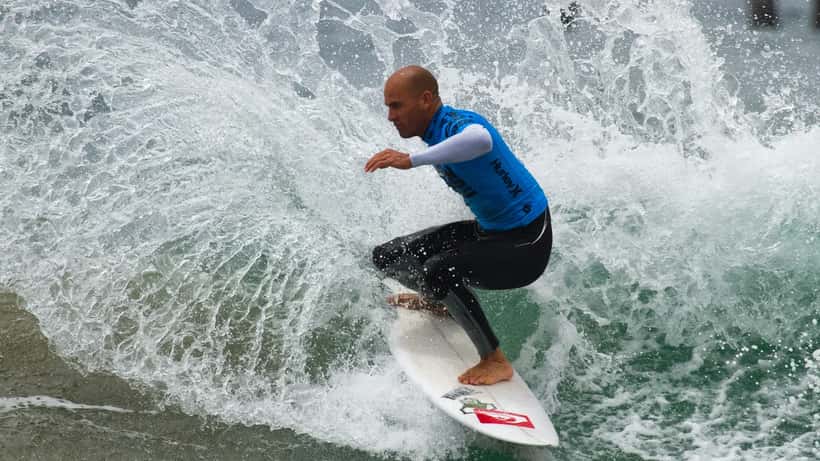
Kelly Slater and his partner Kalani Miller announced in early 2026 that they are expecting a baby girl, due spring 2026 — their second child together following son Tao, born in 2024. Slater is 54 years old, holds 11 World Surfing Championship titles, and in January 2026 competed in the Da Hui Backdoor Shootout on Hawaii's North Shore. He is not retired. He is not done. And the announcement of another child while still competing at the elite fringes of professional surfing raises a question that Australian surfers, athletes, and active adults over 40 are increasingly asking: what does it actually take to keep performing at high intensity this deep into middle age?
The Context: Slater's Serial "Retirements"
Slater's retirement pattern has become something of a running joke in surf culture. He has stepped away from full-time Championship Tour competition multiple times — reportedly 12 separate announcements over 15 years — before returning to competitive action. The underlying reality is more nuanced: Slater has wound back his full-time competitive commitment while continuing to surf at an elite level in specialty events and big-wave contexts.
For the 2026 Da Hui Backdoor Shootout, held at Pipeline on the North Shore between 4 and 16 January, Slater noted he was "hoping I'm healed enough to surf by early mid January" — language that acknowledged an underlying injury or health issue without specifying its nature. That careful language reveals something important about how elite athletes in their fifth decade manage their bodies: not by ignoring injury signals, but by calibrating them.
His estimated net worth of $42 million USD reflects decades of performance, endorsement longevity, and business interests including his Outerknown clothing brand. But the financial picture is secondary to the physical one. How does a 54-year-old remain capable of competing on the world's most dangerous surf breaks?
3 Longevity Habits Sports Doctors See in Athletes Like Slater
Sports medicine specialists who work with long-career athletes across surfing, AFL, cricket, and swimming identify consistent patterns in those who sustain performance into their late 40s and 50s. According to Australian Government physical activity guidelines, adults over 50 require both aerobic activity and muscle-strengthening exercise at least twice weekly for healthy ageing. Elite athletes like Slater go significantly beyond these minimums — but they do so strategically rather than recklessly.
1. Load management, not maximum training. Athletes who continue performing at 50-plus do not train harder than they did at 25. They train smarter. Slater is known for yoga, swimming, and dietary discipline — forms of conditioning that maintain mobility, cardiovascular fitness, and musculoskeletal integrity without the cumulative impact load of high-volume surfing. The goal shifts from building capacity to preserving it.
2. Recovery as a non-negotiable schedule item. Inflammation recovery takes longer at 54 than at 24. What a 20-year-old surfs off in a day takes a 54-year-old three days to recover from. Athletes who extend their careers successfully treat sleep, hydration, and structured recovery periods with the same priority they give training sessions. Slater's hedged language about his January return — "hoping I'm healed enough" — reflects this: a genuine decision being made based on physiological readiness, not willpower.
3. Specialist management of accumulated damage. Most competitive surfers in their 50s carry structural wear from decades of paddling, aerial landings, and wipeouts. Shoulder tendon damage, lumbar spine wear, and knee cartilage degradation are common. Managing these is not about curing them — it is about maintaining function within their constraints. Sports medicine doctors, physiotherapists, and orthopaedic specialists familiar with surf-specific injury patterns play an ongoing role in enabling continued performance.
What Slater's Career Means for Everyday Australian Athletes
Australia has the highest per-capita surfing participation rate in the world. On any given weekend morning from Bondi to Margaret River, tens of thousands of Australians over 40 are paddling out. Many of them have been surfing for decades. Most are not Kelly Slater. But the health principles that enable Slater to paddle into 5-metre Pipe barrels at 54 are not fundamentally different from what enables a 52-year-old Manly local to keep surfing fun and injury-free into their 60s.
The common mistake among recreational athletes is treating pain as a binary signal: if it is not bad enough to stop you completely, it does not require attention. Elite athlete longevity tells a different story. The athletes who are still active and healthy at 60 are almost universally the ones who took small injuries seriously at 40, sought professional input before problems became structural, and adjusted their training intelligently rather than grinding through damage.
For Australian surfers specifically, the shoulder is the most common injury site, followed by the lower back and neck. As covered in our piece on Molly Picklum's Bells Beach comeback, even elite athletes at the peak of their powers require careful management of training load after injury. The principle scales to weekend surfers.
A Baby at 54: What It Says About Long-Term Health Planning
Slater's new pregnancy announcement is not purely a personal milestone. It is a data point about the physiological state of a man who has managed his body carefully for three decades. Fathering a child at 54 while maintaining the physical capacity to surf Pipeline says something about the cumulative effect of disciplined health management.
For Australian men and women in their 40s and 50s who are active but feel their bodies "aren't what they were," the question worth asking is not "can I still do this?" but "am I managing this well enough to still be doing it in 10 years?" The answer usually requires an honest conversation with a sports medicine doctor or GP who understands active adults rather than just general ageing pathways.
Checking In With a Sports Health Expert
If you are a recreational surfer, runner, cyclist, or team sport player over 40 and you have been managing a niggling injury with rest and hope rather than professional assessment, Kelly Slater's longevity is worth considering. Not because his genetics or resources are replicable — they are not. But because the discipline of getting proper advice, managing load intelligently, and treating recovery as a performance variable rather than an inconvenience is accessible to anyone.
A sports medicine doctor can assess your current injury load, identify structural risks before they become acute, and help you build a sustainable plan. Surfing Pipe at 54 may be beyond most of us. Surfing your local break comfortably at 64 is not.
