 Olivia Taylor
This article discusses sports medicine and mental health topics. It is informational only and does not constitute medical or psychological advice. If you have concerns about an athlete's health, consult a qualified health practitioner.
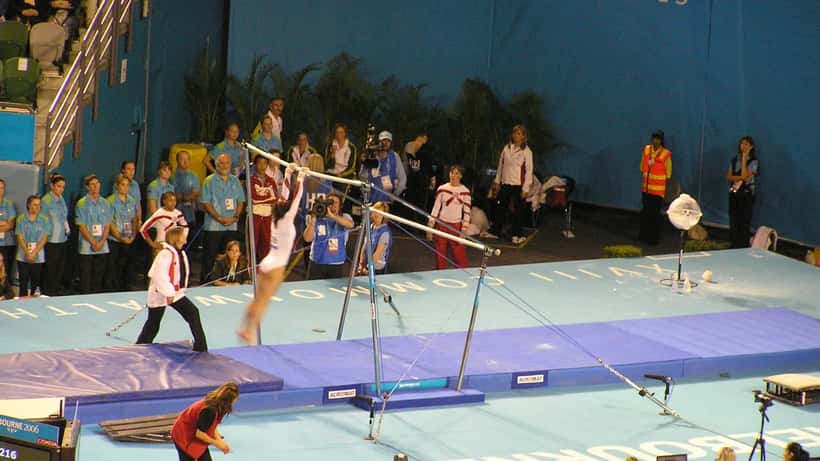
Kate McDonald lit up the Glasgow 2026 Commonwealth Games uneven bars final with a near-flawless 14.333-point routine on 27 July — the only score in the entire field to clear 14.000, and enough to claim gold by 0.433 points over Canadian great Ellie Black. The 25-year-old New South Wales gymnast erased the ghost of her seventh-place Birmingham 2022 finish in a single breathtaking performance, adding uneven bars gold to the team gold Australia's women claimed days earlier. But as Australians celebrate another Commonwealth triumph, McDonald's journey raises a question that matters to tens of thousands of parents, junior gymnasts, and recreational athletes across the country: what does it take to keep a gymnast's body — and mind — healthy enough to compete at this level, and when does everyday training discomfort cross into territory that needs professional attention?
What Kate McDonald's Win Reveals About Gymnastics Health
The uneven bars are among gymnastics' most physically demanding apparatus. A single competitive routine of 30 to 45 seconds requires the gymnast to generate forces on the wrists and shoulders that can reach three to five times body weight with every release-and-catch transition. According to Sports Medicine Australia, overuse injuries account for approximately 60 per cent of all gymnastics-related presentations to sports medicine practitioners nationally. Wrist pain, shoulder impingement, and lumbar stress fractures are the most commonly reported issues in female artistic gymnasts aged 14 to 26.
McDonald's story is also a mental health one. After a difficult seventh-place finish in Birmingham four years ago, she had to reconstruct both her technical execution and her competitive confidence before arriving in Glasgow. Sports psychologists who work with elite Australian athletes note that the ability to return to a high-stakes international event after a public underperformance is itself a clinical skill — one that benefits from structured psychological support, not willpower alone. McDonald's pre-routine self-instruction — "don't be poo," she said she told herself mid-performance — is a textbook example of a self-talk cue used to interrupt negative thought cycles under pressure.
The Hidden Toll on Gymnasts' Bodies
What gymnastics spectators see is the polished performance; what they rarely consider is the injury landscape that precedes it. According to the Australian Institute of Sport, female artistic gymnasts are at elevated risk for a cluster of overlapping health challenges once grouped under the term Female Athlete Triad — now more broadly described as Relative Energy Deficiency in Sport (RED-S). The three core issues are low energy availability (sometimes associated with disordered eating patterns), menstrual irregularities, and reduced bone mineral density. These conditions rarely announce themselves loudly in their early stages, which is why routine health monitoring matters as much as physical training.
For gymnasts who begin competitive training before the age of ten — a common trajectory in Australian elite pathways, including McDonald's own background — the cumulative mechanical load on developing bones and joints is substantial. A 2024 review in the Journal of Sports Sciences found that female gymnasts training more than 20 hours per week before age 16 had a 2.3 times higher risk of developing stress fractures than recreational athletes in the same cohort. Growth plate injuries at the wrist — a condition known as gymnast's wrist, or distal radial epiphysitis — are particularly common and particularly easy to misattribute to general training soreness.
According to Gymnastics Australia, more than 170,000 Australians participate in some form of gymnastics each year, with approximately 45,000 competing at club or regional level. Of these, a significant proportion are adolescent girls who train at volumes comparable to semi-elite programmes — without necessarily having access to the sports medicine infrastructure that protects McDonald and her teammates.
When Wrist Pain Becomes a Red Flag: A Concrete Scenario
Consider a situation many Australian gymnastics families face. A 15-year-old gymnast in suburban Melbourne is preparing for the state championships, training 22 hours per week over a five-week block. For the last three weeks, she has had a dull, persistent ache on the back of her right wrist. It worsens during bar work but fades overnight. Her parents assume it is training fatigue; her coach tells her to tape it and push through.
Here is what the clinical evidence says about that decision. If a growth-plate stress reaction — the most common cause of this presentation in gymnasts her age — is left unassessed for six weeks or more, it can progress from a Grade 1 injury (modified training for four to six weeks, full return to sport likely) to a Grade 3 fracture requiring eight to twelve weeks of complete rest, and in some cases surgical fixation. The cost of acting early: a sports medicine consultation ($120–$180 out-of-pocket after Medicare rebate), an MRI if indicated ($250–$400), and a tailored load-management programme with four to six weeks of modified training. The cost of waiting: a potential three to five months out of the gym, missed state competition, and a psychological setback during a key developmental year.
The if/then is clear: if wrist, shoulder, or lower back pain in a gymnast training more than 15 hours per week has persisted beyond two weeks without clear improvement, an assessment within seven days is clinically appropriate — not a watch-and-wait approach. Specifically, pain that wakes the athlete overnight, pain that is present at rest, pain that is worsening rather than fluctuating, or any visible swelling or restricted range of motion all indicate the need for prompt professional review. These are not signs to tape over.
The Mental Performance Side — Underestimated and Undertreated
Kate McDonald's mental resilience after Birmingham is instructive in another way: it took years to rebuild. Sports psychologists who work with Australian gymnasts report that the period following a significant competitive disappointment is when young athletes are most vulnerable to developing chronic performance anxiety, fear of failure, or early sport burnout — and least likely to seek formal support.
Research from the Australian Psychological Society found that fewer than 12 per cent of junior sport programmes in Australia incorporated access to sports psychology services in 2024, despite gymnastics being consistently identified as one of the highest-risk sports for anxiety, perfectionism, and burnout in female athletes aged 12 to 20. The intervention most supported by evidence — cognitive behavioural approaches combined with sports-specific performance skills training — is significantly more effective when delivered preventively than reactively.
Signs that a gymnast might benefit from consulting a sports psychologist include persistent training anxiety that differs from normal pre-competition nerves, a fear of specific skills that is blocking progression, difficulty bouncing back after a fall or poor result across multiple training sessions, or a noticeable decline in enjoyment of a sport the athlete previously loved. A single consultation to establish a psychological baseline — the mental health equivalent of a pre-season physical — is a legitimate and practical use of professional support.
What to Do Now — For Gymnasts, Parents, and Coaches
McDonald's Commonwealth gold is a reminder of what proper support enables. But that support must be actively sought; it is not built into most Australian club gymnastics environments by default.
For physical health, gymnasts training at moderate to high volumes should have at minimum one annual sports medicine review with a practitioner familiar with gymnastics-specific loading patterns. GPs can provide referrals for imaging under Medicare's chronic disease management provisions, and Sports Medicine Australia's practitioner finder lists clinicians with relevant specialisation. For gymnasts at state level and above, the relevant state gymnastics association may have formal relationships with sports medicine providers.
For mental performance, registered psychologists with a Sport and Exercise Psychology endorsement (Psychology Australia) are the appropriate specialists. Telehealth availability has expanded substantially since 2022, making access practical for athletes in regional and rural areas.
Expert Zoom connects Australians with qualified health specialists — including sports medicine practitioners, physiotherapists, and psychologists — who can assess gymnastics-specific concerns. As covered in how elite female athletes manage career-long health challenges, the demands on high-performance women's sport extend well beyond competition day and provide evidence-based guidance tailored to each athlete's stage of development and training load. For parents inspired by McDonald's Glasgow performance and wondering whether their child's aches or anxieties need professional attention, that question has a straightforward answer: when in doubt, consult early. The cost of an unnecessary consultation is measured in hours; the cost of a missed diagnosis is measured in months — sometimes longer. Kate McDonald's gold was built on years of professional support. The athletes who follow in her footsteps deserve the same foundation.
