 Emily Turner
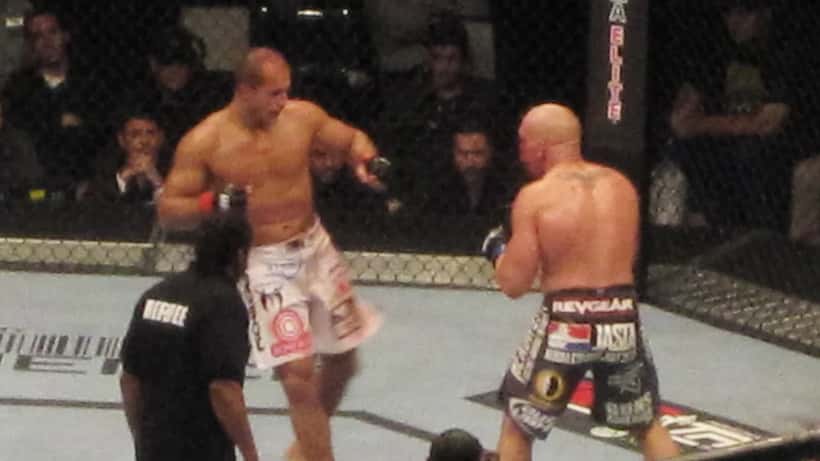
Junior dos Santos, the former UFC Heavyweight Champion known as "Cigano," suffered a brutal first-round knockout at the hands of Robelis Despaigne at MVP MMA 1 on 16 May 2026, making it the first knockout in Netflix MMA history. The fight lasted only moments inside the Intuit Dome in Inglewood, California — and the moment the lights went out for JDS, millions of combat sports fans in Australia and worldwide were reminded of a question that never goes away: what happens to the brain when a fighter hits the canvas?
The Man Behind the KO
Junior dos Santos, 40, returned to traditional MMA after a four-year absence following his UFC release in 2021. In that gap, he went 2-0 in Jorge Masvidal's Gamebred Bareknuckle MMA, which — as sports medicine specialists have long warned — carries its own distinct head-trauma profile. Bareknuckle bouts typically produce more facial cuts but fewer concussions per strike than gloved fights, yet the cumulative load on the brain remains a serious concern.
His comeback at MVP MMA 1, streamed live on Netflix to a global audience, was framed as a statement: at 40, JDS was back. Instead, the night ended in a violent reminder that high-level heavyweight MMA carries significant neurological risk for every competitor, regardless of experience or legacy.
What Happens Inside the Brain at KO
When a fighter is knocked out, the brain has undergone rapid acceleration and deceleration inside the skull. The mechanism — rotational forces acting on the brainstem and cerebral cortex — disrupts the brain's electrical signalling, producing loss of consciousness. This is not simply "getting stunned." According to Sports Medicine Australia, a knockout-level impact typically meets the clinical threshold for a concussion, and repeated concussions accumulate in ways that affect long-term neurological health.
For fighters like dos Santos, who has absorbed significant high-level striking across a career spanning more than two decades, the risk profile is compounded. Research published in journals tracking former professional fighters shows that those with five or more knockouts in their career carry meaningfully elevated risks of:
- Chronic Traumatic Encephalopathy (CTE): a degenerative brain disease identifiable only posthumously, associated with repeated head trauma
- Post-Concussion Syndrome (PCS): prolonged symptoms including headaches, memory problems, mood changes, and cognitive slowing
- Parkinson's-like symptoms: observed at higher rates in former boxers and MMA fighters than in the general population
JDS has been stopped multiple times at the elite level of the sport. Last Saturday's KO brings the conversation back to a critical point: when is the body — and the brain — telling a fighter it's time to stop?
Australian Combat Sports and the Concussion Gap
Australia has an estimated 150,000 registered participants across boxing, MMA, kickboxing, and Brazilian jiu-jitsu, with millions more in contact sports like rugby league and AFL. Yet awareness of concussion protocols outside elite-level professional sport remains inconsistent.
The Australian government's healthdirect concussion resource outlines that any athlete who sustains a head impact resulting in loss of consciousness, confusion, or symptoms such as headache and dizziness must not return to training or competition on the same day — a principle known as "If in doubt, sit it out." Despite this, many recreational combat sports gyms across the country lack formal concussion assessment tools or mandatory stand-down periods.
For amateur fighters, the risk is arguably higher. Without the medical personnel ringside that a Netflix-broadcast event provides, a backyard sparring partner or local competition may not recognise when a hit has crossed the line from hard contact into a neurological emergency.
What a Health Specialist Can Tell You
The moments after a concussion or knockout — and in the days and weeks that follow — represent a critical window. Symptoms of post-concussion syndrome can be delayed, appearing 24 to 72 hours after the initial impact. They include:
- Persistent headache or pressure in the head
- Nausea or vomiting
- Sensitivity to light or sound
- Memory difficulty or "brain fog"
- Mood changes, irritability, or unusual emotional responses
- Sleep disturbances
A general practitioner or sports medicine specialist can conduct a baseline neurological assessment, refer for imaging if red-flag symptoms are present, and guide a staged return-to-sport protocol. This process — known as a graduated return to activity — is designed to prevent second-impact syndrome, a rare but potentially fatal condition that occurs when a second concussion follows too quickly after a first.
For fighters considering a comeback at any age — or for gym coaches deciding whether a training partner should keep sparring — professional medical guidance is not optional. It is the difference between a recoverable injury and a life-altering one.
The JDS Question and What It Tells Us
Junior dos Santos said before MVP MMA 1 that "fighting is my greatest motivation, the type of challenge that feeds my soul." That sentiment resonates with combat sports practitioners everywhere. But the body keeps its own score, particularly the brain.
Robelis Despaigne's post-fight callout of Francis Ngannou and the spectacle of Netflix MMA will dominate the headlines. What the JDS knockout should also drive — particularly in Australia's growing combat sports community — is a conversation about accessing health expertise before, during, and after competitive fighting careers.
Whether you are a weekend warrior stepping into a boxing gym for the first time or a professional athlete reconsidering a comeback, a consultation with a sports medicine specialist or general practitioner can provide clarity on your current neurological baseline, the cumulative risk of your sport, and when to seek urgent care.
On Expert Zoom, you can connect with verified health professionals who specialise in sports medicine and can assess head-injury history, advise on return-to-sport timelines, and help you understand the risks that come with the sport you love — without having to wait weeks for an appointment.
The lights going out for JDS in round one at MVP MMA 1 is a sports story. What happens next — for him and for the thousands of Australian fighters training right now — is a health story. Make sure you are getting the right advice.
This article is for informational purposes only and does not constitute medical advice. If you or someone you know has sustained a head injury, seek professional medical assessment immediately.
