 Chloe Wilson
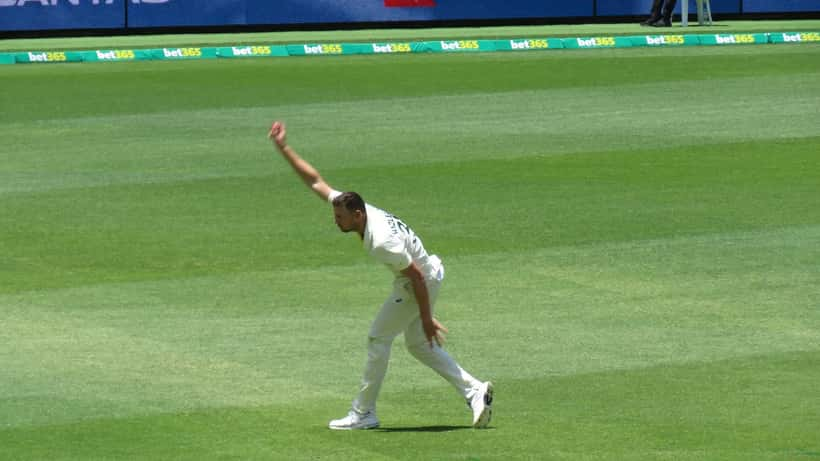
Josh Hazlewood's blistering 6/49 during the first Test in Durban on 13 October 2026 confirmed what Australian cricket fans had dared to hope: the country's most reliable fast bowler is back — and perhaps better than ever. Just eight months ago, Hazlewood was ruled out of the T20 World Cup with a double-injury crisis that threatened to end his international career prematurely. His comeback is inspiring. For the 600,000 Australians who play club or social cricket each year, it carries a more urgent message about listening to the signals your body sends.
The Double-Injury Crisis That Nearly Silenced Him
In February 2026, Cricket Australia confirmed Hazlewood would miss the T20 World Cup after Achilles soreness compounded an existing hamstring strain. The timing was brutal — he had already missed the entire Ashes series, which Australia lost 4-1 to England, with his absence leaving the attack badly depleted.
The sequence of events illustrated a pattern well known to sports medicine physicians: a primary muscle injury, rushed rehabilitation, and then a secondary tendon problem that proved far harder to resolve. According to statements from Cricket Australia's medical staff at the time, Hazlewood's Achilles required a conservative management protocol — no shortcuts, no accelerated timelines.
He missed approximately nine months of international cricket before returning for the Bangladesh Tests in August 2026. The Durban performance, where he swung the ball late at genuine pace, capped a recovery that few had expected to be so complete.
For elite athletes, resources are unlimited: daily physiotherapy, real-time GPS load monitoring, and specialist surgeons on call. For a grade cricketer playing on Saturday afternoons, the journey from "tight Achilles during warm-up" to a specialist consultation looks very different — and the gap in outcomes can be enormous.
Fast Bowlers and the Achilles: A Uniquely Demanding Relationship
Fast bowling places extraordinary demands on the human body. At the point of delivery, a pace bowler's front foot absorbs ground reaction force equivalent to roughly 7–9 times body weight — transmitted up through the ankle and Achilles tendon in milliseconds. Over a 20-over spell, that force is applied hundreds of times.
Achilles tendinopathy — inflammation and micro-tearing within the tendon fibres — is among the most common overuse injuries in cricket, particularly for fast bowlers aged 28 and above. Research published in the British Journal of Sports Medicine found that Australian state and national cricketers experience Achilles injuries at a rate approximately 1.8 times higher than counterparts in team field sports, due to the combination of explosive loading and asymmetric bowling mechanics.
The danger is not the acute tear — most recreational cricketers fear that outcome and would seek help immediately. The danger is the gradual, progressive tendinopathy that builds over weeks and months, routinely dismissed as "normal tightness" or "stiffness that eases off after warm-up." That dismissal is where serious, preventable damage occurs.
Once a tendon moves from early-stage tendinopathy — reactive, largely reversible — to late-stage degenerative change, with disorganised collagen and abnormal blood vessel ingrowth, recovery time extends from 6–12 weeks to potentially 6–12 months. That threshold is crossed quietly, often during a Saturday game that felt "fine at the time."
For more on cricket injury patterns affecting Australian players, see our earlier coverage on the hamstring crisis threatening Australia's Test XI.
When a Grade Cricketer's "Tight Achilles" Became a Six-Month Setback
Consider Marcus, a 36-year-old grade cricketer in Melbourne who bowls medium-pace for his district club. In March 2026 — the start of pre-season — he noticed stiffness in his left Achilles during morning warm-ups. The stiffness eased within the first 10–15 minutes of activity: a textbook hallmark of early-stage Achilles tendinopathy.
Marcus continued to bowl through pre-season and completed a full first-grade season. By October — the start of the new season — his Achilles hurt during bowling, not just before it. An ultrasound ordered by a sports medicine physician in early October revealed neovascularisation and partial-thickness tearing within the tendon: clear signs of late-stage degenerative tendinopathy.
His treating physician's assessment was direct: if Marcus had sought a consultation when the morning stiffness first appeared in March, a 6–8 week load-management program carried approximately an 85–90% success rate for full resolution. At late-stage, the same program carries a 40–50% success rate. The realistic alternative — a 4–6 month structured rehabilitation program, potentially including platelet-rich plasma (PRP) injection at $400–$800 per session — could have been avoided entirely.
The if/then logic is clear:
- If Achilles stiffness appears in the morning but resolves within 15 minutes of activity → this is an early warning. Load reduction and a sports medicine consult within 1–2 weeks is the evidence-based response.
- If pain persists during or after bowling → this is no longer early-stage. Imaging and specialist assessment are non-negotiable before the next training session.
- If pain is present the morning after bowling AND is located on the Achilles tendon itself (the mid-portion, 2–6 cm above the heel bone) → do not bowl again until assessed by a clinician.
The distinction between "normal tightness" and "tendinopathy" cannot be made by the athlete themselves. It requires clinical examination, typically combined with diagnostic ultrasound. Attempting to train through an undiagnosed Achilles condition is the single most common reason grade cricketers convert a recoverable 8-week injury into a season-ending one.
Three Warning Signs That Mean You Need a Specialist This Week
Sports medicine specialists recommend assessing Achilles symptoms against three key thresholds before the season begins:
The morning stiffness test. If posterior heel and lower leg stiffness takes more than 20 minutes to resolve on waking, the tendon is under significant load stress. This alone is sufficient to warrant a consultation within a week — not "after the season ends."
The single-leg heel raise test. Stand on one leg and perform 25 consecutive heel raises. If you cannot complete all 25, or if pain begins before completing the set, tendon capacity is compromised. Healthy tendons in recreational athletes should complete this test pain-free.
The 24-hour rule. If stiffness or pain is noticeably worse the morning after bowling than it was before the session, the tendon is not recovering between loads. This is a hard stop: no further bowling until a clinician has assessed the tendon.
In Australia, the most direct pathway is a GP referral for a sports medicine consultation or a musculoskeletal physiotherapy assessment. Under the Chronic Disease Management plan, Australians with a diagnosed chronic condition can access Medicare rebates for up to 5 allied health services per calendar year — including physiotherapy specifically targeting overuse tendon injuries. Many sports medicine clinics offer same-day or next-day appointments at the start of a cricket season, when presentations are highest.
The Australian Government's health information service, Healthdirect, provides a detailed Achilles tendinopathy overview and a GP locator tool for patients unsure where to start.
This article is for informational purposes only and does not constitute medical advice. Consult a registered healthcare professional if you are experiencing injury symptoms.
What Hazlewood's Return Teaches Every Cricketer
Hazlewood's performance in Durban did not happen through willpower alone. It required months of graded loading under specialist supervision, structured rest periods, and the discipline to accept that some training sessions simply had to be skipped. His career-best figures were the outcome of a meticulously managed recovery that respected the biology of tendon healing.
Weekend cricketers follow the same biological rules. The difference is that a grade cricketer who misses early warning signs cannot call on a team of physiotherapists the following morning. The responsibility falls to the individual to recognise the signs and act promptly.
If your Achilles has been talking to you this pre-season, the best time to listen was three months ago. The second-best time is now. A sports medicine expert on ExpertZoom can assess your symptoms, review your loading history, and provide a structured plan — often within 48 hours of booking.
