 Andrew Thompson
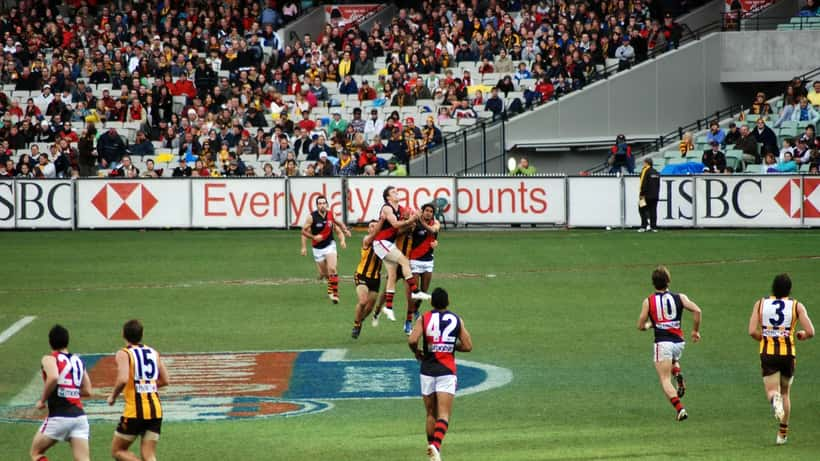
Jordan Ridley wants to play for Geelong. Essendon says he cannot — or at least, not without the right price. As the 2026 AFL trade period enters its final weeks, the 27-year-old key defender's situation has crystallised into one of the most high-profile examples of what happens when an employer holds a worker to a long-term contract they no longer want to honour. For millions of Australians facing similar situations — locked into long-term employment agreements, non-compete clauses, or extended service contracts — the Ridley saga is more than football drama. It is a real-world illustration of how contract law works in a country that is, right now, preparing to fundamentally reshape those rules.
A Three-Year Standoff Enters Its Final Weeks
Jordan Ridley has spent much of the past three years trying to leave Essendon. A former All-Australian defender, he first attracted serious interest from Brisbane in 2024, then widened his search heading into 2026. As of early October 2026, Geelong has tabled a future first-round pick — estimated to fall around Pick 30 in the 2027 National Draft — in exchange for his AFL registration. Essendon, according to AFL Media reporting from 28 September 2026, wants considerably more. North Melbourne remains a competing suitor.
The problem for Ridley is mathematical and contractual. He is tied to Essendon until the end of the 2029 season. Under AFL rules, a player under contract cannot force a trade, nor can they sign with another club without their current club's consent. Essendon holds the legal right to retain Ridley on every dollar of his salary — or to demand a price no rival is willing to pay. Either outcome leaves the player stuck.
Comparable AFL trades for key-position defenders in their mid-to-late twenties have historically commanded the equivalent of $500,000 to $800,000 in draft value. Geelong's offer of a future first, with the Cats as likely premiership contenders, may sit closer to $350,000–$400,000 in real draft capital — well below what Essendon believe the market will bear. The negotiation is ongoing, with the trade window set to close in mid-October 2026.
How the AFL Contract System Operates as a Restraint of Trade
The AFL's player movement system is, in practical terms, one of Australia's most formalised restraints of trade. Players cannot simply resign and sign with a competitor. A club holds a player's AFL registration, and without it, the player is excluded from professional competition entirely.
Australian courts have examined this structure before. The 1995 case of Adamson v West Perth Football Club established that competition-based player contract systems can be valid restraints of trade provided they serve a legitimate regulatory purpose. The AFL's Collective Bargaining Agreement with the AFL Players Association (AFLPA) has since embedded specific trade request rights, hardship provisions, and delisting options — but none of these mechanisms give a contracted player the unilateral right to force their own move. The player can refuse to train or request a trade formally, but Essendon is under no legal obligation to accept either outcome on the player's preferred terms.
The AFLPA can mediate and has done so in previous high-profile cases, but for Ridley, as for any contracted professional, the leverage lies almost entirely with the employer unless an agreement is reached. For comparable analysis of how AFL contracts have been contested, see Zach Merrett's blocked trade bid in 2026 and what it revealed about AFL player rights.
Australian Employment Law and the Reasonableness Test
For workers outside professional sport, the legal framework is structurally similar — though the remedies are somewhat broader.
Under Australian common law, any restraint of trade is presumed void and unenforceable unless the employer can prove it is reasonably necessary to protect a legitimate business interest and extends no further than required. This was confirmed by the High Court in Buckley v Tutty [1971] HCA 71, and has been applied consistently in employment matters involving non-compete clauses, garden leave provisions, and lengthy contractual notice periods.
Courts examining a restraint clause consider the duration of the restriction, its geographic scope, whether the employee had genuine access to confidential information or established client relationships, and whether the compensation received reflected the restriction being imposed. A 12-month non-compete covering all of Australia for a junior employee in a general administrative role, for example, faces a very different legal test than the same clause for a senior executive with deep client access and trade secret exposure.
In New South Wales, the Restraints of Trade Act 1976 (NSW) gives courts additional flexibility: rather than voiding an unenforceable clause entirely, a judge can "read it down" to something proportionate and enforceable — a meaningfully different outcome for both parties in a dispute.
According to information published by the Fair Work Ombudsman, written employment contracts must clearly set out the terms of employment and any post-employment restrictions, and employees are entitled to request a copy of their agreement at any time.
The 2027 Non-Compete Ban Changes the Rules
Here is where Ridley's AFL situation intersects with a legislative shift that will affect millions of Australians far beyond the football field.
The Australian Government has passed the Competition and Fair Work Legislation Amendment (Banning Unfair Non-Competes) Bill 2026, which will ban non-compete clauses for any employee earning below the Fair Work Act high-income threshold — set at $190,100 in 2026–27. The ban takes effect from 1 July 2027.
From that date, any employer who attempts to enforce a non-compete clause against an eligible employee will face significant penalties. The legislation does not apply to employees above the high-income threshold, to business sale agreements where a seller voluntarily agrees not to compete, or to arrangements protecting genuinely proprietary intellectual property through separate legal instruments.
For AFL players, whose contracts operate under a separate collective agreement with exemptions that pre-date this legislation, the change is unlikely to apply directly. For nurses bound by non-compete clauses in private medical practices, software developers restricted from working at competitor firms for 12 months, and financial planners locked into exclusivity agreements well below the $190,100 threshold, the 2027 reform represents the most significant shift in career mobility rights in decades.
The window between now and 1 July 2027 is not empty time: workers and employers alike need to understand which existing clauses will become unenforceable, how to manage contracts being negotiated today, and what protections remain for legitimate business interests.
What Happens in a Real Australian Worker's Situation
Consider a practical scenario to illustrate how these stakes play out financially.
Sarah is a 32-year-old senior account manager at a mid-sized marketing agency in Brisbane, earning $138,000 per year. She signed a two-year employment agreement in February 2025 that contains a 12-month non-solicitation and non-compete clause covering competing agencies across Australia, a $12,000 signing bonus repayable if she leaves before 24 months, and a four-week notice period.
In November 2026 — three months before her 24-month mark — she receives an offer from a competing agency for $168,000 per year, a $30,000 improvement. Her current employer signals it will enforce the full non-compete.
Scenario A — No legal advice: Sarah proceeds without consulting an employment lawyer. She repays the $12,000 signing bonus when she resigns. Her employer then applies for an injunction in the Federal Court to enforce the non-compete. Sarah spends $18,000–$35,000 on legal defence over three to five months before the matter settles. The 12-month non-compete delays her start date by six months. The $30,000 annual salary gain effectively disappears for the first year once legal costs and delayed income are factored in.
Scenario B — Employment lawyer consulted before resignation: The lawyer reviews Sarah's contract against current Australian law. Sarah earns $138,000, well below the $190,100 threshold. The non-compete covers all of Australia with no specification of which clients or relationships it is designed to protect, and Sarah had no access to trade secrets beyond general industry knowledge. The clause fails the reasonableness test under current case law, and from 1 July 2027 will be legislatively banned in any event.
The lawyer sends a letter to Sarah's employer before her resignation, setting out the legal position and noting that any injunction application would face low prospects of success. The employer agrees not to enforce the non-compete — though the $12,000 signing bonus remains repayable. Sarah's net exposure is $12,000 rather than $12,000 plus $18,000–$35,000 in legal costs plus six months of lost income. The consultation cost: $600–$900.
The difference between the two scenarios is not legal knowledge the average worker could reasonably hold — it is the specific assessment of how courts have treated these clauses and how the incoming 2027 legislation changes the negotiating dynamic.
What to Do If You Are in a Similar Position
Jordan Ridley's situation is structurally different from most Australian workers in one critical way: he is bound by a bespoke professional sports agreement in a closed competition where no external legal avenue exists to force a transfer. For most Australians, that is not the case.
If you are currently bound by a long-term employment contract that contains non-compete, non-solicitation, or restraint-of-trade provisions, the time to seek legal advice is before you receive a competing offer — not after you have accepted one. An employment lawyer can assess which clauses in your contract are likely enforceable, which are not, and how the 2027 ban will affect your specific situation.
The AFL trade window closes in mid-October 2026. Jordan Ridley will find out then whether Essendon and Geelong can agree on a price that gives him the fresh start he has spent three years pursuing. For most Australians, the equivalent negotiation — with an employer holding a restraint clause over your career — does not have a set closing date. Getting a professional assessment now, before a dispute escalates, is almost always cheaper than navigating one that already has.
This article is for general informational purposes only and does not constitute legal advice. Employment law matters are fact-specific — consult a qualified employment lawyer for advice on your individual circumstances.
format_used: News brief
