 Chloe Kennedy
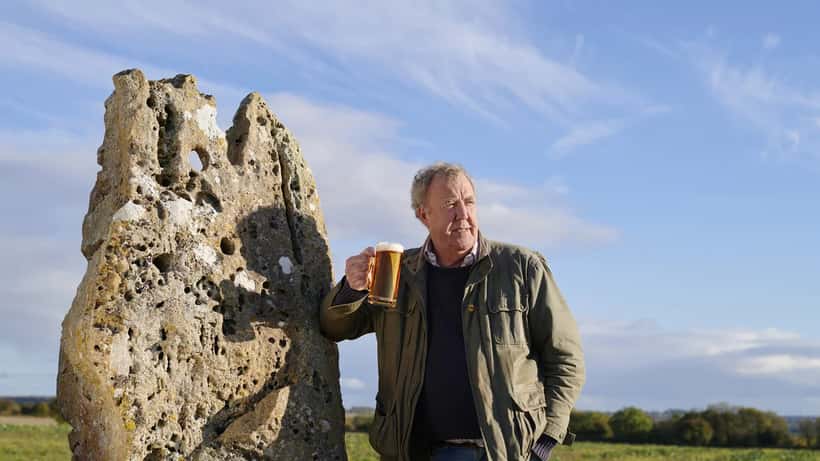
On 10 June 2026, as 25,000 farmers gathered at Jeremy Clarkson's Diddly Squat Farm in Oxfordshire for the Cereals 2026 field event, the former Top Gear host cemented his transformation from television personality to agribusiness entrepreneur. The very next day, Blue Diamond Garden Centres announced an exclusive three-year partnership with Diddly Squat Farm to develop a range of co-branded products, distributed across 54 garden centres and online. For Australian farmers watching Season 5 of Clarkson's Farm on Amazon Prime Video—which premiered on June 3, 2026—the deal asks a pointed question: is your farm structured to earn income beyond the paddock?
What the Blue Diamond Deal Actually Means
The first product from the collaboration—the Diddly Squat Farm Rosé Rose, bred by specialist plant breeder Rosen Tantau—was unveiled at the RHS Chelsea Flower Show before rolling out to Blue Diamond's nationwide chain. The three-year exclusivity arrangement gives Blue Diamond the rights to develop and distribute a co-branded range using the Diddly Squat name, story, and identity.
In commercial terms, this is a licensing arrangement. Clarkson is not growing roses at industrial scale. He is lending brand equity to a partner that handles production and retail. The income generated is tied not to soil conditions or commodity prices, but to a name that five seasons of primetime television have made recognisable.
That distinction matters. Licensing revenue recurs regardless of whether the barley is up or the lamb prices have moved. It is precisely the kind of diversified income stream that agricultural advisers have been urging farm businesses to develop for years—and one that very few Australian farm owners have seriously explored.
Why Australian Farmers Are Watching Closely
Australia has more than 85,600 agricultural businesses, according to the Australian Bureau of Agricultural and Resource Economics and Sciences (ABARES), and the vast majority remain concentrated in single-commodity income. That concentration leaves farm businesses exposed to drought, flooding, volatile export markets, and input cost spikes—risks that diversified income streams can meaningfully cushion.
At the same time, a cluster of tax and structural changes in 2026 is reshaping the economics of owning, operating, and transferring farm assets in Australia:
Division 296: From 1 July 2026, individuals with superannuation balances above $3 million will face an additional 15% tax on earnings, effectively doubling the rate to 30% on the balance above that threshold. Farm owners who have historically channelled profits into superannuation may need to review that strategy urgently.
Discretionary trust reforms: More than 840,000 Australian entities currently operate through discretionary trusts. Proposed changes could require a flat 30% upfront tax on trust income, replacing the current framework where distributions are taxed at the beneficiary's marginal rate. For farm families that use trusts to distribute income across generations, the implications could be significant.
Succession documentation: The Australian Taxation Office now requires that asset transfers between related parties demonstrate a clear "Pattern of Real Bargaining." Informal handshake deals and undocumented transfers—common in family farm succession—can be reset to market value and attract penalties.
The National Farmers' Federation has called on the federal government to protect family farming businesses from the unintended consequences of these reforms, but the policy environment remains unsettled heading into the second half of 2026.
Three Business Lessons from Clarkson's Playbook
The Diddly Squat story is not simply about celebrity. It is a deliberate, staged diversification of a farm's income base—and it holds specific lessons for Australian rural businesses.
1. Build income that does not depend on a harvest
The Blue Diamond deal generates licensing revenue in a wet year, a dry year, or any year the rose sells. For Australian farm owners, the commercial equivalent might be agritourism experiences, farm-stay accommodation, a direct-to-consumer produce operation, or licensing a distinctive place name or product story to a retail partner.
2. Layer income streams without creating structural complexity
Commercial events, licensing arrangements, and retail partnerships can often be housed within existing trust or company structures—or separated into discrete entities for asset protection and tax efficiency. The key is to think about structure before signing, not after the money starts flowing.
3. Plan succession before the tax deadline forces your hand
The UK's 2026 inheritance tax changes—capping agricultural property relief at £1 million and levying 20% above that threshold—have triggered a reorganisation rush among British farm families. Australian farm owners face their own deadline pressure with Division 296 effective 1 July 2026 and ongoing trust reform proposals. Acting before the cut-off date is almost invariably cheaper than restructuring under duress.
When to Talk to a Wealth Management Expert
If Clarkson's deal has made you think differently about what your farm property could earn beyond its commodity output, a conversation with a wealth management adviser is the logical next step.
An adviser with agricultural business experience can help you:
- Identify licensing, hospitality, events, or direct-sales income suited to your land and brand
- Review your existing trust or company structure against the 2026 tax changes
- Model the impact of Division 296 on your superannuation and long-term plan
- Document asset transfers correctly to satisfy ATO requirements and avoid penalty resets
The Australian Taxation Office publishes guidance on income options and concessions available to primary producers at ato.gov.au, but the rules are detailed and each farm situation is different.
Clarkson built a diversified farm enterprise from scratch over five years—in full public view, including the failures. The question for Australian farm owners in 2026 is not whether to explore additional income streams. It is which ones, structured how, and with what professional support. An ExpertZoom wealth management consultant can help you work through all three.
This article is for general information only and does not constitute financial or tax advice. Consult a qualified adviser for guidance specific to your circumstances.
